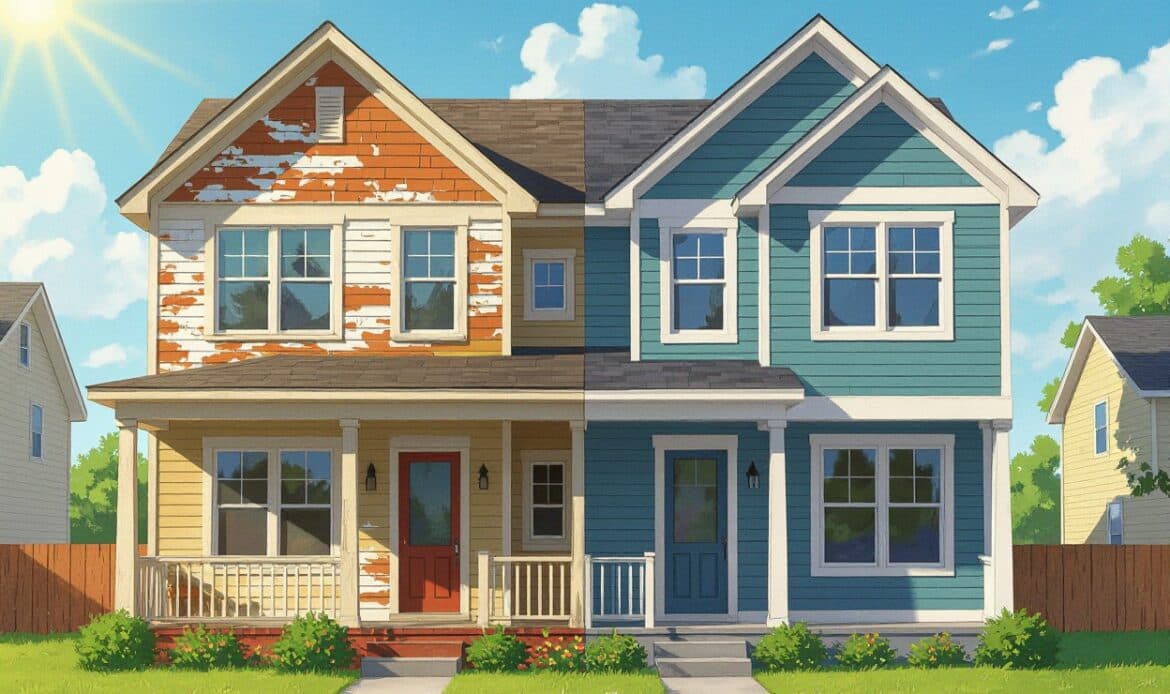
Your Tulsa Siding Installation Cost Guide: From Sticker Shock to Smart Investment

Siding installation cost in Tulsa gets confusing fast, and that is usually where the stress starts. Permit fees, rot repair, and old siding removal show up after the first number you were quoted, and a crew that cuts corners can leave you with moisture damage behind the walls. This guide from Trifecta Roofing and Restoration shows you how to estimate pricing here, compare materials, and spot the red flags that wreck a budget. You get line-item budgeting, return on investment comparisons, and a checklist so nothing catches you off guard. Then you can ask for a transparent, itemized estimate from licensed Tulsa pros and move forward knowing what you are paying for.
Key Takeaways:
- Surprised by siding quotes in Tulsa? Start with per-square-foot starting prices (vinyl ~$3.27, fiber cement ~$4.07, wood ~$4.58) and ask for an itemized estimate that separates material and labor. Get a transparent quote now.
- Plan for permits ($50–$500), old siding removal (~$1,000), house wrap ($150–$300), flashing, and structural repairs. Ask every contractor to list these so your budget doesn't take a hit later. Request a full cost checklist.
- Look at long-term value, not just the first number. Compare 20-year ownership costs (maintenance, durability, energy impact) for vinyl vs. fiber cement vs. wood. Schedule a free material ROI consultation.
- Vet the contractor to protect the house. Require a license and insurance, a written scope, a timeline, a warranty, and references. Walk away from crews that want a big payment up front. Ask us for vetted Tulsa pros and verified references.
- Decide between repair and replacement based on age, how much damage there is, and insurance or permit issues. Get an opinion that includes permit handling and insurance support. Book a no-obligation site inspection.
What Goes Into the Full Price of a Tulsa Siding Job
Material sets your baseline: vinyl at $3.27/sq ft, fiber cement at $4.07/sq ft, wood at $4.58/sq ft. Those numbers cover material only. The invoice also picks up removal of the existing siding (commonly around $1,000 on a standard home), permit fees from $50–$500, house wrap at $150–$300, and flashing at $50–$200. Labor, disposal, trim, fasteners, and any sheathing or insulation upgrades stack on top of that quickly, so read past the material line before you decide a quote is complete.
The math adds up fast. Multiply the per-square-foot material price by your exterior square footage, then add the items above. An estimate that lists only materials and a vague labor number can miss the real cost by $1,500–$5,000 once removal, permits, a weather barrier, and minor repairs land. Treat the material price as the starting point, not the finish line.
What a Complete Siding Estimate Should Show
A thorough estimate breaks out total square footage measured, material unit price, manufacturer and model, color, and waste allowance. It also lists labor hours and rate or a per-square-foot install charge, old siding removal and disposal, house wrap and insulation, flashing, trim, caulking, and fasteners, permits and inspection fees, and cleanup and disposal fees. Local figures belong in there too. In Tulsa that means a permit line from $50 to $500 and a house-wrap charge near $150–$300 if it isn't rolled into labor.
Watch for the paperwork items as well: start and completion dates, payment schedule, warranty terms for both materials and work, who pulls permits, and proof of licensing, bonding, and insurance. An itemized scope is what keeps extra charges off your final bill. If a contractor won't show line-item pricing or leaves out permit and disposal charges, that is a red flag worth acting on.
The Fees Homeowners Don't See Coming
The usual hidden costs are structural or sheathing repair from rot behind the siding, extra flashing or trim work around complex features, scaffold or lift rentals, extended cleanup for heavy debris, and disposal fees that change by dump. Permit oversights can bring a stop-work order or a fine after the fact, so seeing a $50–$500 permit line is better than discovering it mid-job. Small items like house wrap ($150–$300) and flashing ($50–$200) get left off low bids and add up quickly.
We see the fallout. Homeowners who took a material-only quote often ended up paying an extra $2,000–$5,000 once rotten sheathing was exposed or windows needed new trim. Contractors who skip an itemized permit and disposal line leave their clients holding surprise invoices. One Tulsa job added $1,200 in landfill and scaffold charges after the crew hit unusual waste volume and a tight-access roofline.
Protect yourself two ways. Require a written allowance for hidden repairs, since a 10–15% contingency on the contract is standard, and get it in writing who pays permit, inspection, and disposal costs if they run past the estimate. Ask for clarifying line items and collect at least three detailed bids so you can see how each contractor prices those possible extras.
Picking a Material and What It Does to Your Budget
The material you choose drives both the upfront number and the bills that follow. Around Tulsa, material-only pricing averages about $3.27/sq ft for vinyl, $4.07/sq ft for fiber cement, and $4.58/sq ft for wood. Add the local extras like permits ($50–$500), old siding removal (~$1,000), and house wrap ($150–$300), and the spread between options widens. For current local line-item pricing, you can check the prices from several roofers, i.e. Pricing List – Tulsa Discount Exteriors, LLC, to compare material and accessory costs before you commit. You can also call us for a quick pricing quote.
Installation difficulty moves the total too. Fiber cement is heavy and takes special fasteners, which adds labor hours next to vinyl, and wood usually needs finish work and periodic staining. On a 2,000 sq ft home, the material-only math gives you a sense of scale: roughly $6,540 for vinyl, $8,140 for fiber cement, and $9,160 for wood. Real bids typically land at 1.5–2 times those numbers once labor, tear-off, flashing, and disposal are in.
Vinyl, Fiber Cement, and Wood, Side by Side
Vinyl has the lowest starting cost and the easiest upkeep. Expect minimal yearly maintenance and a replacement window around 20–40 years. UV fading and heat expansion are the common complaints, so your installer's fastening technique matters. Fiber cement sits in the middle with higher material and labor costs, and it returns 30–50 years of service, strong fire and rot resistance, and better resistance to warping through Tulsa's seasonal swings. Wood costs the most up front and asks the most of you. Finished cedar or engineered wood gives a high-end look and sells well in certain Tulsa neighborhoods, but budget for staining every 3–7 years and regular rot checks to hold its lifespan in the 20–30 year range.
What You Get Back at Resale
Siding pays back a large share of its cost when you sell. National and regional studies put resale return on investment commonly in the 60–80% range, depending on material, neighborhood, and install quality. Trading old, failing siding for mid-range fiber cement or high-end vinyl with insulation can also show up on the utility bill, often in the ballpark of $100–$200 per year for a typical Tulsa home.
Buyer impression and warranty terms swing the payback. You do best when the material matches what your local market wants, the installer gives a transferable warranty, and the problems underneath (rot, flashing, sheathing) get fixed before new siding goes on. Skip the low bids that leave out house wrap or proper flashing. Bad installation creates moisture damage that costs thousands to repair and drags down resale value.
Here is one example. A midtown Tulsa house replaced 2,000 sq ft of failing siding with fiber cement at a total project cost of ~$22,000, including tear-off and repairs. At the sale 18 months later, the owner saw a market value increase of roughly $14,500 from the improved curb appeal and quality. That works out to about a 66% return, plus the energy savings and lower maintenance along the way.
How to Tell a Good Siding Contractor From a Bad One
Check licensing, insurance, and local presence before you sign a thing. Ask for a Tulsa contractor license number and a current certificate of general liability insurance (minimum $1,000,000) plus worker's comp if they have employees. Ask for an itemized estimate that spells out permit fees (typically $50–$500 in Tulsa), old siding removal (around $1,000 on an average home), house wrap ($150–$300), flashing ($50–$200), and cleanup. A company that hands over manufacturer warranty details, a written workmanship warranty, and photos of past jobs in your neighborhood is far more likely to build something that holds up to Tulsa weather and protects your resale value.
Get a written contract with clear payment terms. A reasonable deposit runs 10–30%, never the whole amount, and it should come with a schedule of work. Timelines should be realistic. A typical 2,000–2,500 sq ft siding replacement usually takes 3–7 days on site depending on prep and repairs. Confirm who pulls permits, who covers rot or sheathing repairs (those can add thousands), and how change orders get approved so nothing lands on your bill without your signature.
Red Flags to Watch For
Refusing to hand over a license number or insurance certificate, asking for large cash-only payments, or pushing you to sign "today" are reasons to stop. Go look at their finished jobs. Overdriven nails, uneven panel spacing, missing or poorly sealed flashing, and no weather barrier or house wrap are the mistakes that cause warping, moisture leaks, and voided warranties. A bid far below the others usually means corners are coming off somewhere in materials or labor, and that cheap price can cost you thousands in repairs later.
Vague scopes and no timeline are the same warning. Contractors who can't name local references, or who only list out-of-state projects, deserve a hard look. Unpermitted work, or a contractor who won't pull permits, can bring fines, failed inspections, and insurance denials, with costs well past the original estimate if the job has to be redone to code.
The Questions That Tell You Who You're Dealing With
Ask these and verify the answers: "What is your Tulsa license number and business address?" "Can you email a current certificate of insurance showing $1,000,000 liability and worker's comp?" "Will you get permits (estimate $50–$500) and provide permit numbers?" "Can you give me an itemized written estimate listing removal ($1,000), house wrap, flashing, and cleanup?" "What is your payment schedule and expected deposit percentage, your warranty lengths for workmanship and manufacturer coverage, and your change order policy?" "Can I have five recent Tulsa references and photos of completed jobs?" Ask about lien waiver procedures and how cleanup and disposal get handled too.
Good answers include verifiable license numbers, an insurer contact who confirms coverage, an itemized contract, and several local references. Technical answers about installation, like correct nailing patterns, required soffit and trim flashing, and house wrap detail, tell you the contractor knows where these jobs usually fail. Someone who quotes realistic production (for example, 1,000–1,500 sq ft installed per crew-day under normal conditions) and lays out a cleanup plan with a dumpster rental or haul-away is ready to work.
Then verify. Call the issuing insurance agent to confirm policy dates and limits. Use Oklahoma or Tulsa license lookup tools to match the license number to the business. Check city permit records for the permit numbers they give you. Drive by or photograph recent job sites from their reference list and look at flashing, corners, and fastener work, because bad flashing and missing weather barriers are visible from the ground. Require a contract clause tying lien waivers to payments, and pass on anyone who wants more than 50% upfront or won't put warranties and references in writing.
Repair or Replace: Running the Numbers
When Repairs Cost More Than Replacing
Compare against a realistic Tulsa replacement baseline. Material-only vinyl runs about $3.27 per sq ft, so a 2,000 sq ft exterior is roughly $6,540 in materials before labor, removal, and permits. Add the usual extras, old siding removal at ~$1,000, house wrap at $150–$300, flashing at $50–$200, and permits at $50–$500, and a full vinyl replacement typically lands in the $8,000–$15,000 range on an average home. If your last three repairs add up to more than ~40–60% of that range, or you are calling someone out every 12–24 months, replacement is usually the better financial move.
Structural risk counts too. Patching over soft sheathing or water intrusion hides costs that keep climbing. Replacing rotted sheathing or dealing with mold adds thousands in a hurry. Treat moisture damage, widespread board failure, or recurring flashing leaks as the point where you stop repairing and start replacing. When a warranty transfer, energy efficiency, or curb appeal will move resale value, paying once for replacement beats paying repeatedly for repairs.
Reading Your Siding's Remaining Lifespan
Match expected lifespans to real Tulsa exposure. Vinyl typically lasts 20–30 years, with some products reaching 40. Fiber cement averages 30–50 years. Wood ranges 20–40 years depending on maintenance. Age your siding against those benchmarks. If your vinyl is past year 15 with fading, cracks, or repeated nail or trim issues, there isn't much useful life left. Fiber cement with hairline cracks or isolated nail pops can often be repaired and stretched further, but widespread peeling or rot in wood points straight to replacement.
Measure the damaged area and look for patterns instead of chasing one problem at a time. If more than 10–15% of your exterior surface is failing with warping, soft spots, decay, or blown seams, replacement usually beats repeat repairs. Multiple failed seams, siding that keeps separating after storms, or interior staining on exterior walls point to sheathing or moisture-barrier failure underneath, and patching won't fix that reliably.
Use a short checklist to decide. Write down the siding age, total square footage affected, frequency and cost of recent repairs, and material type. If documented repairs over the past five years approach half the estimated installed replacement cost, or the siding has passed roughly 70–80% of its expected lifespan, replace it and stop feeding hidden costs.
Permits and Code in Tulsa: What Compliance Actually Costs
Permit fees in Tulsa typically run $50 to $500, and that line doesn't cover everything. Plan review, required inspections, and mandatory weather-barrier or flashing upgrades can add another $150–$500. Permit processing and inspection scheduling also add lead time, commonly 7–21 days, which can stretch your timeline and your labor costs if crews sit idle or the weather window shifts.
Budgeting for material and labor alone leaves you open to the usual surprises: rot that turns into structural repair (often more than $1,000), rework after a failed inspection, or HOA and code-required finishes that don't match your original plan. When your contractor puts permit and inspection line items in the estimate up front, most of that goes away and the schedule holds.
How Tulsa Handles Siding Permits
Tulsa generally requires permits for full siding replacement, material changes that affect fire-rating or insulation, and any work that changes the structure or window and door openings. Minor patching or trim-only work may be exempt. Most projects need 1–2 inspections, an initial review and a final sign-off, and the application asks for scope details, contractor licensing information, and a permit fee based on project cost.
Contractors who work in Tulsa regularly pull permits as part of the job and can move inspections along. If you pull the permit yourself, be ready to supply property records and contact information and to schedule inspection windows. Historic districts and HOA-controlled neighborhoods often need separate approvals, so add another $50–$300 and a week or two to the timeline when that applies.
What Skipping the Permit Really Costs
Some homeowners skip the permit to save money, but that savings, usually under $500, can turn into city fines, a stop-work order, or forced removal and reinstallation to meet code. Fines run anywhere from a few hundred dollars to several thousand, and bringing the work up to code commonly costs $2,000–$10,000 depending on scope.
The indirect costs are worse. Unpermitted siding can void parts of your homeowner's insurance for related claims, complicate or stall a sale when appraisers or inspectors flag work that isn't up to code, and leave hidden defects like improperly installed flashing that lead to moisture intrusion and rot. Lenders and title companies sometimes require corrective permits or repairs before closing, which delays the sale and cuts your negotiating power.
Here is how it plays out. You skip a $300 permit to save up front. A buyer's inspector later asks for permit history and code-compliant corrections. Permitting after the fact, paying fines, and fixing the work can easily total $3,000–$5,000, plus the time your house sits on the market. That is why permit and inspection allowances belong in the estimate from day one.
Putting It All Together
Your siding installation cost in Tulsa comes down to material, labor, permits, and whatever the crew finds behind the old boards. That uncertainty is what stalls projects and blows budgets. Use the numbers here to anticipate permits, removal, and repairs, and to compare vinyl, fiber cement, and wood on more than price: maintenance, energy performance, and what you get back at resale. A clear plan up front is what keeps surprise charges off the final invoice.
When you are ready, every job starts with a free inspection, and you get an itemized estimate for your home along with a materials recommendation built around long-term value. The work is handled by licensed, insured installers with a defined scope and a warranty in writing. Call (918) 471-2777 or ask Trifecta Roofing and Restoration for a free estimate and get transparent siding pricing from certified Tulsa pros.
FAQ
If your Tulsa siding quote keeps moving or feels incomplete, you are not the only one. These answers cover what drives the price, the fees that hide in the fine print, material value, how to check a contractor, and when to repair instead of replace.
What determines the total cost of siding installation in Tulsa?
Material price per square foot (local averages are vinyl ≈ $3.27/sq ft, fiber cement ≈ $4.07/sq ft, wood ≈ $4.58/sq ft), labor, siding removal, underlayment or house wrap, trim and flashing, fasteners and caulking, disposal and cleanup, permits, and any structural repairs. For a written quote with no surprises, schedule a free on-site estimate so someone can measure the house and itemize every cost.
What hidden costs should I budget for on a Tulsa siding project?
The usual ones are permits ($50–$500), old siding removal (often $1,000+), house wrap or insulation ($150–$300), flashing and specialty trim ($50–$200 per area), rot or sheathing repair, disposal fees, scaffolding or rental equipment, and HOA approvals. To catch them early, ask for our pre-inspection checklist and an itemized bid that flags likely extras before work starts.
How does material choice affect upfront cost and long-term value in Tulsa?
Vinyl costs less up front and asks little of you. Fiber cement is mid-range with higher material and installation costs but a longer life and better resale value. Wood looks high-end and costs more to maintain over time. Think in terms of 20+ years, including maintenance and energy savings. Book a free material consultation and we'll walk through a 20-year cost comparison for your house.
How do I spot a contractor who won't inflate the price mid-project?
Red flags: vague scope of work, no itemized written estimate, no license or insurance, high-pressure sales, no local references. Good signs: licensed and insured crew, a written contract with itemized costs, local references, clear warranty and permit handling, and a documented inspection for hidden repairs. Before work starts, ask for a detailed contract and a written warranty.
When does siding repair cost more than full replacement in Tulsa?
Replace when the damage is widespread, on more than 25% of the siding, when there is rot underneath, when you need fixes constantly, or when old siding is hurting energy efficiency and home value. Constant patching usually costs more than replacing. Get a free repair-vs-replace assessment with an itemized recommendation showing short- and long-term costs.