What New 2026 Insurance Laws Mean for Your Roof Claim
For years the advice on Oklahoma roof claims was simple: file fast, hope for the best, take whatever the insurance company decides. That advice is now incomplete, and following it can cost you. The 2026 Oklahoma roof insurance laws changed the power dynamic between homeowners and insurers. Some of the changes help you. Others create new traps if you are not paying attention. We spent the last several months reading through these regulations, and what we found is both encouraging and a little maddening.
What Changed in the 2026 Oklahoma Insurance Laws
Insurers can no longer deny a claim off satellite photos alone
This one drove us crazy for years. An insurance company would deny a claim based only on satellite or drone photos, without ever sending a person to look at the roof. Homeowners got denial letters citing "no visible damage" while an inspector standing on that same roof could see hail impacts and lifted shingles.
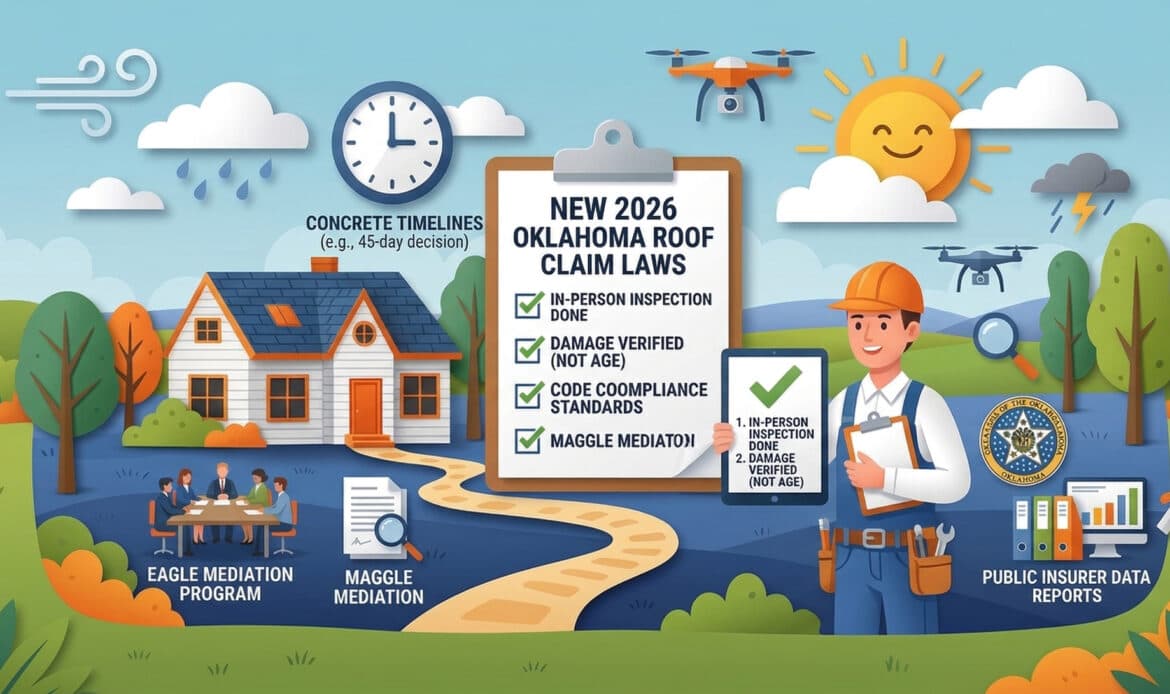
The 2026 laws prohibit insurers from denying claims based exclusively on aerial imagery. They have to conduct an in-person inspection or accept a licensed contractor's documented assessment. That is a big deal.
New rules for roofs 15 years and older
If your roof is 15 years old or more, insurers can now require a professional inspection before issuing or renewing your policy. Here is the catch: they cannot use age alone as grounds for denial when legitimate storm damage occurs. The law draws a clear line between pre-existing wear and sudden damage from a covered event.
Think of it like a well-maintained 18-year-old truck. It runs fine. If someone rear-ends you, the insurance company cannot refuse to fix the collision damage just because the truck is not new.
Insurance companies have to move faster
The new regulations set concrete deadlines insurers must meet:
15 business days to acknowledge receipt of your claim
45 calendar days to complete their investigation and issue a coverage decision
30 calendar days to issue payment after approval
Miss those deadlines and homeowners have grounds for regulatory complaints and potential penalties against the insurer. It is accountability with teeth.
Building code compliance coverage has to be disclosed
When you replace a damaged roof, current building codes often require upgrades that did not exist when your home was built. New ventilation standards. Updated fastener requirements. Enhanced underlayment specifications.
Under the 2026 changes, policies must clearly disclose whether they include code compliance coverage. Plenty of homeowners find out too late that their policy only covers replacing what was there, not what is now legally required. Read your policy declarations page carefully.
Your Rights in the Oklahoma Roof Insurance Claim Process
You have 24 months for hidden damage
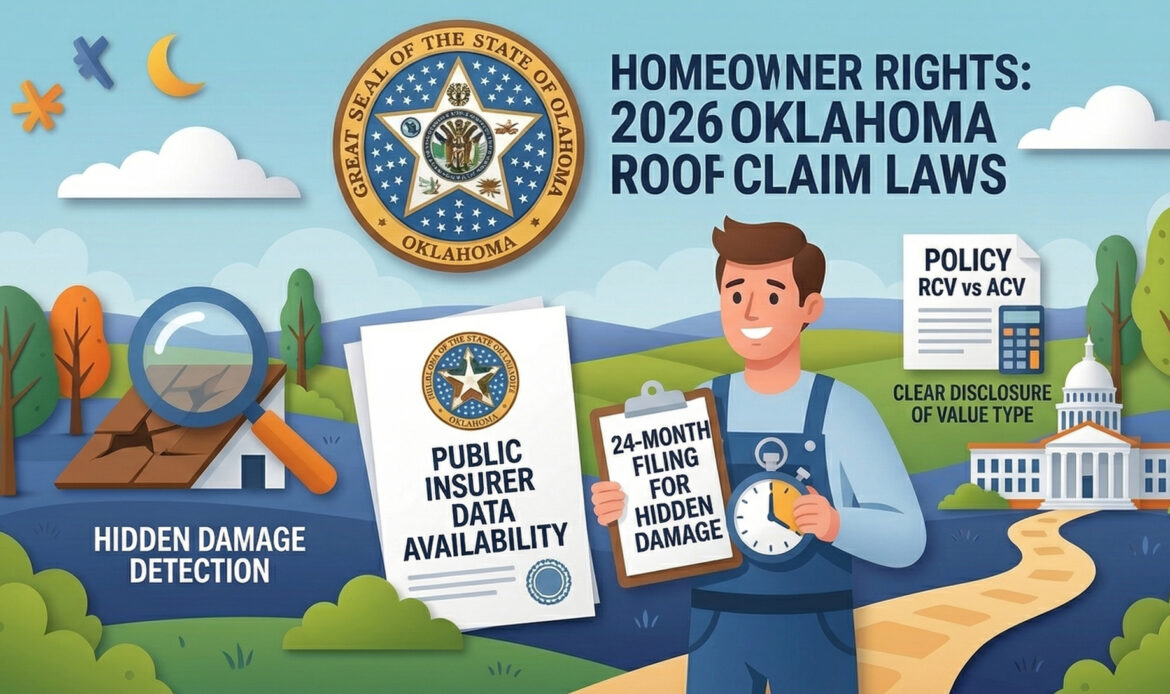
The Oklahoma roof insurance claim time limit is now clear. You have 24 months from the date of the storm event to file a claim for damage that was not immediately apparent. That matters because not all hail damage shows up as obvious holes or missing shingles. Granule loss and micro-fractures sometimes only become evident when leaks develop months later.
Do not sit on it. Document everything right after a storm, even if the roof looks fine from the ground.
Documentation carries more weight now
The roof insurance claim process in Oklahoma puts greater emphasis on documentation standards. In practice, that means:
Timestamped photos of damage from multiple angles
Written reports from licensed roofing contractors
Weather event verification (date, location, severity)
Records of any temporary repairs made to prevent further damage
Weak documentation is the number one reason good claims fail. Most people grab a few blurry phone photos and call it done.
RCV vs ACV: know which one you have
Here is the lingo you need: RCV versus ACV. Replacement Cost Value pays to replace your roof at current prices. Actual Cash Value deducts depreciation based on your roof's age and condition.
The difference is big. A 12-year-old roof might have 40% depreciation applied under an ACV policy. On a $15,000 replacement, that is $6,000 out of your pocket before you factor in the deductible. Find out which policy you have before storm season hits.
Insurers now file quarterly reports
Insurance companies must submit quarterly reports to the Oklahoma Insurance Department detailing claim volumes, denial rates, average processing times, and reasons for denials. That data becomes publicly accessible starting mid-2026.
Why does that matter to you? Patterns of bad behavior become visible. If one insurer denies roof claims at triple the industry rate, that is a tool for regulators and for anyone shopping for coverage.
What to Do When Your Roof Claim Is Denied
A denial letter feels like a punch to the gut. We have watched it happen to people with clearly legitimate claims. When that notice shows up, do not panic. Work through this order.
1. Read the denial letter against your policy
What specific reason did they cite? Pull your policy and find the section they are relying on. Sometimes denials are based on exclusions that do not apply to your situation. Sometimes they cite the Oklahoma roof insurance claim statute of limitations incorrectly.
2. Build stronger evidence
Get a second professional inspection. Hire a licensed public adjuster if the stakes are high enough. Collect weather data from NOAA or local news archives confirming the storm event. The more documented evidence you have, the harder it is for the insurer to hold the denial.
3. File a formal appeal before the deadline
Most policies require appeals within 30 to 60 days of denial. Miss that window and you may forfeit your right to challenge. Submit everything in writing. Keep copies. Send it certified mail with return receipt.
4. Use the EAGLE mediation program
Oklahoma's EAGLE program (Early Assessment and Resolution of Claim and Coverage Disputes) offers free mediation for disputed claims. A neutral third party reviews both sides and tries to broker a resolution. It is faster and cheaper than litigation.
5. File a complaint with the Oklahoma Insurance Department
If mediation does not settle your Oklahoma roof insurance claim, file a formal complaint with the state Insurance Department. They investigate insurer conduct and can impose penalties for violations. It also creates a paper trail that helps if you end up needing legal action.
Where That Leaves You Under the 2026 Oklahoma Roof Insurance Laws
The real change is not any single regulation. It is the shift toward transparency and accountability. Insurers operate under closer scrutiny now, with clearer timelines and stronger documentation requirements, and homeowners have more tools to fight unfair denials.
Here is where people lose ground: waiting and hoping. The homeowners who come out ahead start documenting before the storm hits. They photograph their roof once a year. They keep the policy declarations page somewhere they can find it. They know whether they have RCV or ACV coverage.
None of it helps if you do not act once damage shows up. File promptly. Document thoroughly. Know your deadlines. The 2026 Oklahoma roof insurance laws give you better footing, and at Trifecta Roofing and Restoration every job starts with a free inspection so you have the photos and the written report to stand on. Call (918) 471-2777.
Frequently Asked Questions
What is the Oklahoma roof insurance claim statute of limitations?
You have 24 months from the date of the covered event to file a claim for hidden or delayed damage. For damage you can already see, file promptly. Policy language can shift this slightly, so check your specific contract.
Can an insurance company deny my claim because my roof is old?
No. Age alone cannot be the sole basis for denial when legitimate storm damage exists. Insurers can factor age into depreciation on an ACV policy, but they cannot reject a valid claim just because your roof is older.
What should I do first after storm damage to my roof?
Document it immediately. Take photos and videos of all visible damage. Make temporary repairs to stop further water intrusion and keep the receipts. Get a professional inspection from a licensed roofing contractor. Then file your claim with your insurance company within 15 days.
How long does my insurance company have to respond?
Under the 2026 regulations, insurers must acknowledge your claim within 15 business days and issue a coverage decision within 45 calendar days of completing their investigation. Payment after approval must happen within 30 calendar days.
Is the EAGLE mediation program worth using for a denied claim?
Yes. EAGLE mediation is free and often resolves disputes faster than formal appeals or legal action. Success rates are reasonable, and even if mediation fails, the process creates documentation that strengthens your case for the next step. There is no downside to trying it.