Local Tulsa Roofer vs. National Companies: Key Advantages for You
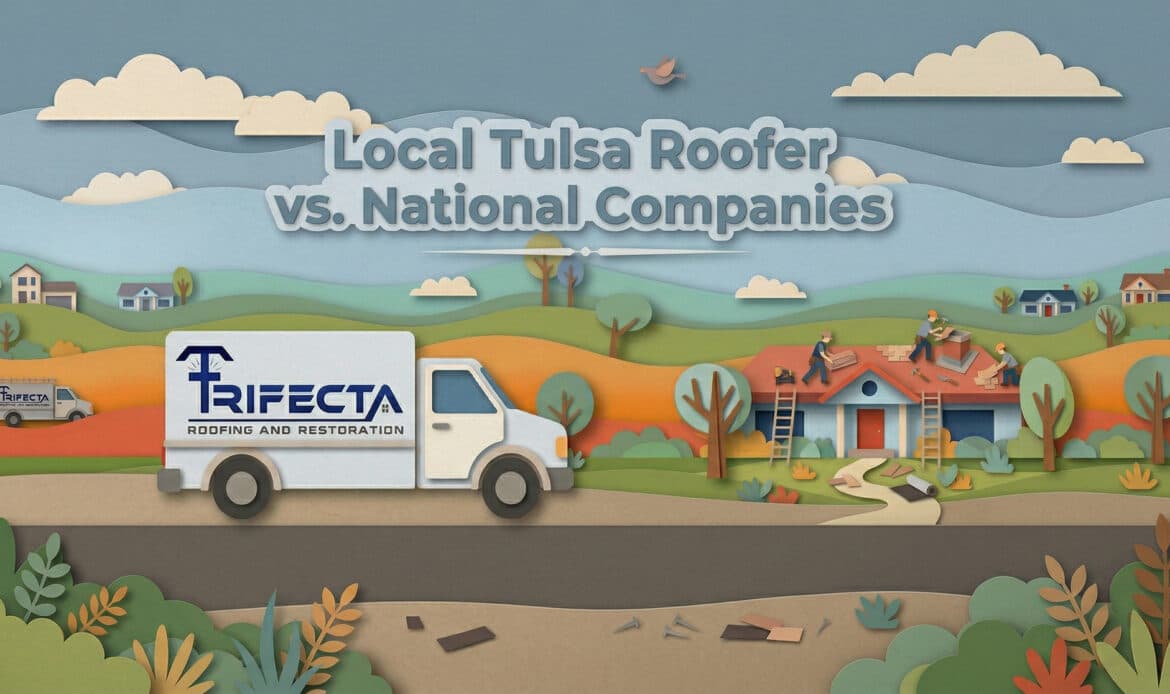
The big name on the truck does not mean better work. National roofing companies have the ad budgets and the polished websites. But a roof is not a product you order online. It is a local problem that needs a local answer. When the sky turns green over Tulsa and hail starts hammering, the company with a call center three states away is not the one knocking on your door. At Trifecta Roofing and Restoration, we work the same neighborhoods year after year, which is the whole argument for hiring a local Tulsa roofer.
What You Get With a Local Tulsa Roofer
1. Faster emergency response
When a branch punches through your shingles at 2 AM, response time is everything. A local roofer lives in the same zip code, often has crews spread across the metro, and can have someone at your house within hours. National companies route calls through centralized systems and dispatch from regional hubs, and they prioritize by volume. Your one roof against a thousand-customer queue is not a fight you win.
2. Real knowledge of Tulsa weather
We have watched national contractors recommend materials that do fine in Phoenix and then crack like cheap plastic after an Oklahoma ice storm. They do not know our spring temperature swings, or how summer heat bakes certain underlayments into brittle sheets. Local roofers have repaired the same neighborhoods after the same storms for years. That pattern recognition is institutional knowledge no training manual replaces.
3. Building codes we actually work under
Tulsa has specific requirements for wind resistance ratings, permits, and inspections, and those codes change periodically. A local contractor keeps relationships with city inspectors and stays current because the livelihood depends on it. National outfits often send project managers who have never pulled a permit in Oklahoma County. Mistakes happen. Permits get delayed. Your project drags on.
4. Accountability you can find
Reputation travels fast in a community. The most frustrating part of dealing with national chains is that accountability feels impossible. You are a ticket number. A local roofer cannot hide behind corporate bureaucracy. They live here, their kids go to school here, and they sponsor the little league team. Bad work follows them to the grocery store. That pressure produces better results.
5. Pricing without corporate overhead
National companies carry overhead that would make your head spin: corporate offices, marketing departments, regional managers, shareholders expecting returns. All of it gets baked into your quote. People search for affordable roofers near them because they already know local contractors run leaner. Lower overhead means competitive pricing without cutting corners on materials or labor.
6. Service from someone who walked your roof
Forty-five minutes on hold with a national roofing company to schedule a follow-up inspection is a real thing that happens. Forty-five minutes. With a local contractor, you text the owner. Personalized service means your questions get answered by someone who actually stood on your roof, not a script reader in a cubicle farm.
Where Local Roofers Pull Ahead of National Companies
Storm damage repair
Storm damage roof repair in Tulsa happens on compressed timelines. After a big storm, demand spikes. National companies fly crews in from out of state. Those storm chasers work fast, collect payment, and disappear. Local roofers handle the same surge and then stick around for the warranty calls and the issues that surface months later. They have skin in the game.
Emergency repairs
Emergency roof repair in Tulsa means immediate tarping, an assessment, and often same-week repairs to keep water out of your living room. Local contractors keep emergency protocols in place because they know what an exposed roof means in Oklahoma weather. National chains will put you on the schedule for next month.
Insurance claim help
An insurance claim can feel like a foreign language. Local roofers work with the same adjusters over and over and know what documentation gets a claim approved. They know which carriers are reasonable and which ones require extensive supplemental requests. That experience means faster approvals and fewer out-of-pocket surprises.
Warranty and follow-up
A warranty is only as good as the company behind it. National chains go through ownership changes, regional restructuring, and sometimes bankruptcy. Your warranty can outlive their presence in your market. A local contractor with 20 years in Tulsa will still be here in five years when that flashing starts leaking.
How to Size Up Tulsa Roofing Companies
Read the reviews properly
Reviews of Tulsa roofing companies tell stories if you read them right. Do not just count stars. Look for specifics about communication, timeline accuracy, and responsiveness after the job is done. Reviews that name the owner or describe a specific problem getting solved suggest real experience. Generic five-star reviews that all sound identical are a red flag.
Compare quotes line by line
Cheaper is not always better. Break down what each quote includes:
Material specifications and brands
Labor warranty terms
Debris removal and cleanup
Permit costs and inspection coordination
Timeline commitments
Total cost of ownership, not the sticker price. A cheap install that fails in three years costs more than a quality job that lasts fifteen.
Verify license and insurance
This step is not optional. Ask for a COI (Certificate of Insurance) before any work starts. It should show general liability and workers' compensation coverage. Call the insurance company directly to confirm the policy is current. If a worker is injured on your property and coverage is missing, that liability lands on your homeowner's policy.
Questions worth asking
Go past the basics:
Who is on-site daily managing the project?
What happens if weather delays the timeline?
How do you handle unexpected structural issues found during tear-off?
Can I speak with three homeowners whose roofs you finished in the last six months?
The answers show operational maturity. Hesitation or vague responses signal inexperience.
Making the Call on Your Tulsa Roof
Picking roof repair services in Tulsa comes down to alignment. A local Tulsa roofer brings geographic knowledge, community investment, and accountability that a national corporation cannot copy. The decision is not about company size. It is about who shows up when things go wrong and who answers the phone three years from now.
Do your homework, verify credentials, and read reviews with a critical eye. Do not let a national advertising budget convince you that bigger means better. In roofing, local expertise wins. At Trifecta Roofing and Restoration, every job starts with a free inspection. Call (918) 471-2777 and we will take a look.
Frequently Asked Questions
How much faster do local Tulsa roofers respond to emergencies than national companies?
Local roofers usually respond within hours for urgent situations, often with same-day tarping and an assessment. National companies generally schedule a first visit within three to seven business days because of centralized dispatching and regional crew availability.
What advantages do local roofers have during Oklahoma storm season?
Local contractors know Tulsa's storm patterns, work with adjusters who cover this region, and stock materials suited to our climate. They also position crews before major weather events, so they can move faster once damage happens.
Are local roofing companies really more affordable than national chains?
Generally, yes. Local companies carry lower overhead, no corporate profit margins, and smaller marketing expenses. Those savings often show up as 10-20% lower quotes for comparable work and materials.
How do I verify that a Tulsa roofing company carries proper insurance?
Ask for a Certificate of Insurance showing general liability (minimum $1 million) and workers' compensation coverage. Then call the insurance provider directly to confirm the policy is active and has not lapsed.
How do warranties differ between local and national roofing companies?
Both usually offer manufacturer warranties on materials. The difference is who honors the workmanship warranty. Local contractors stay reachable for warranty calls, while national companies may leave the market or restructure, which makes claims hard to process.