
How to Prepare Your Roof for Tulsa’s Spring Storms: Expert Tips & Checklist
Most homeowners think storm prep means checking the weather app and pulling the patio furniture inside. That stops about three steps short of protecting the most expensive part of the house. The roof takes the hit first when Tulsa's spring storms roll through, and it's the last thing most people think to look at. So here's the question we ask at Trifecta Roofing and Restoration: is your roof ready? A quick glance up from the driveway doesn't answer it.
We've walked enough neighborhoods after a storm to know the difference between the homes that come through fine and the ones that don't. It's rarely luck. It's preparation. Below is a practical inspection checklist, the maintenance that actually matters, and how to tell whether you're looking at a simple repair or a replacement conversation.
Your Pre-Season Roof Inspection Checklist
A thorough look before the first severe weather watch saves thousands in emergency repairs. Think of it like a pilot's preflight checklist. It isn't glamorous, but skipping steps creates real problems at the worst possible moment.
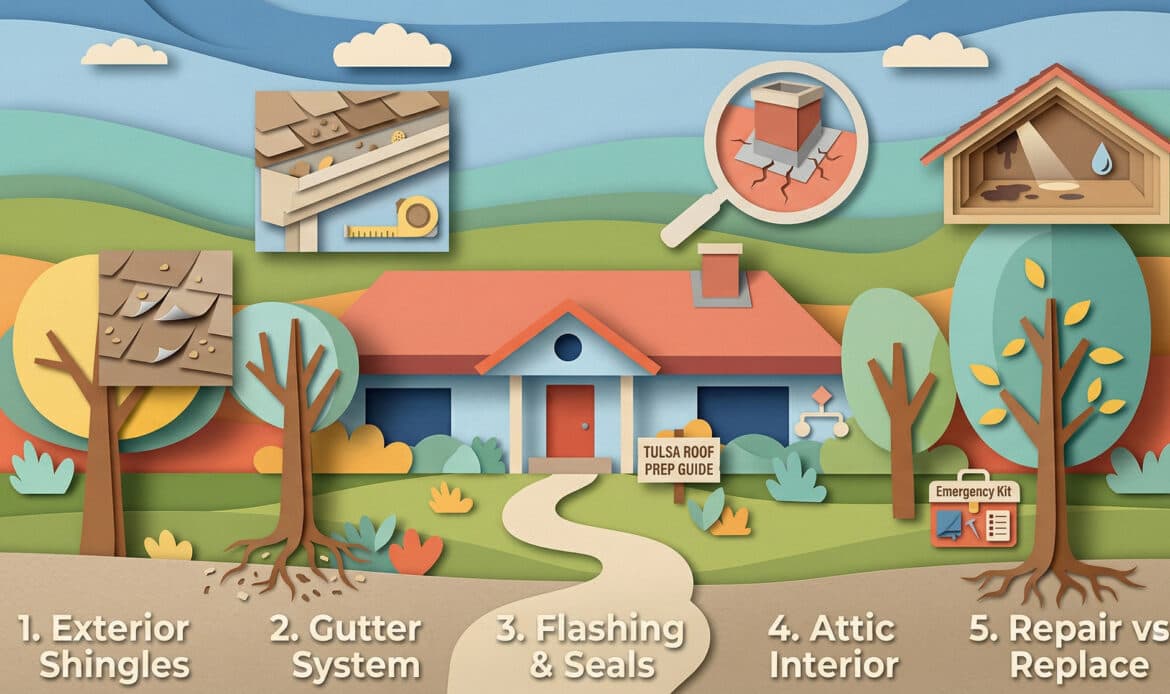
1. Exterior Shingle Assessment Points
Shingles tell you a story if you know how to read them. Look for curling edges, cracked surfaces, or granules collecting in the gutters. Those granules are the shingle's UV protection. Once they wash away, the material underneath ages fast. Missing shingles are obvious trouble. Damaged shingles are sneakier. They look fine from the ground and fail in 60 mph winds.
We rushed an inspection once and missed a section of lifting shingles. It cost a living room ceiling two weeks later. Now we break the roof into quadrants and check each one separately.
2. Gutter System Evaluation
Gutters handle the water management that keeps everything else dry. Check for:
Visible separation from the fascia board
Standing water or debris buildup
Rust spots or corrosion on metal gutters
Downspouts directing water at least four feet from the foundation
Clogged gutters in a heavy storm don't just overflow. They back water under shingles and into soffits. That's rot waiting to happen.
3. Flashing and Seal Inspection Areas
Flashing is the metal around chimneys, vents, and skylights. It seals the vulnerable spots where two surfaces meet. Look for lifted edges, rust, or cracked sealant. The flashing around a chimney takes the worst of the temperature swings.
4. Attic Interior Warning Signs
Sometimes the clearest evidence of a roof problem shows up inside. Grab a flashlight and check the attic for:
Daylight visible through the roof deck
Dark staining on rafters or insulation
Musty odors suggesting moisture intrusion
Sagging sections of decking
A dry, well ventilated attic handles storms well. A compromised one turns a small leak into a mold colony.
5. Roof Leak Detection Methods
Finding leaks before a storm finds them saves the real headaches. A few roof leak detection methods work for a DIY check. The garden hose test puts one person on the roof with a hose while another watches the attic for drips. Low-tech, but it works. Infrared thermal scanning catches moisture patterns you can't see, though that takes professional equipment.
The most reliable method is also the simplest: walk the attic after a heavy rain and look for wet spots. Effective, and often skipped.
Maintenance That Actually Holds Up in a Storm
An inspection finds problems. Maintenance fixes them before wind and hail show up. These tasks target the specific weak points Tulsa's spring weather goes after.
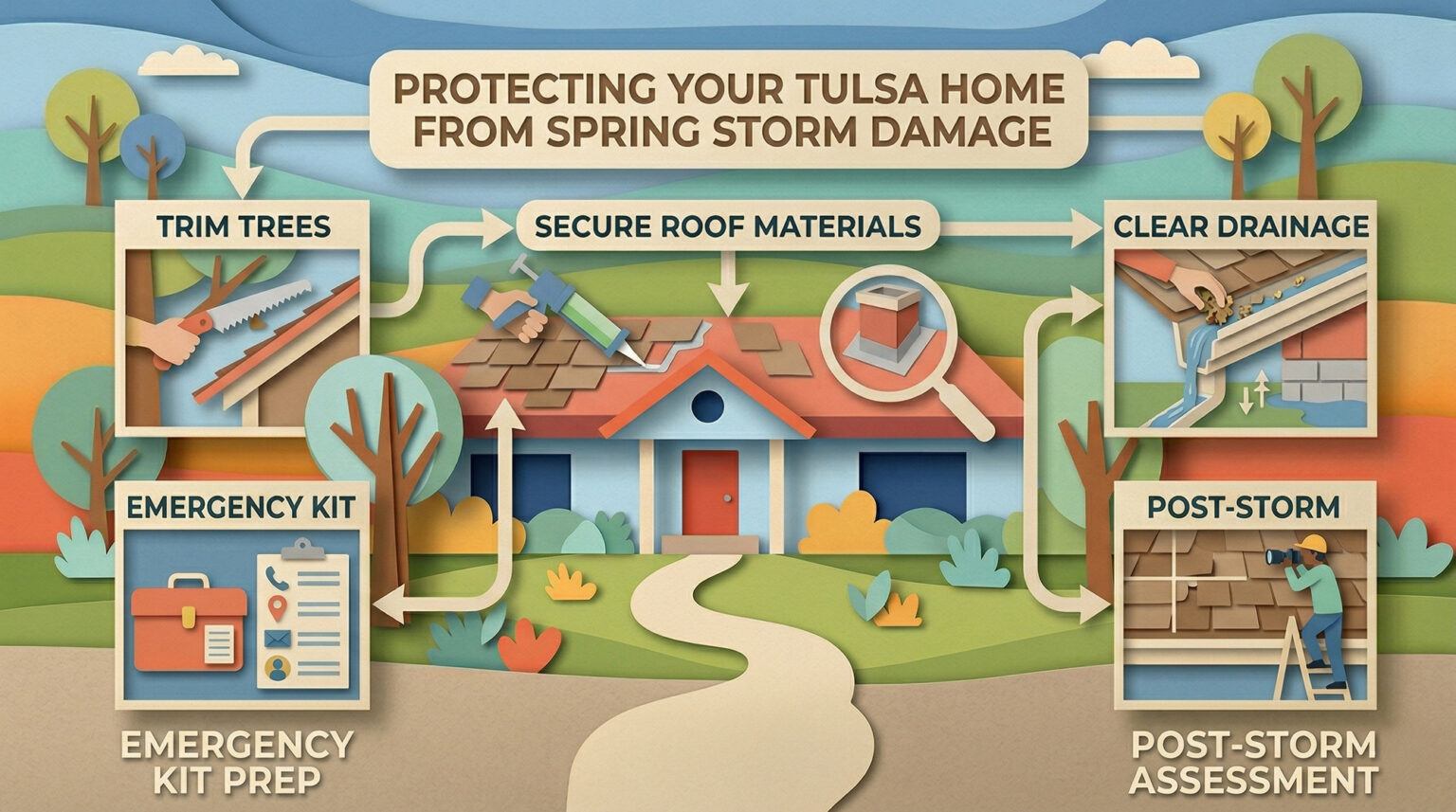
Tree Trimming and Debris Removal
Trees look great until they punch a hole in a roof. Any branch within six feet of the roof surface needs trimming. Overhanging limbs drop debris that traps moisture, and they turn into projectiles in straight-line winds. That big oak in the backyard? Its branches scrape the shingles in every storm and wear the surface protection away.
Don't forget the debris that's already there. Pine needles in valleys, leaves behind dormers, and gunk around vents build dams that hold water exactly where it shouldn't sit.
Securing Loose Materials
Loose ridge caps, lifted shingle tabs, and wobbly vent covers are entry points during a storm. A tube of roofing sealant and an afternoon handles most of them. We see homeowners spend hundreds on gutter cleaning services while ignoring the five-dollar fix of re-adhering a lifted shingle corner.
Drainage System Optimization
Water follows gravity and takes the easiest path. Your job is making sure that path leads off the roof and away from the foundation. Check that valleys channel water toward the gutters without pooling. Confirm the gutters slope toward the downspouts. Add splash blocks or extensions where a downspout discharges too close to the house.
Emergency Supply Preparation
Sometimes a storm does damage no matter how well you prepared. Keep these where you can reach them:
| Item | Purpose |
|---|---|
| Quality tarps (multiple sizes) | Temporary leak coverage |
| Roofing nails and lumber | Securing tarps |
| Caulk and roofing cement | Quick sealing |
| Contractor contact list | Fast professional response |
Repair or Replace: How to Decide
The repair versus replacement question keeps homeowners up at night. There's no single answer, but a few factors make it clearer.
Age-Based Assessment Criteria
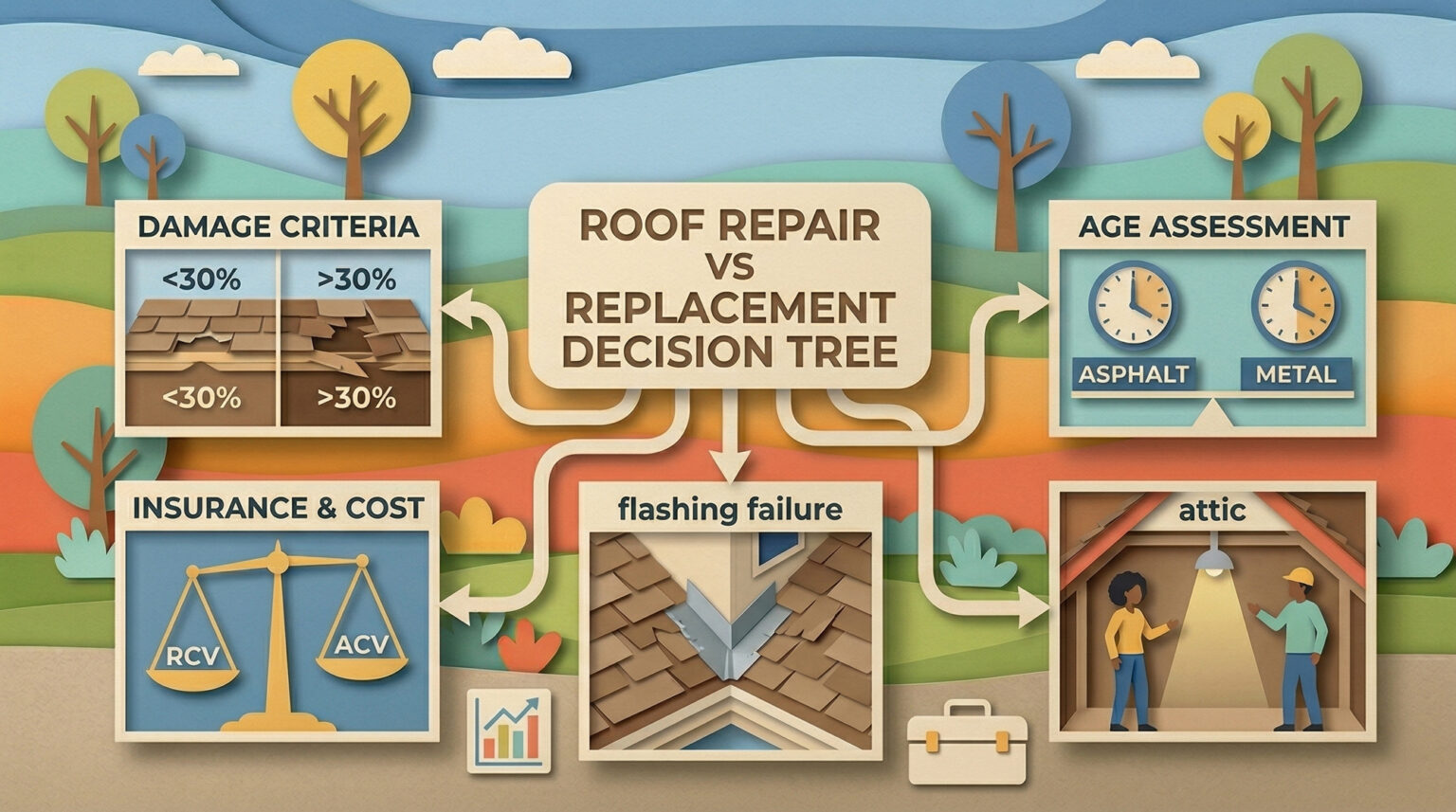
Most asphalt shingle roofs last 20-25 years in Oklahoma's climate. Metal roofs run 40-50 years. If a roof is near those numbers and shows problems in several places, fixing them one at a time is money spent on a system near the end of its life. A younger roof with damage in one spot is a repair.
Storm Damage Threshold Indicators
This is where it gets tricky. Minor hail damage on less than 30% of the surface usually calls for a repair. Damage past that threshold often means replacement is the better long-term value. The real indicator isn't just what you can see. It's whether the structure underneath is still sound.
Cost-Benefit Analysis Guidelines
A general rule: if repairs cost more than 30% of replacement value, replacement wins financially. Context still matters. Someone selling in two years sees this differently than someone staying twenty. Factor in the age of the existing roof and how many years of service each option buys per dollar.
Insurance Coverage Considerations
Policies vary a lot on storm damage. Read yours before the weather turns. Know your deductible, the depreciation schedule, and whether you carry RCV (Replacement Cost Value) or ACV (Actual Cash Value). RCV pays to replace with similar quality. ACV pays current value minus depreciation. That difference matters enormously on an insurance claim.
Document the roof's pre-storm condition with dated photos. An adjuster appreciates clear before-and-after documentation.
Protecting Your Tulsa Home Before the Sirens
Learning to prepare your roof for spring storms is more than a list of chores. It's a system that catches problems early and handles them before conditions stress-test the house. Inspect at least once a year. Act on what you find. Don't let a small repair turn into a full replacement.
The best protected homes aren't the newest ones. They're the maintained ones: clean gutters, prompt shingle repairs, trimmed trees, proper attic ventilation. Unglamorous work that pays off when the sirens start and everyone else is scrambling. If you'd rather have another set of eyes on it, every job with Trifecta Roofing and Restoration starts with a free inspection. Call (918) 471-2777 and we'll take a look.
Frequently Asked Questions
When should I schedule my pre-storm roof inspection in Tulsa?
Early March is the sweet spot. The weather usually cooperates for safe roof access and contractors haven't hit peak season yet. Late February or early March gives you time to fix anything we find before April's severe weather pattern typically ramps up.
What are the most common roof vulnerabilities during Oklahoma spring storms?
Lifted shingle edges top the list. They catch wind and create cascading failures. Compromised flashing around penetrations comes second. Third is poor attic ventilation, which creates pressure differences that lift shingles from underneath.
How much does professional roof storm preparation typically cost?
Professional inspections run $150-400 depending on roof size and complexity. Minor maintenance like resealing and securing loose materials adds $200-500. Budget roughly $500-1000 for thorough pre-storm preparation including inspection and basic repairs.
Can I do this maintenance myself or should I hire someone?
Ground-level gutter cleaning and debris removal are fine as DIY tasks. Anything that puts you on the roof introduces fall risk. For inspections, binoculars from the ground catch the obvious issues. Detailed assessment and repairs are better handled by a pro with the right safety equipment.
What emergency repairs can I do right after storm damage?
Tarping damaged areas prevents secondary water damage. Secure tarps with lumber and nails, not just weights. Photograph all damage before any temporary repair. Clear debris from drains so water doesn't pool. Hold off on permanent repairs until a professional confirms the full extent of the damage.