Ponding Water on a Flat Roof: Spotting Trouble Before Your Roof Sags
What Ponding Water Actually Is
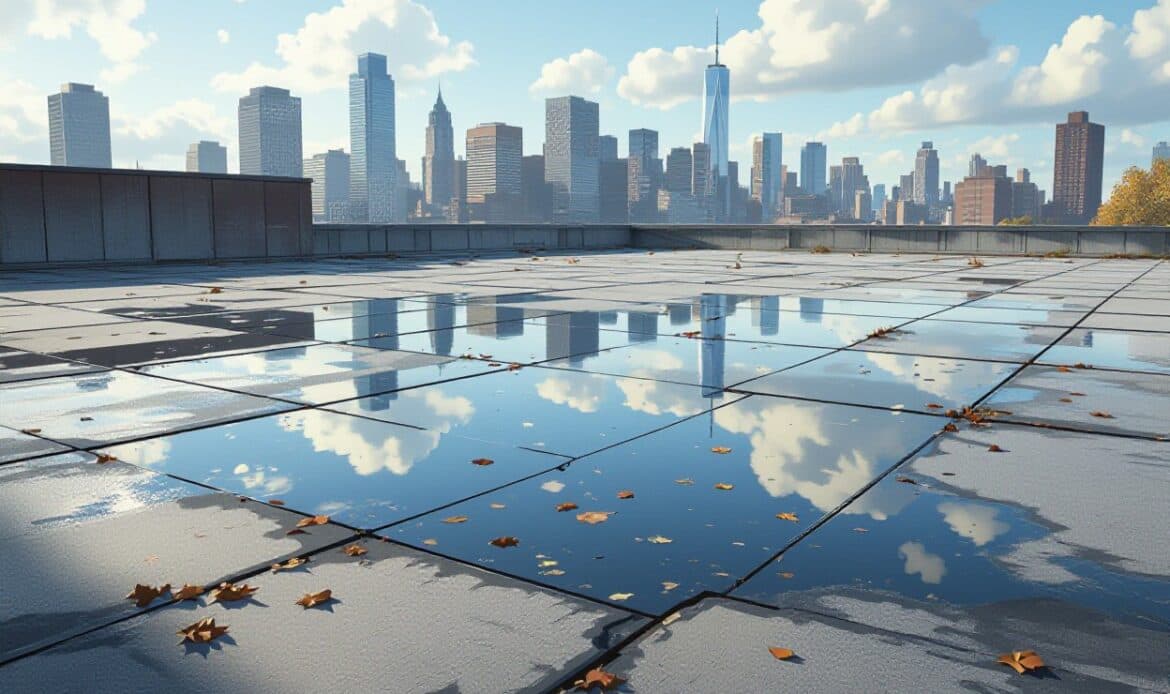
Ponding water on a flat roof turns into a structural problem faster than most owners expect. Water weighs roughly 5.2 pounds per square foot for every inch of depth, so a puddle that looks harmless can add thousands of pounds of stress to your joists. The National Roofing Contractors Association defines ponding as water still sitting 48 hours or more after the rain stops, but you do not have to wait that long to be concerned. When water sits instead of flowing to the drains, something is wrong with your roof's slope.
That is a physics problem your building was never designed to solve. Even a small pond degrades asphalt and synthetic materials. Standing water collects dirt and pollutants that eat at the surface. Discoloration is usually what you notice first, but the real issue is constant hydrostatic pressure looking for a pinhole to get through.
What Causes the Puddle
Compressed insulation is a frequent culprit. Heavy rooftop equipment like HVAC units slowly crushes the insulation board underneath, creating a bowl where water collects. Gravity cannot pull water out of a low point. Foot traffic from service technicians does the same thing on a smaller scale, compressing the substrate along repeated pathways and leaving shallow troughs that trap runoff before it reaches the scuppers.
Debris dams are the other big offender, and they are the one you can control. If nobody has been on the roof in a few months, windblown leaves, pine needles, and trash form a barrier around the drain domes. Water filters through slowly, but the rapid flow you need during a heavy Oklahoma storm is blocked. The water backs up and sits right where seams and flashings are weakest.
Why It Matters More Than It Looks
A stagnant pool acts like a magnifying glass for UV rays, intensifying the heat and speeding up the chemical breakdown of the membrane. That lens effect puts the submerged area through extreme thermal cycling, heating during the day and cooling fast at night. The material ages early and turns brittle, then cracks under pressure. Once the protective layer is gone, moisture wicks into the insulation below, ruins its R-value, and your energy bills climb.
Biological growth loves wet. Standing water is a perfect ecosystem for algae, moss, and small plants, and those roots burrow through asphalt or single-ply membranes. As the vegetation spreads it holds more water, adding dead load nobody calculated for. That starts a cycle of sagging and pooling until the deck itself is at risk of collapse.
Telling a Minor Puddle from a Real Problem
Not every bit of water on your roof is an emergency. Sometimes it is shallow moisture that evaporates by noon. Other times it is a heavy, stagnant pool actively crushing your insulation. You need to tell the two apart, because treating them the same way means either overspending or ignoring a leak that is coming.
It comes down to knowing what separates a functional roof from a failing one. Before you call a contractor, check for these:
- Standing water on a flat roof that stays for days instead of hours.
- Recurring flat roof drainage problems in specific, isolated spots.
- Structural causes of ponding water on roofs versus simple debris blockage.
- Whether the fix is maintenance or reconstruction.
- Steps that keep water accumulation from damaging the membrane.
Seeing the difference tells you how urgently to act.
| Condition / Symptom | Risk Level & Implication |
|---|---|
| Water evaporates within 24-48 hours | Low Risk. This is generally considered acceptable performance and rarely voids manufacturer warranties. |
| Water depth exceeds 1 inch | High Risk. Adds roughly 5.2 lbs of weight per square foot, stressing joists and compressing insulation. |
| Pooling near drains/scuppers | Moderate Risk. Usually indicates a blockage or a high drain installation error rather than structural sagging. |
| Pooling in center of roof span | Severe Risk. Suggests deck deflection or structural sagging, which can lead to catastrophic collapse. |
| Vegetation growing in water | Critical Risk. Roots will penetrate the membrane, causing leaks and signaling long-term neglect. |
Small Puddles vs. Serious Pools
A small puddle near a vent pipe that is less than half an inch deep is rarely an emergency. Those shallow spots usually come from slight inconsistencies in the membrane installation or minor settling. Water deeper than an inch is a different story, because water weighs roughly 5.2 pounds per square foot for every inch of depth.
The math gets bad quickly. A 20x20 foot area pooling two inches deep is over 4,000 pounds of extra load on beams that were never designed for it. That is how drainage problems become structural failures. The roof deflects, bows downward, and makes room for even more water next time.
Temporary Issues vs. Long-Term Problems
Sometimes water is up there because a storm dropped three inches of rain in an hour and the drains are catching up. That is a capacity issue, often solved by pulling wet leaves off a strainer. If the water is gone within 48 hours after the rain stops, the roof is doing its job.
Long-term problems are the ones still there after the sun comes out. Water sitting in the same spot three days after a storm usually means permanent deformation of the deck or compressed insulation. Those are the causes of ponding that damage property, rotting the membrane from the outside in while mold grows below the deck.
Ignore those pools and you get the magnifying glass effect: the sun heats the dark water, cooks the membrane underneath, and makes it brittle. The material cracks, water seeps into the insulation, the wet insulation compresses, and the depression gets deeper. Breaking that cycle early is the only way to avoid a full tear-off.
My Top Tips for Dealing with Ponding Water
A puddle on your roof does not always mean panic. Handling it is usually about consistent management, not force. A few smart moves save you a big headache later without a total tear-off. You just need to know what to look for and keep a routine.
- Clear debris weekly so drainage problems do not escalate.
- Check standing water 48 hours after rain to gauge severity.
- Catch causes like sagging or clogged drains early.
- Take steps to prevent water accumulation before winter hits.
Knowing the difference between an annoyance and a structural threat protects your investment.
Quick Fixes You Can Try Today
Do not use a heavy shovel or anything sharp. You will poke holes in the membrane and make things worse. Start with the obvious. Grab a push broom and gently sweep the water toward the drains. It sounds too simple, but a small silt barrier is often the only thing keeping gallons of water from flowing away.
Check the drain baskets too. If they are choked with leaves, water has nowhere to go. Clearing a blocked strainer is often the single fastest way to stop ponding. Be careful not to push the gunk down the pipe, or you trade a roof problem for a plumbing problem.
When to Call a Pro
There is a line between being a handy property owner and getting in over your head. If you sweep the water away and it comes right back because the deck itself has dipped, put the tools down. Structural sagging is not a DIY fix. You cannot patch over a depression caused by a rotting beam or crushed insulation. That is asking for a collapse.
If you see water stains on the ceiling directly below the puddle, stop. Internal leaks mean the barrier is already breached, and it is time for professional ponding water resolution. Sealing from the top while water is trapped in the layers just rots the roof from the inside out.
Your warranty matters here as well. Many manufacturers will void your coverage if they find unauthorized patches. We use infrared moisture scans to find water trapped beneath the surface, which the naked eye cannot catch. Paying for an expert opinion now is cheaper than a denied warranty claim later.
Step-by-Step: Inspect, Then Act
So how do you deal with these puddles before they become permanent? You need a plan that moves from inspection to action without wasting time or risking your safety. The damage cycle has to stop.
Before you head up the ladder with a bucket, know what you are looking for. This is not just about moving water. It is about finding out why it is there so you are not repeating the job every time it rains.
| Quick Troubleshooting Guide | |
|---|---|
| What You See | What It Likely Means |
| Water deeper than 1 inch | Drainage failure or structural sagging |
| Debris around the drain | Simple clog preventing flow |
| Bubbles in the membrane | Water has trapped beneath the surface |
| Puddle stays 48+ hours | Slope or design issue requiring repair |
Assessing Your Roof Situation
Eyeballing the water level instead of measuring it is a mistake a lot of building owners make. Guessing leads to expensive surprises. Grab a tape measure about 24 hours after the rain stops. Water deeper than an inch is a real issue that will not fix itself. Check the location too. Water pooling right next to a drain tells you the drain is blocked or sitting too high to work.
Check the texture of the roof under the water as well. Probe the area carefully with a blunt tool or your foot. If it feels spongy or soft, the insulation underneath is saturated, and that is a major structural risk. Document those spots now and it saves time when you explain the problem to a contractor.
Removing Standing Water Safely
A squeegee or a wet vac is much safer for the membrane than a bucket. Push the water gently toward the drains with steady strokes. Do not scrape or dig into the surface, or you will create leaks. If you use a pump on larger pools, set it on a protective board so it does not vibrate a hole through the roof material.
Watch where you step. Wet roof membranes are slippery, and walking on compromised areas is dangerous. Wear non-slip shoes and stay away from the edge unless you have proper fall protection. If the water is near a drain, clear the debris by hand first. Sometimes that alone makes a massive puddle disappear.
When the drains are completely overwhelmed, you may need emergency channeling. Flexible tubing can siphon water over the parapet wall, and pool noodles make temporary dams that guide water toward a working scupper. That is not a permanent fix, but it buys time and takes load off the structure until a roofer gets there.
What Makes Ponding Worse
Water does not decide to stay on your roof for no reason. It is usually a mix of building conditions and outside forces working against your drainage. Finding the specific culprit is half the battle.
Here is what usually tips the scale from dry to dangerous:
- Drainage problems caused by debris buildup in scuppers
- HVAC units vibrating and creating low spots over time
- Compressed insulation that changes the roof's pitch
- Standing water that traces back to poor original installation
Any one of these turns a drizzle into a real headache.
Structural Elements That Matter
Over years of service, the joists and decking that hold up your roof settle or deflect under load, creating subtle valleys you will never see from the ground. A wood deck can warp from moisture absorption. A steel deck can rust and lose rigidity. Either one feeds the drainage problem.
Heavy equipment complicates it. Rooftop HVAC units often weigh thousands of pounds, and if they were not properly supported at installation, they slowly depress the roof surface around them. You end up with isolated spots of standing water that will not drain, because gravity is working against you.
Weather's Role
Oklahoma weather is hard on roofing materials. In peak summer, UV radiation dries the oils out of asphalt-based roofs and shrinks single-ply membranes, pulling them away from flashings and opening pockets where water gathers. Then a thunderstorm dumps inches of rain in minutes and overwhelms whatever drainage you have.
The heating and cooling cycle does the real damage. Thermal shock expands the membrane during the day and contracts it fast at night, stressing seams until they separate. Once the seams open, water gets into the insulation, compresses it, and permanently changes the slope you need to keep water moving.
Wind matters too. High winds lift membrane edges or scour away protective gravel surfacing, leaving the layers underneath exposed. Combine wind damage with freeze-thaw and the aging accelerates far faster than you would expect.
Pros and Cons of Different Fixes
Roof repairs run from $400 for a simple patch to over $12,000 for structural modifications, so it pays to weigh your options. You can choose a quick adjustment or a major renovation. Pick wrong and you mask the symptom while the deck underneath keeps rotting. Seeing the options side by side helps, because the cheapest fix up front often costs more in maintenance.
Every roof is different, but the physics of water stay the same. Here is how the common solutions compare.
| The Solution & The Upside | The Downside (Cons) |
|---|---|
| Roof Coating (Silicone/Acrylic) Creates a continuous, waterproof barrier that extends membrane life and resists UV damage. | Does not fix the slope or low spots, meaning water will still pond on top of the new coating and potentially degrade it. |
| Roof Drains Moves large volumes of water quickly from the center of the roof where pooling is deepest. | Requires cutting through the roof deck and running internal plumbing, which is invasive and expensive. |
| Tapered Insulation The most effective permanent fix that physically changes the roof angle to force water to drains. | High installation cost since it usually requires removing the existing roof system down to the deck. |
| Automatic Roof Pumps An inexpensive, immediate way to mechanically suck water off the roof without construction. | Requires a power source, needs frequent maintenance, and can freeze or fail during winter storms. |
| Scuppers (Wall Outlets) Passive drainage that uses gravity to let water flow out through the parapet walls. | Only works if the water is near the edge; useless for center-roof ponding unless you re-slope the whole surface. |
| Roof Crickets Triangular structures built behind units or chimneys to divert water around obstacles. | Adds weight to the roof and requires skilled installation to ensure water does not just pool somewhere else. |
| Adding New Gutters Improves water collection at the edges and protects the building foundation. | Does nothing for water trapped in the middle of the roof due to sagging decking. |
| Full Roof Replacement Guaranteed to fix both the waterproofing and the slope issues simultaneously. | The most expensive option and disruptive to building operations or daily life during the project. |
Temporary vs. Permanent Solutions
A bucket of roof patch might stop a leak today, but it will not change the physics of a depression holding 500 pounds of water. Pumps and sweeping are life support for a dying roof. They buy time and demand constant attention. If you are out of town or forget to check after a heavy storm, that water sits and does damage.
Permanent fixes like crickets or tapered insulation change the roof's geometry so gravity does the work. Regrading costs more up front, but it removes human error and stops the deterioration cycle. Leaning on temporary measures too long usually ends in structural rot that costs three times what the original drainage fix would have.
DIY or Hire Someone
Falls from roofs account for over one-third of all construction fatalities, so this is not a low-risk weekend hobby. Clearing leaves from a drain, you can probably handle. Altering drainage slopes or cutting into the membrane for a new drain is different, and a single mistake can void your warranty or cause a major interior leak.
Most flat roofing materials need specific temperatures and precise application. We carry equipment that finds moisture trapped under the membrane, which you cannot see but which will rot your decking. If the job is more than cleaning or surface patching, the labor you save is rarely worth the risk of injury or bad waterproofing.
Adjusters often deny claims when they find unpermitted DIY work on structural elements. Hiring a pro buys you their liability insurance and the guarantee that water goes where it should. Unless you have professional roofing experience, leave structural modifications and drain installations alone so a $500 problem does not become a $15,000 disaster.
Why Regular Maintenance Pays Off
Avoiding Bigger Problems Down the Line
A puddle is a slow-motion wrecking ball on top of your building. Standing water adds weight your joists were never meant to hold indefinitely, about 5 pounds per inch of depth for every square foot. A 20x20 foot pond just one inch deep adds nearly a ton of load to the framework. Ignore it and the sagging spot deepens, then holds even more water next time.
Weight is only part of it. Moisture is the enemy of roofing compounds. Water baking in the sun works like a magnifying glass for UV rays and breaks the chemical bonds in the membrane. Materials break down much faster there than on the dry parts of the roof. Weak spots turn into cracks, and water gets into the insulation layers below.
Saving Your Wallet from Expensive Repairs
Ignoring a clogged drain is like ignoring a check engine light. Waiting costs more. Clearing debris takes an hour of your time or a small service fee. Letting water sit leads to structural damage across the property. Once water breaches the membrane you are not paying for a patch, you are ripping out saturated insulation and replacing rotted decking.
The cost does not stop at the roofline. If water gets inside, you risk mold growth that can shut down operations or drive tenants out. Remediation is expensive and often not fully covered by insurance if they decide it came from negligence. A dry roof protects your bottom line.
Think about the lifespan too. A well-maintained flat roof should last 20 years or more, but chronic ponding can cut that in half. Nobody wants to pay for a replacement a decade early because of poor drainage. Spending a little now on drainage keeps your capital where it belongs.
If ponding water on a flat roof has you concerned, do not wait for it to get worse. Trifecta Roofing and Restoration will take a look, and every job starts with a free inspection. We serve Tulsa, Broken Arrow, Bixby, and the surrounding communities with honest, reliable work. Request Your Free Estimate Now.
FAQ
How do I know if the water on my roof is actually a problem?
If a puddle is still there two days after the rain stops, you have a ponding problem. Water is heavy and roofs are not swimming pools. A flat roof is supposed to have a slight slope that moves water along. Water sitting for 48 hours or more means gravity is losing to a dip or a clog. That water is slowly damaging your roofing materials and adding weight the structure was not built to hold.
Can I just sweep the water off myself?
You can use a push broom or a squeegee to move it. Getting that weight off the roof stops damage. Just do not use anything sharp, like a metal shovel, that can slice the membrane and create a leak. Gentle strokes toward the drains are enough. Wet roofs are slippery, so be careful. A wet vac works well if the water is deep. If the structure feels shaky or spongy underfoot, get down and call a professional.
Why is this happening to my roof in the first place?
Usually bad design or debris. Sometimes the original builders never got the 1/4 inch slope right, or the building settled over the years and created a new low spot. Other times the drains are clogged and acting like a stopper in a bathtub. Leaves and muck build up around the scuppers or internal drains and back everything up. Check those drains before you assume the roof is broken.
Is this going to wreck my building?
Leaving water up there can cause structural problems. It starts with the roofing material breaking down faster than the dry areas and turning brittle. Once that barrier fails, moisture reaches the insulation and decking, and mold loves damp and dark. The weight is the scary part. A large pool puts heavy stress on beams that can eventually bow or crack. The roof sags more, holds more water, and sags further. It is a big deal.
Do I need a whole new roof to fix this?
Not unless the damage is widespread. Drainage can often be fixed without tearing everything off. Tapered insulation builds a ramp under the roof surface to guide water to the drains. Adding an extra drain or a scupper at a stubborn low spot also works. A full replacement only comes into play when the deck is rotting or the membrane is too far gone to patch. A good roofer can usually target just the problem areas and save you money.