Denied! How to Fight Back When Your Roof Insurance Claim is Denied
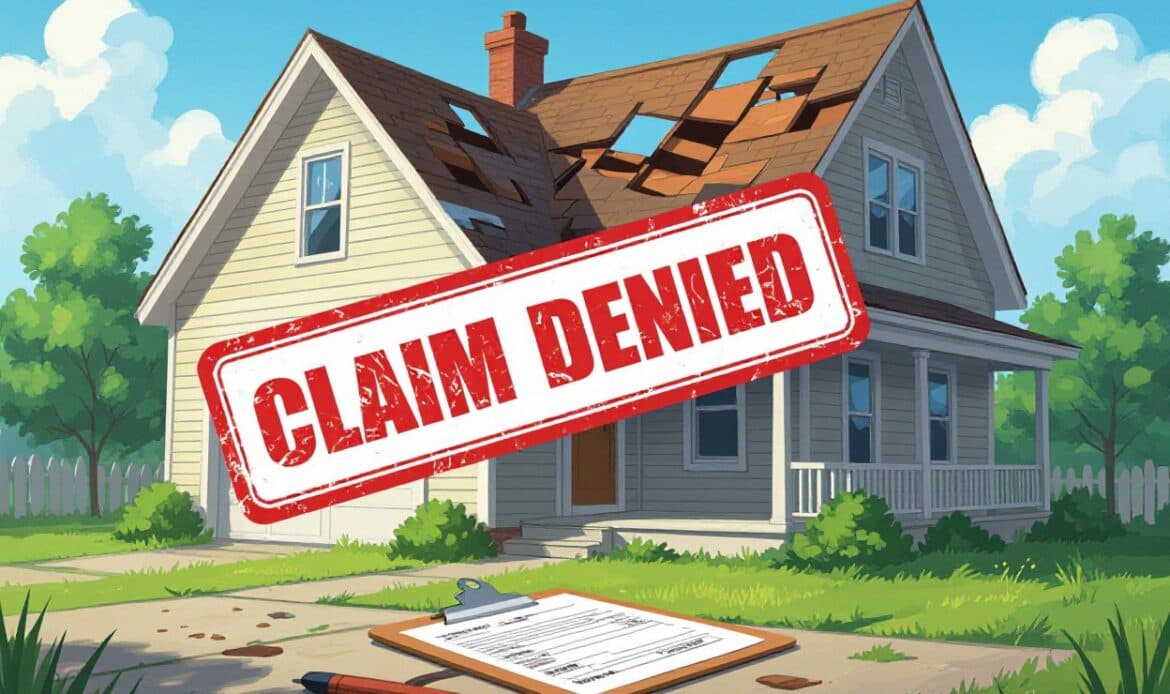
When your roof insurance claim is denied, that letter is not the end of the story. You pay premiums for protection, and a denial feels like a slap. But adjusters make mistakes, and a 'no' is not the final word. At Trifecta Roofing and Restoration we see denials overturned when homeowners know what to do next. You have options. Fighting back works when you take the right steps.
What Kinds of Roof Claims Get Denied?
Most homeowners assume they are covered until a storm hits. They file, then get a letter saying the damage came from age, not wind. Even with an obvious leak, insurance companies have plenty of reasons to say no.
For them, it is a business decision.
The biggest fight is wear and tear versus sudden damage. Most policies cover sudden accidental damage: a tree limb through the deck, wind peeling back flashing. If your roof has some years on it, the adjuster can argue the materials simply gave out.
Common Reasons for Rejection
They might say the shingles were already curling or cracking before the storm. Proving the storm caused the final damage takes solid evidence.
Maintenance is the other angle. If the carrier believes you neglected the roof, like letting moss grow or ignoring a small leak, they can deny for negligence. You have a duty to maintain the property. If you do not, they will not pay for what follows.
Here are the scenarios where claims get denied most often:
- Cosmetic damage that does not affect how the roof functions, common with metal roofs and hail dents.
- Damage from manufacturing defects or bad installation, which is a warranty issue.
- Filing too late and missing the policy's deadline.
- Damage from perils listed under your policy exclusions, such as mold, pests, or earth movement.
Check how they categorized the damage, too. An adjuster can misread the policy language or miss the link between the storm and the damage. That is why a policy language analysis matters. It tells you whether they are applying a coverage gap that is not actually there.
Here is a breakdown of the frequent denial categories:
| Denial Category | Why It Happens |
|---|---|
| Wear and Tear | The adjuster claims the roof failed naturally, not from a specific event. |
| Cosmetic Damage | The roof has dents or dings but still functions, so the insurer refuses to pay for replacement. |
| Negligence | Evidence suggests the homeowner did not perform routine maintenance, which led to the damage. |
| Late Filing | The homeowner waited too long to report the damage, violating the policy's timeframe. |
| Policy Exclusions | The specific cause of damage is explicitly listed as not covered in the contract. |
Knowing the category tells you how to answer. If they denied you for wear and tear, you have to show the roof was in good shape before the storm.
The wording of your denial sets your next move.
Why Insurers Reject Roof Claims
Blaming the age of your roof is the go-to tactic. You can have clear storm impact, but if an adjuster can argue your shingles were failing from normal wear and tear or lack of maintenance, they can deny the payout. A strong gust hits old and new roofs alike, yet the carrier keeps pointing at age. They will call it a policy exclusion instead of sudden accidental damage and push the cost back on you.
The Fine Print Trap
Interpretation matters just as much. An adjuster might misread coverage terms or question the timing of the damage to suggest it happened outside your coverage window. That technicality saves them money. If they cannot blame age, they will argue the damage, say cosmetic hail hits, is not covered, betting you do not have the documentation to prove otherwise.
How to File Your Appeal, Step by Step
Here is how to appeal a denied roof insurance claim. You are building a defense, and it has to be specific. Prove the carrier is wrong with details that directly counter their decision. When they cite "improper maintenance," answer with an independent roofer's technical report. A vague complaint goes nowhere. A fact-based rebuttal gets read.
Open your letter with your policy number, claim number, and the date on the denial notice. Then take their arguments one at a time. If they said the damage is old, attach a weather report from the date of loss. Meeting the submission deadline is critical, so mail the appeal before the window closes. Stay on them.
The Appeal Action Plan
| The Header Essentials | Begin your letter by clearly referencing your policy number, claim number, and the date of the denial notice to ensure the file is easily located. |
| Point-by-Point Rebuttal | Address each reason from the rejection letter individually, using your contractor's expert opinion to contradict the adjuster's findings. |
| Evidence Attachment | Include high-resolution photos, weather reports, and written estimates that create a chronological timeline of the damage. |
| Active Follow-Up | Regularly communicate with your assigned appeals specialist by phone or email to keep your case active and track its progress. |
The Factors That Decide Your Claim
Carriers keep tightening their guidelines on storm damage. The real hurdle is usually not the damage, it is the story the insurer builds around the age of your roof. They lean on "wear and tear" for any roof over a decade old, which puts the burden of proof on you. If you have no maintenance records for small repairs or inspections, they will argue you let the property go before the storm ever arrived.
Know the variables an adjuster is reviewing:
- The specific policy exclusions in your contract, especially cosmetic versus functional damage.
- Whether the insurance adjuster has roofing experience or only general claims knowledge.
- The quality and timestamps of your documentation compared to their initial report.
Sometimes you hit a wall that facts will not move. If the denial looks like bad faith, you may need legal help. Legal pressure is occasionally the only thing that gets a response. Run through these factors and you will spot the weak points in their argument.
Ways to Improve Your Odds on Appeal
Winning an appeal comes down to organization. Keep a log of every contact with your insurer: dates, times, the name of the adjuster you spoke with, and a summary of what was said. Without a paper trail, proving stalling or negligence later is nearly impossible.
You cannot resend the same paperwork and expect a different answer. Bring new evidence that makes another denial hard to justify. Go beyond the first roof inspection report. These strategies strengthen your position:
- Use Local Weather Data: Pull historical NOAA reports for your zip code to show storm severity on the date of loss. That counters the "wear and tear" argument.
- Use the "Neighbor Strategy": If neighbors with roofs of a similar age were approved by the same insurer, point to that precedent and the inconsistency it shows.
- Submit Maintenance Records: Dig up receipts for gutter cleaning or minor repairs to show you are a responsible homeowner. This answers the "neglect" defense used in a denied roofing claim.
- Get High-Angle Imagery: Drone footage or satellite imagery can show the "before" state of your roof and prove the damage is recent.
Knowing which evidence prompts a reconsideration is the difference between paying out of pocket and getting full approval.
Handle It Yourself or Hire Help?
You may want to run the appeal yourself and skip paying anyone. Then you read the denial letter and hit a phrase like "concurrent causation."
Deciding whether to fight the carrier alone or hire a public adjuster or attorney is a real financial call.
Handle it yourself and you keep 100% of any payout. On smaller claims under $10,000, hiring a professional often does not pencil out because their fees could consume the funds needed for repairs.
There is a risk on the other side.
Policies are complicated. Miss a filing deadline or say something that lands you under a "neglect" exclusion and you can sink your own claim.
Professionals know the system. A public adjuster typically charges a contingency fee between 10% and 20% of the total settlement. They get paid when you do. Attorneys work the same way but may take more, from 33% to 40%.
So ask yourself: is it better to keep 100% of a denied claim, which is zero, or 80% of a fully covered roof replacement?
Comparison: DIY Appeal vs. Hiring Representation
| Feature | Handling It Yourself (DIY) |
|---|---|
| Cost to You | Free (excluding your time and stress) |
| Settlement Retention | You keep 100% of the final payout |
| Time Commitment | Extremely High: expect hours of calls and paperwork |
| Technical Knowledge | Limited to your own research and contractor input |
| Negotiation Strength | Low: carriers know you are not a legal expert |
| Speed of Resolution | Often slower due to learning and stalling tactics |
| Risk of Errors | High: easy to miss deadlines or say the wrong thing |
| Stress Level | High: you manage every conflict personally |
| Best For | Small, straightforward claims under $10k |
| Outcome Probability | Lower chance of overturning a hard denial |
| --- | --- |
| Cost to You | 10% – 40% of the settlement amount |
| Settlement Retention | You keep the remainder after fees are paid |
| Time Commitment | Low: they handle the calls, emails, and arguments |
| Technical Knowledge | Expert level regarding policy law and construction |
| Negotiation Strength | High: carriers take licensed professionals more seriously |
| Speed of Resolution | Generally faster, as they know how to apply pressure |
| Risk of Errors | Low: they carry liability insurance for mistakes |
| Stress Level | Low: you are removed from the daily conflict |
| Best For | Large losses, total replacements, or complex denials |
| Outcome Probability | Significantly higher payouts on average |
Making the Call for Your Situation
If your contractor will provide documentation at no cost, try the appeal yourself first. There is no harm in a well-written letter and a fresh set of photos.
When the carrier starts leaning on complex policy exclusions, stop.
Do not let pride cost you a payout.
That is the point to bring in a professional and level the field. They know which state statutes force the insurer to respond, and they can spot bad faith practices. If you need professional help for a denied roof insurance claim in Broken Arrow, a local expert knows what homeowners are up against with carriers here. Sometimes a letter from a law firm is all it takes for an adjuster to "find" coverage they missed.
Summing Up
Staring at a rejection letter while the next storm builds is a rough place to be. Do not give up. Carriers count on homeowners walking away because the process looks complicated. That is how valid claims go unpaid.
Treat it as a negotiation, not a verdict.
With the right evidence and a determined contractor behind you, a "no" can become a "yes." You pay those premiums for a reason. Make some noise and hold them to the agreement. Nobody cares about your home the way you do.
You do not have to fight the insurance company alone. If your roof insurance claim is denied, contact Trifecta Roofing for a free, no-obligation inspection and quote. Get your free estimate today.
FAQ
I just got a denial letter for my roof claim. What do I do first?
Do not toss the rejection notice. That letter tells you how to fight back. Read the exact reason they gave, usually "wear and tear" or "lack of maintenance," and compare it to your policy. Then call a reputable local roofer for an inspection.
They can tell you whether the adjuster missed legitimate storm damage that should be covered. You are gathering evidence for your counter-argument.
They say the damage is just "wear and tear." Is that final?
The "wear and tear" excuse gets used constantly. A roof that is not new can still be storm damaged. Do not let anyone convince you that age disqualifies you from coverage. You have to show a specific event caused the damage.
If a storm came through last week and you have missing or dented shingles, that is an event, not aging. A structural engineer or a skilled contractor may be needed to separate an old roof from a storm-damaged one.
Should I hire a public adjuster for a denied claim?
It depends on the size and complexity of the claim. A public adjuster works for you, not the carrier, and knows the language that gets claims approved. They also take a percentage of your payout.
On a claim worth a few thousand dollars, that may not be worth it. On a full roof replacement where the insurance company has gone quiet, a professional can change the outcome.
Is there a time limit on appealing a denied roof claim?
Yes, and it varies by state and policy. It is usually one to two years from the date of damage. Do not wait until the last minute. The longer you sit on it, the harder it is to tie the damage to a single storm. Roofs degrade on their own. Wait six months to appeal and the adjuster can argue the damage got worse from neglect, handing them another reason to deny.
Can I ask for a different adjuster to take a second look?
Yes, and you should if the first adjuster seemed inexperienced or rushed the inspection. Initial adjusters make mistakes. Have your contractor on site for the second visit.
It is much harder to overlook damage when a knowledgeable roofer is pointing straight at hail impacts or wind lift. That is how you get an honest assessment.