


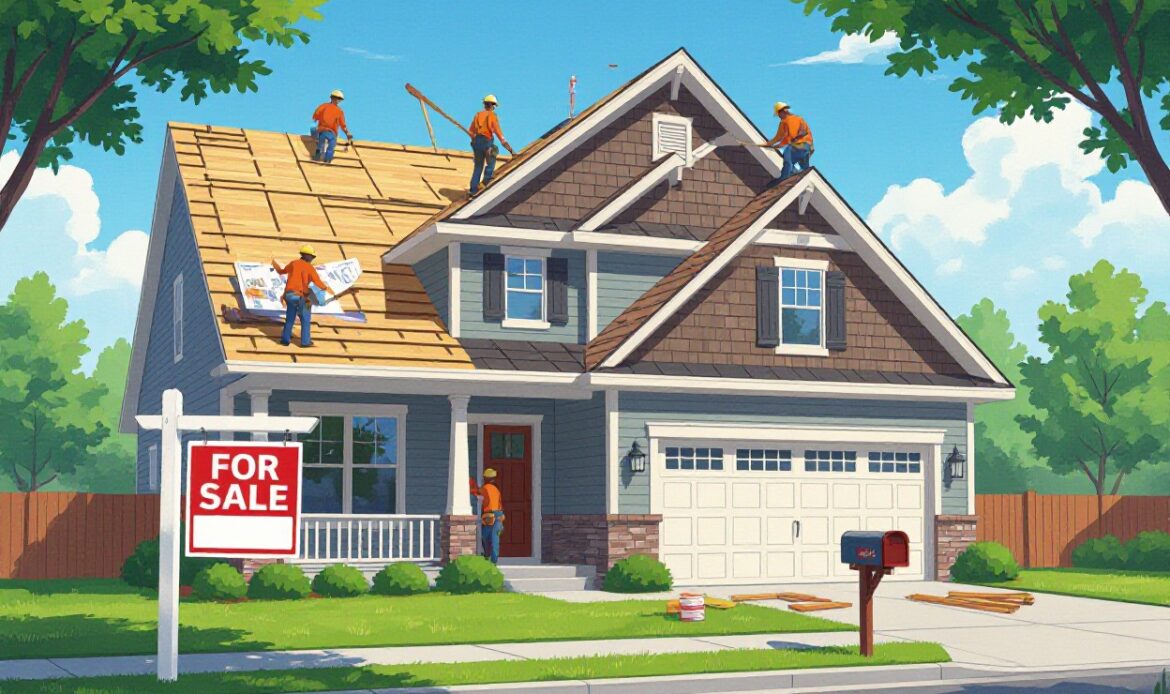
Many homeowners wonder if a roof replacement will raise insurance premiums, and the answer is not always simple. Installing impact-resistant materials can drop your premiums by up to 35% because insurers want to reduce their risk. However, if you upgrade to luxury materials like slate or tile, your home’s replacement value increases. Your rates might climb to cover that new worth. You need to check if your material choice qualifies for weather-resistance discounts before signing a contract.
What’s the Deal with Insurance Premiums and Roof Replacements?
How Do Insurance Companies Assess Risk?
Insurance companies use actuarial data to predict how likely your home is to suffer damage. They compare your property to thousands of similar homes in the Tulsa area. An older roof, or one made of materials that fail in Oklahoma storms, is a higher liability. They calculate the odds of a catastrophic failure. When they look at your property, they determine if your roof can handle wind or hail without a total payout. By analyzing the structural integrity and resistance ratings of your roofing system, they assign a risk score. A higher risk score means you will pay more each month.
What Roof Factors Influence Your Premium?
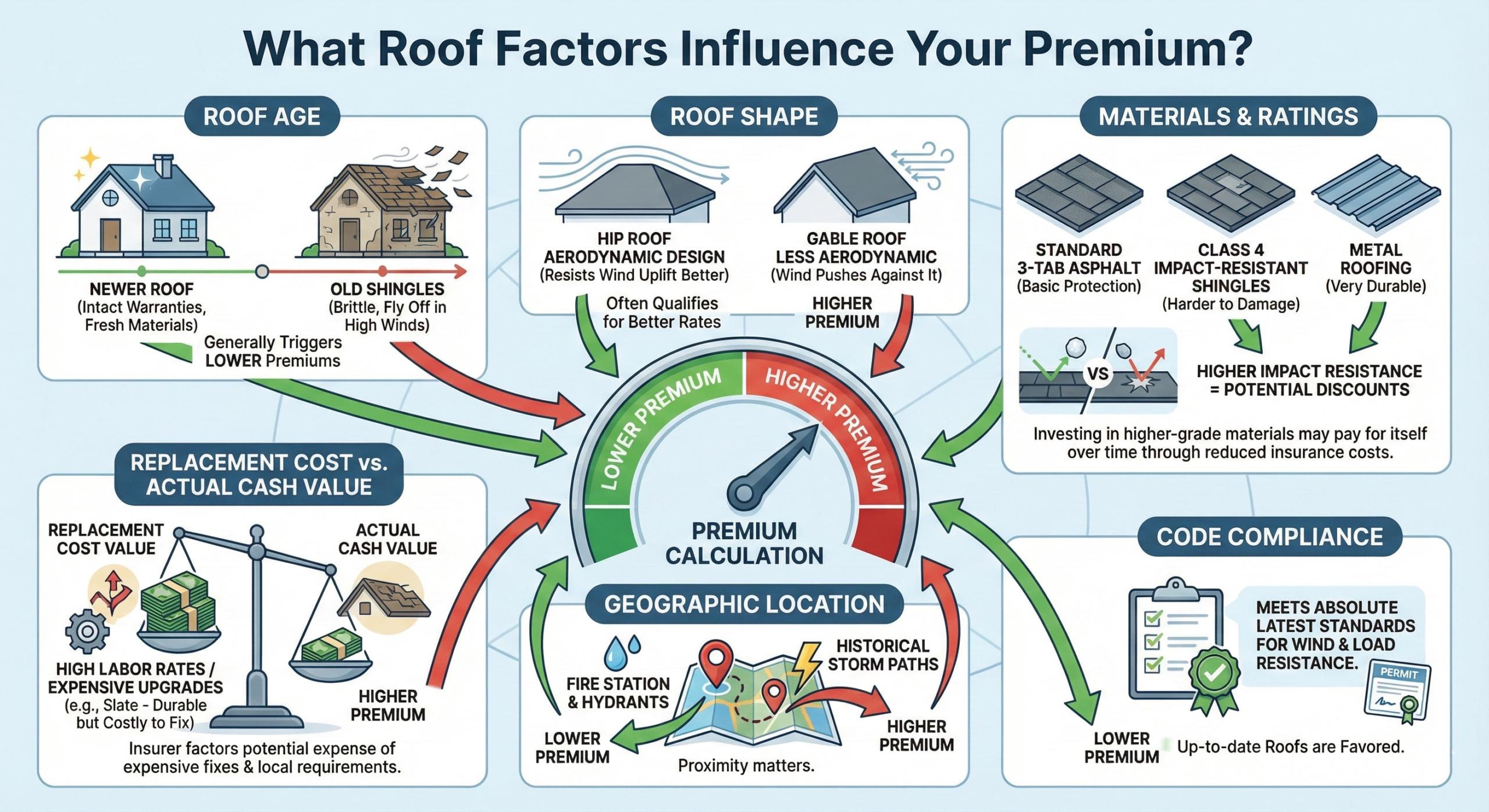
Your roof’s age is the first factor an underwriter checks. Old shingles are brittle and can fly off in high winds. The shape of your roof also matters. A hip roof, which slopes on all four sides, is more aerodynamic than a gable roof and often qualifies for better rates. Wind cannot easily push against it.
Materials are another key variable. Standard 3-tab asphalt shingles provide basic protection. Upgrading to Class 4 impact-resistant shingles or metal roofing changes the calculation. These materials are harder to damage, meaning you are less likely to file a claim for minor hail.
- Roof Age: Newer roofs generally trigger lower premiums due to intact warranties and fresh materials.
- Roof Shape: Aerodynamic designs like hip roofs resist wind uplift better than gable ends.
- Material Ratings: Higher impact resistance ratings directly correlate to potential discounts.
Assume that investing in higher-grade materials will pay for itself over time through reduced insurance costs.
You must also consider the replacement cost value versus the actual cash value of your new system. If you live in an area with high labor rates or where local building codes require expensive upgrades, the insurer must factor that potential expense into your premium. While a slate roof is very durable, it is also very expensive to fix if a tree falls on it. This can complicate how the premium is calculated.
- Geographic Location: Proximity to fire stations, hydrants, and historical storm paths.
- Replacement Cost: The current market price to replace the specific materials you chose.
- Code Compliance: Whether your roof meets the absolute latest standards for wind and load resistance.
Assume that your insurance agent will not know about these positive changes unless you explicitly provide the documentation.
Can a New Roof Actually Lower Your Insurance Costs?
Most homeowners assume that home improvements drain their savings account. Replacing an aging roof is one of the few upgrades that can put money back in your pocket over time. Insurers bet against disasters, so they approve of anything that lowers the odds of a payout. A sturdy, modern system is less of a liability than worn-out shingles.
From their perspective, old roofs are a major risk for water damage claims. A brand-new installation is solid protection against the elements. Because you significantly lower the risk of leaks and structural failure, many providers are willing to pass those savings on to you as lower premiums.
The Surprising Discounts You Might Get
Your annual rate can drop significantly. Some carriers offer premium reductions from 5% up to 35%, depending on your policy. These discounts are tied to specific upgrades that reduce weather risks, like installing impact-resistant shingles that withstand hail.
You usually have to ask for the discount. You will need to prove your new roof meets the standards, often by submitting an installation certificate or an impact-resistance rating form from your contractor. Being proactive is the key to unlocking these savings. Submit your paperwork as soon as the project is complete.
What Materials Could Save You Money?
For the biggest discount, standard asphalt shingles may not be enough. You should consider upgrading to Class 4 impact-resistant options. These durable shingles are designed to withstand severe weather, and insurers reward this durability. In fact, you can find Oklahoma impact-resistant shingles insurance discounts up to 25% from various carriers. Metal roofing is another great option for savings, often earning substantial premium breaks because it is fire-resistant and holds up against wind damage.
These premium materials cost more upfront, but the long-term math can work in your favor when you factor in years of reduced insurance bills. Before you sign a contract, call your agent and run the numbers on different material types. You might find that spending a little extra on hail-resistant materials pays for itself through lower premiums faster than you expect.
It is not just about the top layer. Features like secondary water barriers or wind-mitigation attachments can also trigger discounts, even with traditional shingle types. Upgrading your roof deck attachment or using superior underlayment strengthens the entire system against severe storms, which is what insurance adjusters want to see.
When Could Your Premium Go Up After a Roof Replacement?
It feels strange to spend thousands on a new roof only to see your insurance bill climb. This happens more often than you might think. The main reason is an increase in your home’s replacement cost value. If your old roof was worth $10,000 and you install a system worth $25,000, your insurance company has a more expensive asset to cover. So if you ask, how much does home insurance go up after a new roof, the answer depends on this new value. They are not penalizing you for the upgrade; they are recalculating the financial risk.
When you improve your home’s condition, your dwelling coverage limit often needs to be raised to match the new appraisal value. This automatic adjustment ensures you are not underinsured, but it results in a higher monthly premium. While you have a safer home, you are also paying to insure a higher-value property.
Is It All About Upgrades?
Switching from standard asphalt shingles to premium materials like slate, clay tile, or heavy-gauge metal changes the math for your insurer. While these materials are very durable against Tulsa weather, they are also much more expensive to repair or replace. If you swap basic composite shingles for a luxury slate roof, your premiums might rise to match the higher tier of coverage required.
It is a trade-off. A premium roof lasts longer, but you may pay more annually to insure it. If a hailstorm cracks expensive tiles, the insurance payout would be massive compared to a standard shingle roof, and your premium reflects that potential liability. You need to weigh whether the longevity and curb appeal are worth the potential increase in insurance costs.
What If You Uncover Problems While Replacing?
Removing old shingles can expose structural rot or decking issues. If these problems are severe, you may have to file an additional claim to cover the repairs. That added claim activity can signal a higher risk to your insurer. Providers become concerned when they see deep-seated structural issues, as it may suggest a history of deferred maintenance.
Uncovering these issues could also trigger a mandatory re-inspection. Your insurer may demand proof of repairs before they renew your policy. If your contractor finds significant water damage to the trusses, the insurance company might require detailed documentation that the structural integrity has been fully restored. Failing to address these problems does not just risk a premium hike; it could make it difficult to find coverage at all.
Timing Your Roof Replacement for Insurance Wins
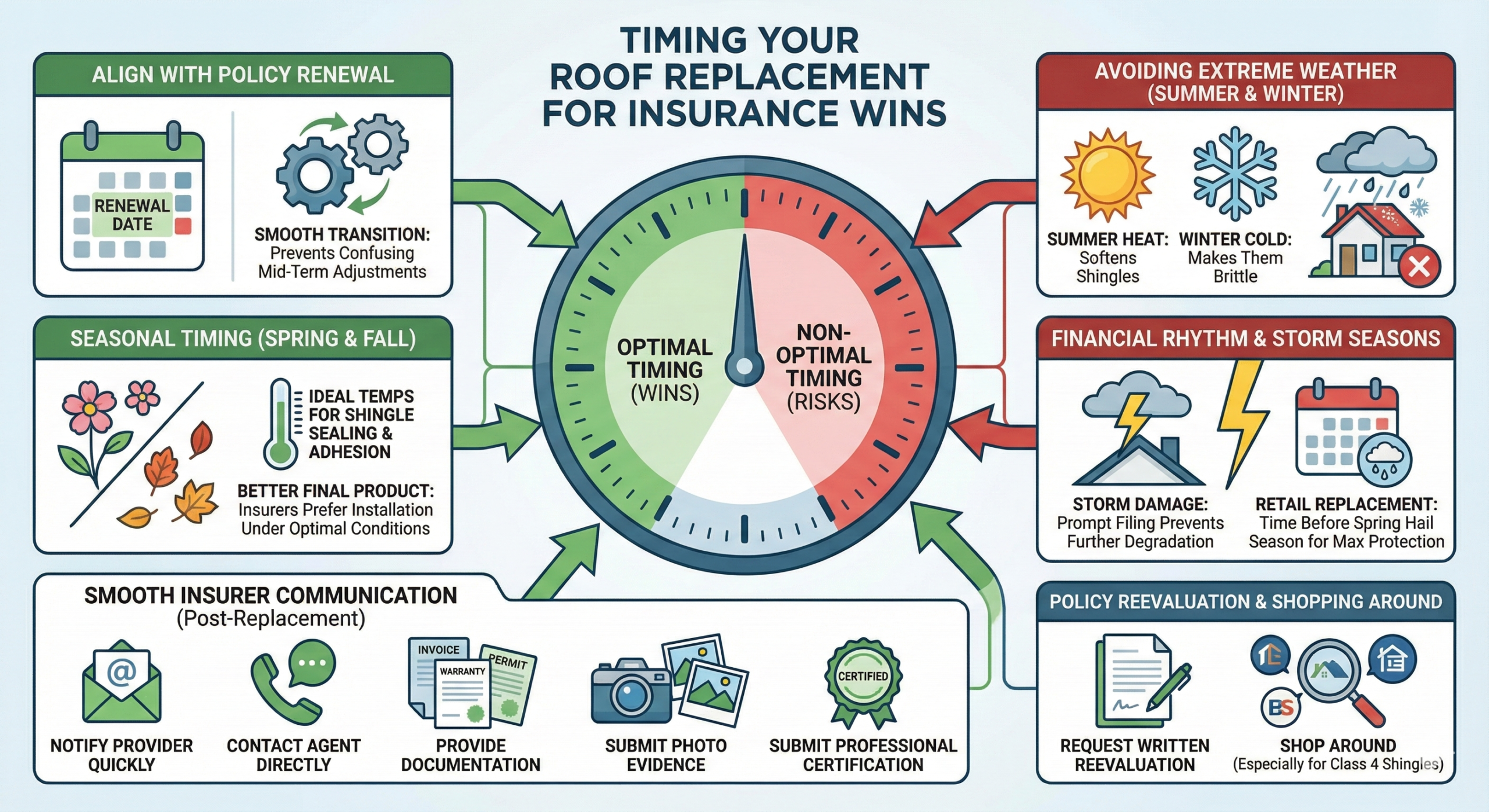
When you replace your roof can affect your insurance benefits. Planning your roof replacement to align with your policy renewal date gives your insurer time to adjust your coverage before the next billing cycle. This prevents confusing mid-term adjustments.
Oklahoma’s weather should also influence your timing. Planning for spring or fall provides ideal temperatures for shingle sealing and adhesion. This avoids extreme summer heat that softens shingles and winter cold that makes them brittle. An installation under optimal conditions is something insurance adjusters prefer to see.
Is There a Perfect Time to Replace Your Roof?
You can replace a roof in any weather besides rain or snow, but aiming for mild weather in spring or autumn often results in a better final product. Insurers favor roofs installed under optimal conditions because it means fewer workmanship claims later. By avoiding the peak of storm season, you also ensure that your Tulsa roofing contractor is not rushing your job to get to the next emergency repair.
There is also a financial rhythm to consider. If you are replacing a roof due to storm damage, filing the claim and scheduling the work promptly prevents further degradation that an insurer might refuse to cover later. If this is a retail replacement paid out of pocket, timing it before the spring hail season gives you maximum protection from new impact-resistant materials when you need them most.
How to Keep Things Smooth with Your Insurer
Once your roof replacement is complete, notify your insurance provider quickly to secure potential premium reductions. Contact your agent directly to inform them about the upgrade. Mention the materials used, installation date, and the name of your Tulsa roofing contractor. Have your documentation ready, including the contractor’s final invoice, material warranties, and building permits.
It helps to provide thorough evidence. Many insurance companies now require photographic evidence of the completed roof. Include clear images showing the full roof from multiple angles. Submitting a professional roof certification from your contractor can often accelerate premium adjustments and help secure all eligible discounts.
If your current agent is slow to respond or says your premium will not change, request a written reevaluation of your policy. Different insurance providers in the Tulsa area have varying policies. Some place higher value on certain roofing materials that better withstand Oklahoma’s weather. If you have installed Class 4 shingles and your insurer is not offering a discount, it might be time to shop around.
My Take on Communicating with Your Insurance Company
You must be your own advocate. Insurance carriers do not monitor your property for improvements. Unless you tell them about the upgrades, they will continue charging you based on the old, riskier roof. You are not asking for a favor. You are presenting evidence that your home is a safer property for them to insure.
The most successful homeowners treat this conversation like a business negotiation. You have installed materials designed to handle Tulsa’s weather. You need to make sure your agent understands that your roof is not just new; it is built to withstand the very threats that cause claims.
What Info Do You Need to Share?
You cannot just call and say you have a new roof and expect savings. You need to provide proof. The most important document is the Impact Resistance Certificate from the shingle manufacturer. Your roofing contractor should provide this upon completion. This certificate verifies that the materials meet the UL 2218 Class 4 standard for hail resistance and is often required for discounts.
Beyond the certificate, send the final paid invoice and the permit completion sign-off. Include a few clear, high-resolution photos of the finished work, especially close-ups showing the installation quality. Creating a digital paper trail gives the underwriter everything they need to recalculate your rate.
Should You Shop Around for Better Rates?
Loyalty in insurance does not always pay off. Different carriers have different appetites for risk in Oklahoma. Your current provider might offer a 5% discount for an impact-resistant roof. A competitor might offer a discount of 25% or 30% for the exact same protection.
If your current agent provides an underwhelming quote after your investment, do not be afraid to look elsewhere. Getting quotes is free. Use your new roof as leverage when talking to other brokers. Tell them you just installed a new, fortified roof system and want to know who gives the best credit for it. Switching carriers could save you hundreds of dollars a year.
Be careful not to just look at the price. Sometimes a cheaper premium means the new company offers “Actual Cash Value” coverage on your roof rather than “Replacement Cost” coverage. Always ensure that your new lower rate still includes full replacement cost coverage so you are not left with a large bill after the next storm.
Common Myths About Roof Replacements and Insurance
Online forums contain conflicting stories about insurance premiums. You might see a thread asking, Insurance premium increased after roof replacement? and feel concerned. This advice often lacks nuance because every policy and location is different.
Some homeowners believe telling their insurer about a new roof is a risk. Hiding a major improvement is riskier. Your insurance carrier needs accurate data to cover you properly. Outdated information usually costs you money, either in missed discounts or denied claims.
Do New Roofs Always Mean Higher Rates?
Replacement cost coverage is usually the reason for a rate hike, not the new roof itself. If you swap standard asphalt shingles for high-end slate, you have increased the value of the asset the insurance company has to protect. They have to charge more because it costs them more to rebuild that slate roof than the old asphalt one.
The positive side is often ignored. A new roof lowers the risk of water damage claims. While your dwelling coverage amount might rise, your rate per $1,000 of coverage often drops because the home is safer. It is a balancing act, and assuming the rate will skyrocket stops many people from making necessary upgrades.
What Most People Get Wrong
Actual Cash Value (ACV) policies are a common problem. You might think your policy covers a full replacement, but if your roof is 15 years old, an ACV policy only pays what that old roof is worth today. Many people mistakenly believe a new roof automatically switches them back to full replacement cost coverage without calling their agent. You have to actively request that policy change.
Another misconception is that discounts are automatic just because a roof is new. They are not. Unless you provide the specific impact-resistance rating certification, like a UL 2218 Class 4 form, the system just sees “new roof.” You leave money on the table by failing to submit the specific engineering paperwork that proves your shingles can withstand hail.
Grandfathered rates can also be an issue. You might have a loyalty rate that no longer exists for new policies. A major change like a roof replacement can trigger a policy rewrite to current market rates. This is not the roof’s fault, but it prompts the update. Always ask your agent if updating your roof details will trigger a full policy rewrite so you are not surprised by a change in your base rate.
A roof replacement is more than a construction project. It is a financial decision that can change your monthly costs. While you may worry about a rate hike, insurers prefer a secure home that can withstand a Tulsa storm. If your premium increases, it is usually because your home’s value has increased, which is a positive outcome.
The only mistake is staying silent.
You must call your agent after the work is complete. Ask about Class 4 impact ratings and wind mitigation credits. Make them explain how your new roof changes your policy’s math. You spent money protecting your biggest asset. Ensure your insurance company recognizes the upgrade. If you want to understand your options, our team can help. Talk to one of our experts to get a quote for roof replacement without raising insurance premiums.
Ready to protect your home and potentially lower your insurance costs? Get your free quote from Trifecta Roofing today.
FAQ
Will getting a new roof actually drop my insurance bill?
Insurance companies view old roofs as a high liability. A new roof is a lower risk because it is less likely to leak during a storm. You will likely see some savings. The amount depends on the materials. Basic shingles offer a small discount. Impact-resistant materials provide much larger savings. Ask your agent about specific discounts before choosing materials.
Is there any world where my premium goes up after a replacement?
Replacing a standard shingle roof with the same material usually lowers rates. Upgrading to luxury materials like slate or tile is different. These materials make your home more expensive to repair. Your premium might increase to cover the higher replacement cost. You get a better roof but may pay slightly more to insure its value.
Are those impact-resistant shingles really worth the hype for insurance?
Yes. Standard shingles can be damaged by hail. Class 4 impact-resistant shingles are built to withstand severe weather. Insurers value this durability because it means fewer claims. In Tulsa, discounts for these materials can be substantial, often 20% to 35%. The upfront cost is higher, but the long-term savings and added protection are worth it.
When’s the right time to tell my insurance company about the new roof?
Contact your insurer as soon as the project is finished. Waiting until your policy renews means you overpay for months. Get the certificate of completion from your contractor and send it to your agent immediately. Ask when the new rate becomes effective. The change is often prorated, and you may get a refund.
What if I get a new roof and my insurance company doesn’t drop my rate?
If your insurer does not offer a discount for a major upgrade, it is time to shop around. Not all carriers evaluate risk the same way. One company might not offer a discount, while another will. Use your new roof certification to get quotes from other companies. You may find better rates for the exact same coverage.