
How to Fix Roof Flashing Leaks: Stop Water Damage Now!

Knowing how to fix roof flashing leaks matters, because failing flashing causes thousands of dollars in structural rot across homes every year. Flashing is your roof's first defense against water. When those metal seals crack or rust, water gets into your walls. If you are staring at a ceiling stain right now, know that a lot of these repairs are within reach of a homeowner. With the right sealant and some patience, you can stop that leak. At Trifecta Roofing and Restoration, we see these leaks all over Tulsa and Northeast Oklahoma, and most of them start small.
What Roof Flashing Actually Does
Most people think shingles do all the work of keeping a house dry. Shingles handle the flat, open sections well. They are useless at corners, joints, and anywhere two different materials meet. That is where roof flashing comes in. It acts as a bridge.
These thin strips, usually galvanized steel, aluminum, or copper, channel water away from gaps and back over the shingles into the gutter. Without those watertight seals, rain walks straight into your home. Flashing is a critical part of your roofing system.
Types of Roof Flashing
Different areas of the roof need specific flashing to move water the right direction. Step flashing goes where a roof meets a wall, overlapping each shingle. Valley flashing is a heavy-duty V-shaped channel running down the intersection of two roof slopes.
- Vent pipe flashing fits around plumbing stacks.
- Drip edges direct water away from the eaves.
- Chimney flashing uses a two-part system for masonry.
Put the wrong type in the wrong spot and you have invited a leak.
| Flashing Component | Primary Function & Location |
|---|---|
| Step Flashing | Interwoven with shingles at wall intersections to direct water downward |
| Valley Flashing | Channels heavy water volume where two roof slopes meet in a V-shape |
| Drip Edge | Prevents water from sticking to the roof edge and rotting the fascia |
| Vent Boot | Seals the circular gap around plumbing pipes extending from the roof |
| Counter Flashing | Embedded in masonry to cover the top edge of base flashing on chimneys |
Why Flashing Matters So Much
Think of flashing as the zipper on a raincoat. Break the zipper and you get wet. These metal pieces cover the roof transitions where the structure moves as temperatures change.
Houses settle and wood expands, so those joints stay under constant stress. Loose, rusted, or missing flashing gives water a direct path into your attic. That water intrusion rots wood and feeds mold long before you ever see a drip on the ceiling.
A flashing leak you never catch eats at the structure of your home from the inside out. You can end up replacing rotted wood inside walls or damaged rafters, which costs far more than a simple roof repair. Keeping flashing in good shape is cheap protection.
What Makes Flashing Start Leaking
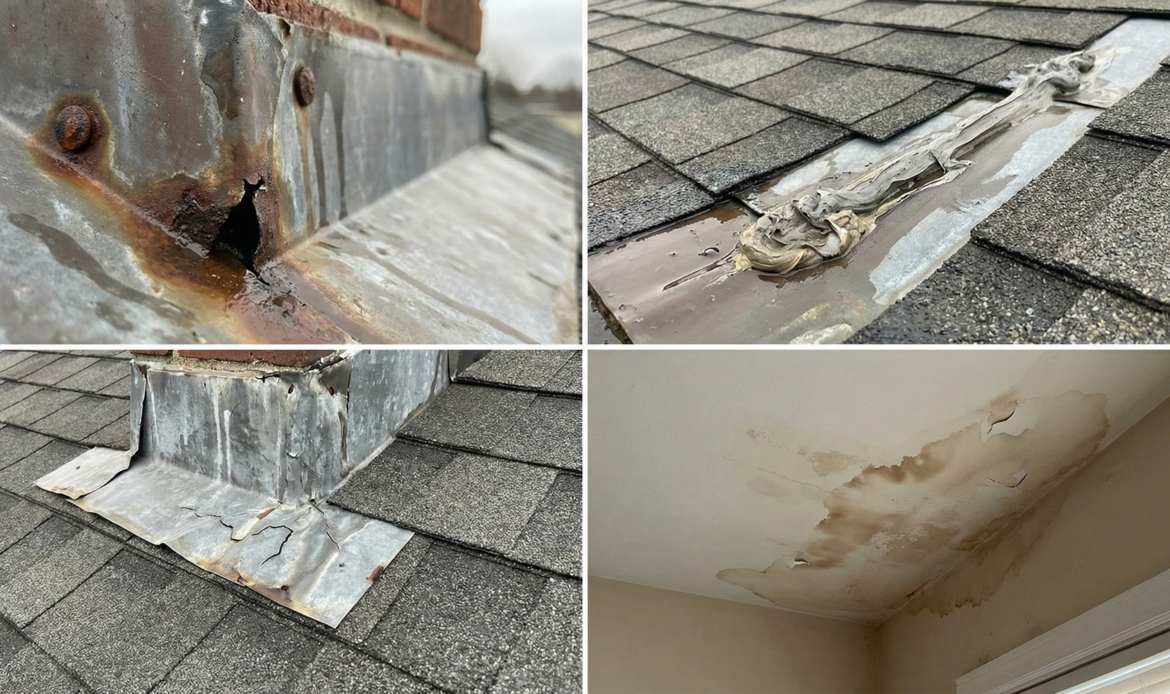
Flashing leaks usually build slowly. A small gap or a rusted nail head sits there for months until a storm drives water through it. Improper installation accounts for a large number of the leaks I see, where somebody ran a bead of caulk instead of weaving the metal in with the shingles correctly. Even a newer roof leaks when the flashing was installed wrong.
Material failure is the other big one. Reusing old flashing during a roof replacement to save a few dollars causes problems. The old metal often will not take being refitted to new shingles, so it cracks and fails. Using old flashing with new shingles is a significant risk, and if corners were cut on your home, you are the one looking at water stains.
Everyday Wear and Tear
Your house shifts and settles constantly. Roofing materials and the wood decking underneath expand and contract at different rates, and that pulls on the flashing. Over time this thermal movement can push roofing nails out of their holes, breaking the waterproof seal. It happens slowly, until there is enough space for water to get in.
The sun works on the roof too. UV rays bake the caulk and sealants around flashing until they go brittle and crack. Once the sealant lets go, the flashing edge lifts and water finds a direct path behind the metal barrier. You cannot stop that from happening, which is why you inspect. No sealant lasts forever in the Oklahoma heat.
Weather and Other Factors
Severe weather is the obvious one. Heavy winds lift the edges of step flashing and let wind-driven rain get underneath. Hail dents aluminum flashing until it cracks or pulls away from masonry. A falling branch can tear the rubber collar of a vent boot away from the pipe, and you have a leak that day.
Slower damage adds up too. Oxidation corrodes galvanized steel over time. When leaves or pine needles pile up in roof valleys or behind a chimney, they hold moisture against the metal and speed up rust and corrosion. Wet debris is very damaging to flashing and cuts its lifespan short.
Ice dams during winter freezes cause their own trouble. Snow melts on the roof, refreezes at the eaves, and forms a dam that pushes water back under the flashing. Flashing is built to shed water downward, not to sit submerged. That backed-up water finds any small imperfection and seeps through the roof deck.
How to Spot a Flashing Leak Early
Water intrusion is a common source of home insurance claims, and faulty flashing is often the cause. Catching it early is how you avoid expensive repairs and keep your ceiling dry. Leaks do not always start with a big storm. Sometimes a small gap just widens month after month.
Most leaks start small and stay hidden until the damage is real. By the time you see water dripping, structural pieces may already be compromised. Get out a ladder or a pair of binoculars and look.
Signs Your Flashing Needs Attention
Rust stains running down your siding mean corrosion is working on your metal barriers. It also means the metal is getting thin and weak. If you see visible gaps where the flashing meets the masonry, rain has a straight shot into your home.
Shingles near your chimney or vents should lie flat. Curled shingles suggest water is getting underneath and working on the adhesive. After a heavy storm, look for bent or displaced metal pieces that wind or debris knocked loose.
What to Look For Inside
A yellow ring on the ceiling usually means the leak has been running for weeks. By the time that stain shows up, water has likely soaked through your roof decking and insulation. Do not wait for drips.
Go into the attic during the day and turn the lights off. Look for pinholes of light. Run your hand along the rafters and feel for moisture. Damp insulation or wet wood directly below flashing points tells you the seal outside has failed.
Mold grows on damp wood within 24 to 48 hours. If the attic hits you with a heavy, musty smell, you almost certainly have a leak. Even with no visible water, that smell means moisture is trapped where it does not belong.
Step-by-Step: Fixing Flashing Leaks
Flashing repair sounds intimidating until you break it into steps. You are building a barrier to keep moisture out. Work one joint or one nail at a time. Patience and attention to detail matter more than speed.
Before you start, figure out what kind of failure you have. Different parts of the roof fail in different ways, and knowing the right approach saves you time.
| Problem Area & Symptoms | The Fix Strategy |
|---|---|
| Chimney Intersections: Water stains on bricks or drywall. Often caused by step flashing pulling away from the mortar. | Do not just caulk over the old sealant. You must clean out the old mortar joint and re-secure the counter-flashing so it hangs correctly over the step flashing pieces. |
| Vent Pipes (The Boot): The rubber seal around the pipe cracks from UV exposure. | This is typically a replacement, not a repair. You have to slide a new rubber boot over the pipe and tuck the top flange under the shingles to shed water. |
| Valleys: Leaks in the crease where roof planes meet. This area handles high water volume. | Patching is risky. The best solution is often to replace the metal valley liner entirely to ensure there are no seams for water to enter. |
| Dormer Walls: Siding meets the roof deck. Leaks often occur because the flashing was nailed too low. | You may need to pry back some siding boards. The goal is to install new L-shaped flashing that extends at least 4 inches up the wall behind the siding. |
Tools You'll Need
Gather your tools before you climb the ladder. You need a flat pry bar to lift shingles without breaking them and a utility knife with a hook blade for clean cuts. Add tin snips for cutting metal and a decent caulk gun.
Safety comes first. Wear non-slip shoes and use a harness if the pitch is steep. Keep roofing cement and galvanized roofing nails in your pouch so you are not running up and down the ladder. A stiff wire brush is handy for cleaning surfaces before you seal them.
Repairs You Can Handle Yourself
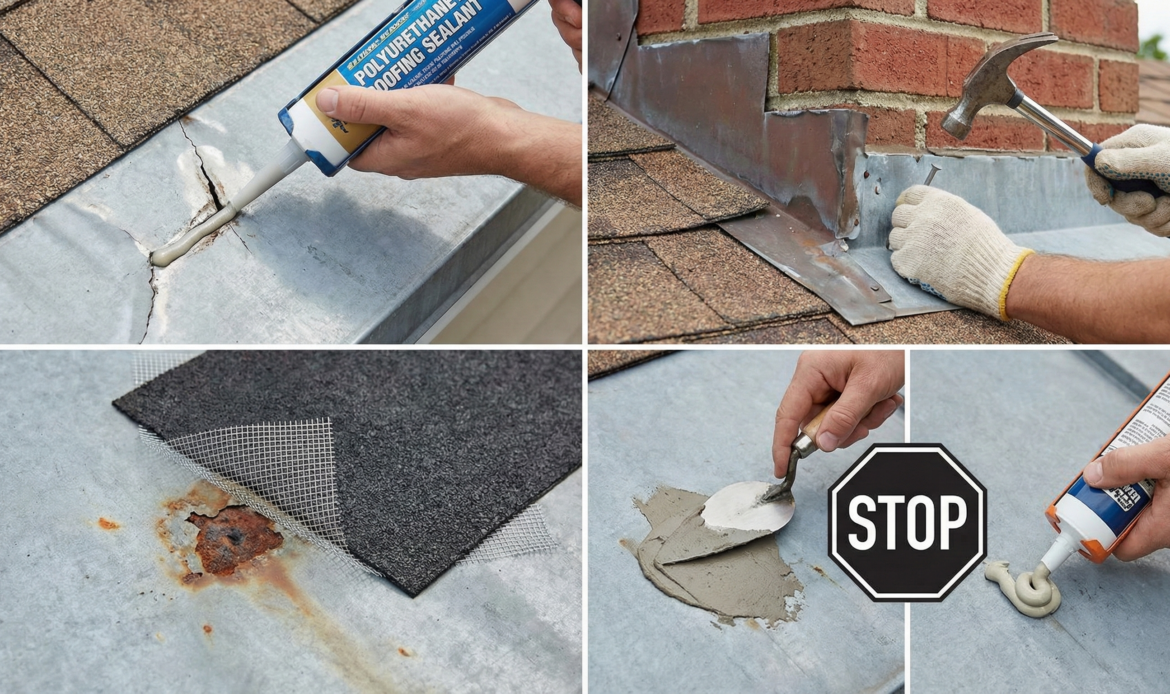
Sometimes it is just a dried-out seal or a popped nail. For a small hole or crack in the caulk, scrub the area with a wire brush and lay a fresh bead of polyurethane roofing sealant. Use a quality sealant that can take temperature swings. Smooth it with a putty knife so the seal is solid.
Loose step flashing is another one you can manage. Often you can bend it back into place and secure it with a new masonry nail or flashing cement. A small pinhole rust spot does not always mean replacing the whole piece. A patch of flashing tape, or a three-course application of roofing cement and mesh, will seal it.
Do not bury a problem area in sealant. It might stop the leak for a while, but it traps water underneath and hides the real damage, which makes the eventual repair cost more. You want to deflect water, not build a dam. If the repair area is bigger than a dinner plate, you are probably looking at a replacement. A good DIY roof flashing repair comes down to knowing your limits.
DIY or Call a Roofer?
We have met homeowners who patched a chimney leak with a tube of caulk, then watched the ceiling sag months later because the real entry point was somewhere else. Weigh the money you save doing it yourself against the risk of doing it wrong, especially with water intrusion on a steep roof.
It usually comes down to how comfortable you are with heights and how handy you are. A small sealant repair does not need a professional. Rusted-through flashing buried under siding is another animal. Your safety decides it.
| DIY Route | Professional Service |
|---|---|
| Significantly lower upfront costs | Higher cost for labor and expertise |
| You control the schedule immediately | Subject to contractor availability |
| High risk of personal injury | Fully insured and safety-trained |
| No warranty on workmanship | Typically includes labor warranties |
| Requires purchasing specialized tools | Crew arrives with all necessary equipment |
| Limited to surface-level fixes | Can address underlying structural rot |
| Learning curve can lead to mistakes | Experienced diagnosis of leak sources |
| Good for minor resealing jobs | Essential for complex replacements |
What You Gain Doing It Yourself
If you are comfortable with the work, small repairs save you money. There is real satisfaction in sealing a vent boot before the next storm rolls through. For simple resealing, you do not have to wait on a contractor's schedule while your attic takes on water.
Doing it yourself also teaches you your own house. While you are running sealant you might notice a loose shingle or a rusted gutter spike that a quick look from the ground would miss. Catching small things early adds years to a roof.
When to Hire a Professional
Sometimes the roof is too steep, or the damage hides under shingles you cannot pull without making things worse. Working a ladder with heavy tools is dangerous. If you are not sure of your footing or your ability to build a watertight seal, a roofer costs less than a hospital bill. That is when it makes sense to hire a professional for roof flashing leak repair in Jenks and get it done safely.
Complex roof geometry often calls for custom metal bending that standard tools cannot do. If flashing has to tuck behind stucco, brick, or siding, you can damage the cladding getting it in there. Siding put back wrong traps water against your house frame and rots the wood.
A professional carries insurance and stands behind the work. If we make a mistake, we come back and fix it on our dime. If you make a mistake, every repair after that is on you. A workmanship warranty is worth something.
Keeping Flashing in Good Shape
Most homeowners leave the roof alone until something goes wrong. Regular upkeep is how you keep small issues from turning into expensive ones. Stay ahead of the wear and a minor problem never becomes a disaster.
You do not have to be a roofer to handle basic maintenance. Look for these things when you inspect:
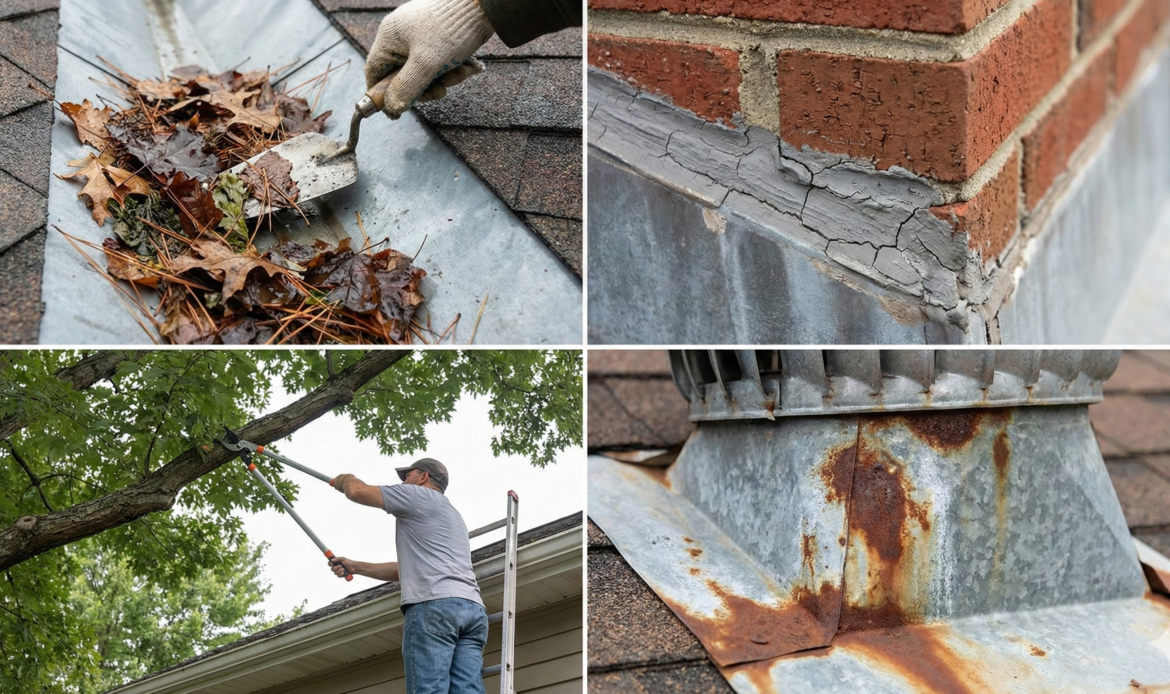
- Clear away accumulated debris like wet leaves and pine needles that trap moisture against the metal.
- Inspect old sealant for cracking, drying, or separation from the masonry.
- Trim back overhanging branches that could scrape or dent the flashing during high winds.
- Check for rust spots or corrosion that might be damaging the galvanized coating.
Steady attention prevents premature failure and keeps the house dry.
Routine Maintenance That Works
A clean roof is a dry roof. Wet leaves packed against chimney flashing hold moisture on the metal for weeks. Clear debris out of valleys and around vents so water can move. That debris creates an acidic environment that corrodes metal and seals and shortens the life of everything it touches.
If you see moss or algae, skip the pressure washer. It damages shingles and loosens flashing seals. Use a gentle chemical treatment or a zinc strip to stop the growth. Biological growth holds moisture against flashing edges and speeds up corrosion.
Seasonal Checks
Do not wait for a storm. Inspect in the spring and again in the fall. Summer heat and winter freezes expand and contract everything up there, and that loosens nails. Oklahoma weather is unpredictable, so catching a shifted piece of step flashing before the spring rains can save you a leak.
Look at the caulking and sealants every time. They give out before the metal does and are usually the first failure point. If caulk is dried, cracked, or pulling away, scrape it out and re-apply right then. That small fix prevents thousands in damage.
Watch the small stuff, like slight discoloration on the metal or wavy shingles near the flashing. Those hints often mean it is time for local roof flashing repair in Tulsa. Spotting early warning signs puts you ahead of the water.
The Bottom Line
Ignoring a curled shingle or a little rust is easier than climbing on the roof, but timing is the whole difference between a cheap repair and a major renovation. Most of us maintain our cars and never think about the flashing keeping our homes dry until it fails. You do not want to be setting buckets on the floor during the next storm because you skipped a simple inspection.
Your home is only as strong as its weakest part. Take the time to look at your roof flashing. You do not have to be an expert to spot a gap or run a bead of roofing cement, and a well-sealed home is worth the effort.
If you would rather have someone else handle how to fix roof flashing leaks on your house, call Trifecta Roofing and Restoration. Every job starts with a free inspection, and we will show you photos of what we find so you get peace of mind before any work begins. Get Your Free Quote Today!
FAQ
Can I just patch the flashing with sealant, or do I need to replace it?
A quick fix works sometimes, especially on a tiny crack or a small gap. A high-quality roofing cement or flashing tape will seal minor issues. Be honest about the condition of the metal, though. If the flashing is rusted through or badly bent, sealant is not a permanent answer. You are only delaying a replacement.
Look at the damage straight on. If the metal is structurally sound, a patch may hold. If it is weak or corroded, replace the section and keep your home dry.
What happens if I use the wrong type of metal for the repair?
The metal matters because of a chemical reaction called galvanic corrosion. It happens when different metals touch with moisture present. Mix copper flashing with aluminum nails or galvanized steel and the new repair corrodes fast. Cost and longevity factor in too. Galvanized steel is affordable but will eventually rust. Copper lasts much longer and costs more.
Match new materials to what is already there. Everything expands and contracts at the same rate, seals stay tight, and you avoid early failure.
Is it safe to reuse the old shingles around the repair area?
Reusing old shingles is tempting, but they are usually brittle and crack when you move them. Prying them up breaks the sealant strip and hurts their structural integrity. Even ones that look fine may not seal back down right, which leaves them open to wind and water. New shingles are worth the money. Buy a bundle that matches your roof so the repair seals watertight.
How do I know if the leak is from the flashing and not the roof?
The location of the stain inside is your best clue. If the damp spot sits near a chimney, skylight, or where a wall meets the roof, it is almost certainly flashing. Shingle leaks tend to show up more randomly or in the middle of a slope. Flashing leaks happen at transition points. If you can, get in the attic directly above the stain during a storm.
You will usually see water tracking along a rafter near a vent or chimney. Rust trails outside or gaps where metal pulls away from brick confirm it.
Do I need a pry bar, or can I use a hammer and screwdriver?
Basic household tools cause damage on a roof. A flat pry bar is built to slide under shingles and lift nails without tearing the asphalt matting. A screwdriver gouges the wood decking or punctures the shingles you were trying to save. The right tools make the job cleaner, faster, and safer. You also want tin snips to cut new flashing cleanly for a tight fit. Jagged edges leave gaps where water gets in and undoes your repair.