


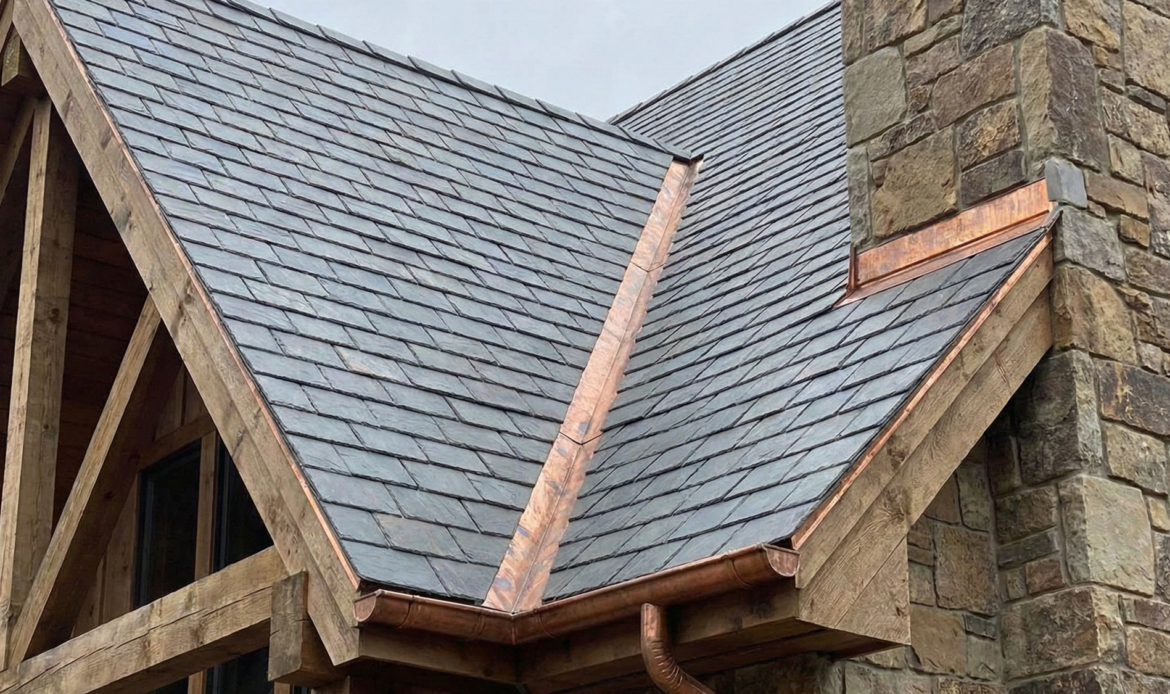
Most homeowners don’t stare at their roof valleys until water starts dripping on the rug, a common sign of roof valley leaks. It happens. Those V-shaped channels handle a ton of water and eventually, they wear out. Since they take such a beating during storms, they are the most common source of leaks. If you ignore the subtle signs, you risk expensive structural damage to your home’s framing. Spotting a problem before it becomes a disaster is easier than you think. Catching it early saves you a bundle.
What’s a Roof Valley Anyway?
The Basics of Roof Valleys
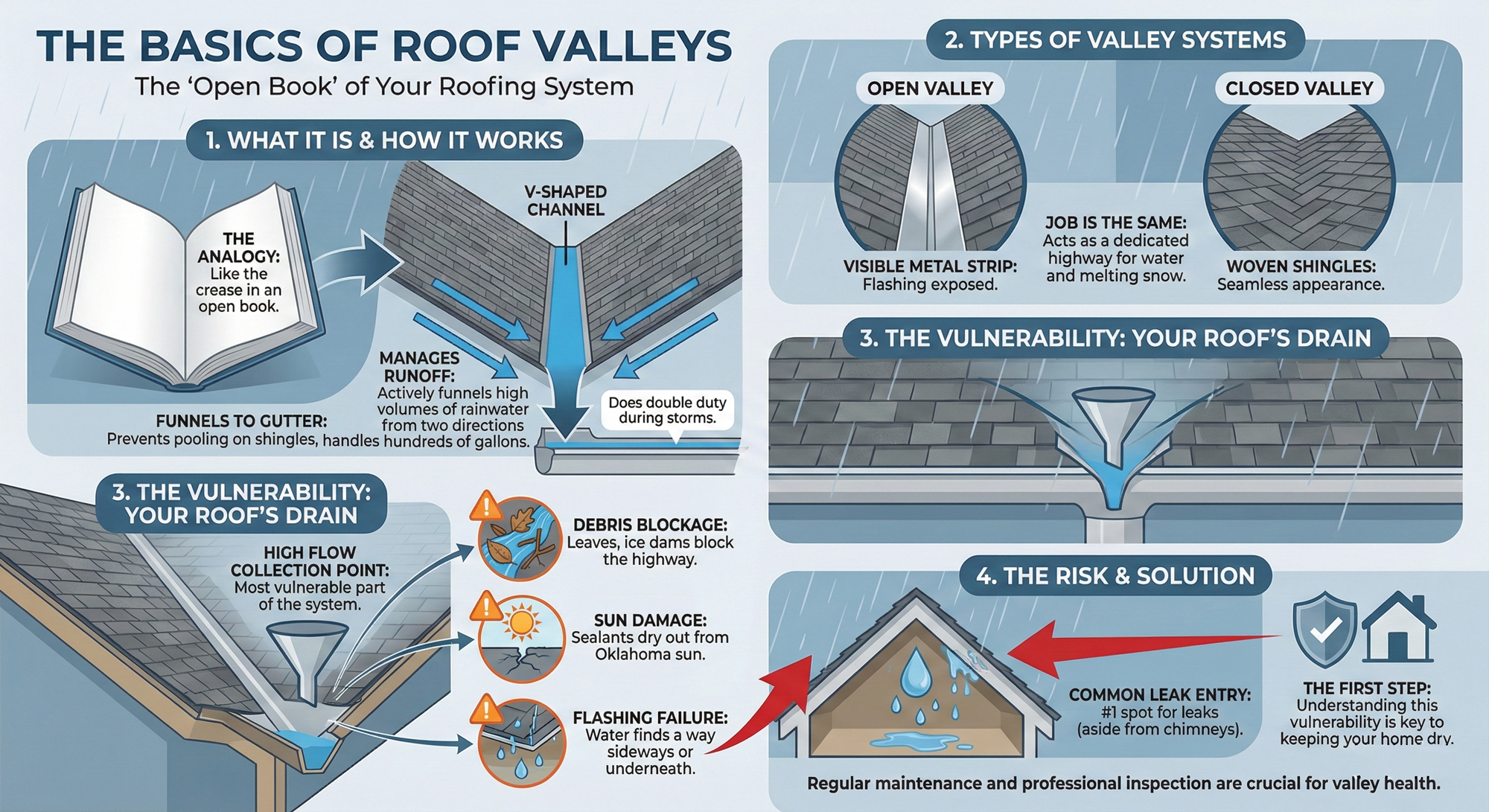
Think of your roof valley like the crease in an open book. Instead of holding words, it manages hundreds of gallons of rainwater. It is the V-shaped channel where two roof planes intersect, creating a trough that runs to the edge. While flat shingles let water roll off, this area actively manages high volumes of runoff from two directions at once. It does double duty every time a storm rolls through Tulsa, funneling water into the gutter instead of letting it pool on your shingles.
You might see a visible strip of metal running down the seam, or the shingles might be woven together. That is the difference between an “open” and “closed” valley system. Regardless of the style, the job is the same. It acts as a dedicated highway for water and melting snow. Because gravity pulls everything to this low point, it is under constant pressure from the elements and debris. If leaves or ice dams block this highway, the water has nowhere to go but sideways or underneath the roofing material.
Since this spot collects so much flow, it is the most vulnerable part of the entire system. It is the drain of your roof. Just like a drain can get clogged, so can a valley. If the flashing underneath fails or sealants dry out from the Oklahoma sun, water finds a way in. That makes the valley the most common entry point for leaks aside from chimney flashing. Understanding this vulnerability is the first step in keeping your home dry.
Why They Matter for Your Roof
Most of your roof deals with rain falling directly on top of it. The valley handles that plus all the runoff from the slopes above it. That is a massive amount of water. During a heavy Oklahoma downpour, that V-channel turns into a rushing river. If that channel is compromised, you are not just getting a simple drip. You are inviting a concentrated stream of water directly into your home’s structure. This high-volume intrusion is why valley leaks cause damage much faster than a missing shingle elsewhere.
Once water breaches the valley seal, it travels along rafters and drips onto your insulation, compressing it and ruining its R-value. The real danger is the wood. Prolonged exposure leads to rot in the decking and framing. This structural damage can jeopardize the stability of the roof itself if left unchecked. The rot can spread along beams, weakening the support system that holds up your roof.
Ignoring a valley issue is gambling with your home’s framework. These leaks often start slow and run along beams, so you might not see a ceiling stain until the attic damage is severe. Catching a valley failure early is the difference between a minor patch job and a major structural renovation. It is about protecting the investment you have made in your home.
A properly functioning valley also protects your foundation. By channeling that massive volume of water into gutters and downspouts, it keeps the deluge away from the base of your house. When a valley gets clogged or leaks, water spills over the sides, pooling against your home’s perimeter. This can lead to basement flooding and soil erosion around your foundation. That V-shape on your roof does more heavy lifting than it gets credit for.
How Do You Spot a Leak in Your Valleys?
Water travels at higher velocities in roof valleys than on any other part of your home’s exterior. This explains why these channels are usually the first spots to show wear and tear. The damage usually starts long before you see a drip in the living room. You need to be proactive. The initial signs of the four common problems with roof valleys are often subtle, hiding in plain sight until a major storm exposes every weakness. A blockage or a lifted shingle can force water sideways and under the protective layer, creating a leak that might not show up on your ceiling for weeks.
Most homeowners wait until there’s a puddle on the floor to call a professional. By then, you are paying for drywall, paint, and insulation on top of the roof repair. You have to get a close look at your roof, or at least use good binoculars, to catch these things early. The goal is to spot the failure while it is still just a roofing problem and not a whole-house problem. Sometimes the leak is not directly below the valley. Water runs along rafters and drips ten feet away from the entry point, sending you on a wild goose chase if you do not know the valley is the likely suspect.
You need to inspect these areas after every major weather event, especially if you have trees nearby. A valley that does not drain properly is like a swimming pool for your shingles, and asphalt shingles are not built to be submerged. They are designed to shed water, not hold it. If you spot dampness in the attic that aligns with the crease of the roof, do not wait for it to dry out. Trapped moisture leads to wood rot faster than you think. It is a race against time once the water barrier is breached.
Signs You Shouldn’t Ignore
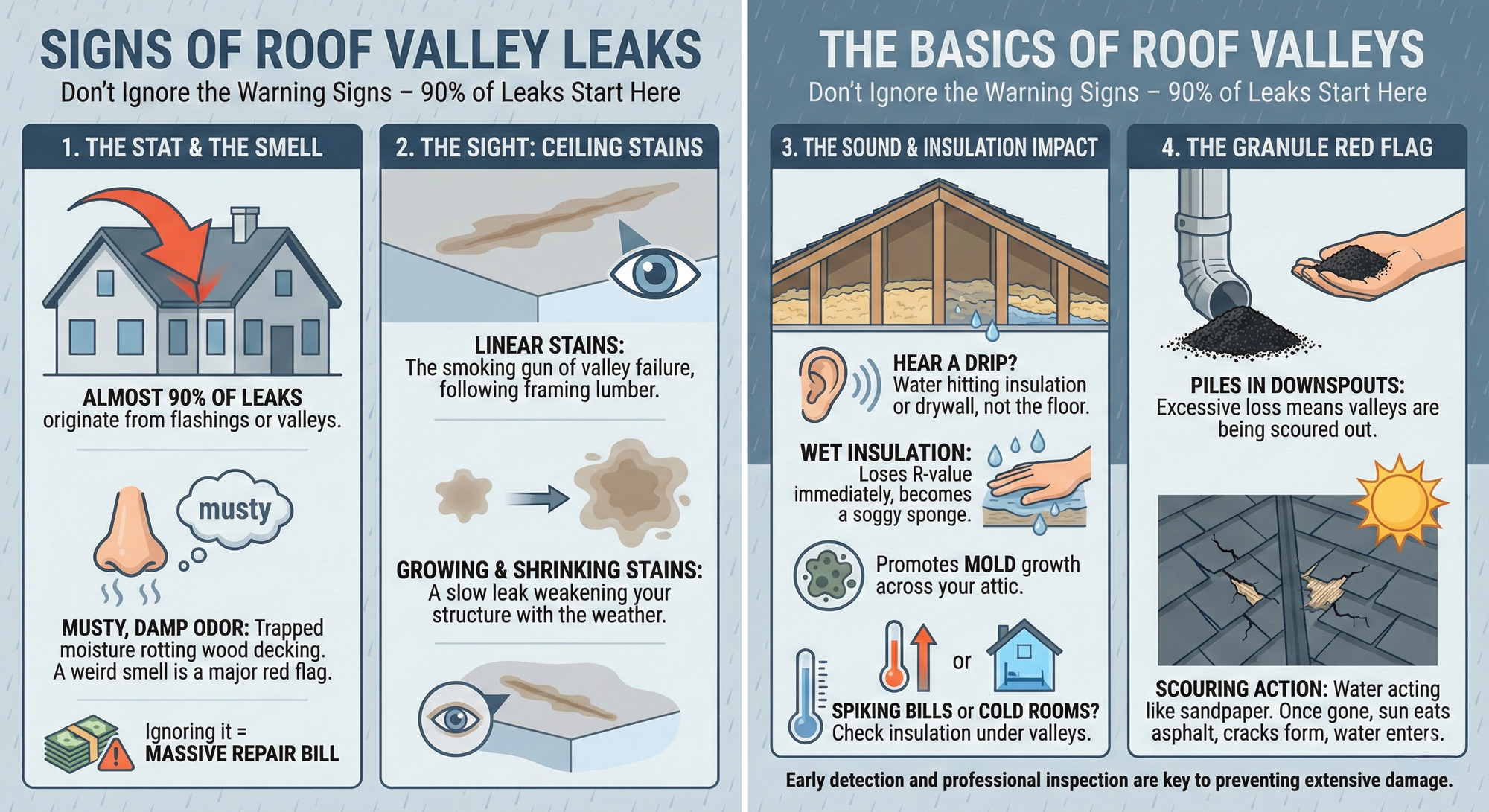
Almost 90% of roof leaks originate from flashings or valleys. Ignoring a weird smell in the attic is asking for a massive repair bill. You might smell that musty, damp odor before you see water, which means there’s trapped moisture rotting the wood decking. It is easy to brush off discoloration on the ceiling, but if it’s in a line, that is a valley leak. Linear water stains are the smoking gun of valley failure because they follow the path of the framing lumber under that roof crease. If a stain grows and shrinks with the weather, you have a slow leak that is weakening your structure.
You can sometimes hear a leak before you see it. If you are in the attic during a heavy downpour and hear dripping that is not hitting the floor, it might be water hitting the insulation or drywall. Wet insulation loses its R-value immediately and becomes a heavy, soggy sponge against your wooden joists. This creates a perfect environment for mold to grow across your attic. If your heating bills spike or a room feels colder than the rest, check the insulation under the roof valleys.
Another red flag is finding piles of granules at the bottom of your downspouts. Shingles shed some granules over time, but if you see a handful after a rain, your valleys are likely being scoured out. Water rushes down that V-shape with force, acting like sandpaper. Once those granules are gone, the sun eats the asphalt, the fiberglass mat cracks, and water gets in. Excessive granule loss means your roof’s protection is gone, and the valley is baking in the sun.
Visual Clues That Scream “Fix Me!”
Shingle granules protect the asphalt from UV rays. Once they are gone, the material deteriorates twice as fast. When you look at your valleys and see bald spots or shiny asphalt, failure is imminent. It looks like someone took sandpaper to the crease of your roof. If you have metal valleys, look for rust and lifted edges. Metal expands and contracts with heat, and this movement can pop nails. If you can see a gap between the metal flashing and the shingles, water is getting in there.
Debris dams are another visual clue people overlook. A pile of wet leaves in a valley works like a dam, forcing rainwater to back up and travel sideways under the shingles. This is called capillary action. You might see darker coloration in the valley even when the rest of the roof is dry, which means debris is holding moisture. Any vegetation growing in your valley means the material is compromised and staying wet.
Check for the “fishmouth” effect where shingles curl upward at the valley cut. This happens because of heat aging or poor installation. It creates a funnel for wind-driven rain to get under your roofing material. If the shingles look wavy or buckled, the underlayment might be wrinkled or wet. If you see cracked roofing cement, that black sealant some roofers use, address it immediately. Dried-out sealant cracks and pulls away, leaving an open doorway for water.
A distinct “hump” or unevenness running down the center of the valley is a dangerous visual clue. This usually indicates the metal flashing underneath has buckled or a nail has backed out and is pushing up. A hump disrupts the smooth flow of water, creating turbulence and slow spots where leaks are almost guaranteed to start. If your valley line is not straight and smooth, you have a problem underneath.
What’s Up With Tulsa Weather and Roof Valleys?
We have noticed an intense shift in weather patterns lately, and your roof is feeling it. Tulsa sits where humid subtropical climates clash with cold dry air from the north, creating a recipe for roofing stress. Your roof valleys are the drainage superhighways of your house, taking on more volume and pressure than flat sections of shingles. When you combine that concentrated water flow with our unpredictable weather, you get accelerated wear and tear that catches people off guard.
Roof valleys are the first point of failure in about three-quarters of the roof leak calls we get. Gravity forces gallons of water into these V-shaped channels. If there is a tiny gap in the flashing or a crack in the sealant, water will find it. This is why understanding the most common problems with roof valleys and how to fix them is critical for Tulsa homeowners. The sheer volume of rain we get in short bursts can overwhelm these channels, forcing water sideways under the shingles.
This constant battle against the elements means your maintenance cannot be passive. Ignoring these areas because they look fine from the driveway is a gamble. The debris that collects in these valleys acts like a dam. When that happens during a Tulsa downpour, the water pools and has nowhere to go but inside your attic. Keeping these channels clear is the single most effective way to prevent leaks, yet it is the step most homeowners skip.
Stormy Seasons and Their Impact
Spring in Tulsa brings massive thunderstorms that dump an ocean of water in minutes. During these events, the velocity of water rushing into the valley is incredibly high. This is not a gentle stream; it is a pressurized flow that can scour away protective granules on asphalt shingles. If your valleys are lined with shingles rather than metal, this erosion happens much faster, leaving the fiberglass mat exposed. Once that protective layer is gone, a leak is guaranteed.
Then you have hail. Hail stones tend to funnel into the valley and accumulate. If you have metal flashing, large hail can dent it, breaking the seal where the metal meets the shingles. On closed valleys with woven shingles, hail impact can crack the material right at the bend. These hairline cracks are almost impossible to see from the ground but act like open doors for water.
Winter brings the freeze-thaw cycle, which creates ice dams that are nightmares for roof valleys. Snow melts during the day, runs down the valley, and refreezes at the eaves when the sun goes down. This builds a wall of ice. The water behind it backs up and can seep under the flashing. This stagnant water is dangerous for your roof deck, causing rot you will not notice until the wood is mush.
How Climate Can Shorten Your Roof’s Life
Thermal shock is a silent killer in Oklahoma. We have days where the temperature swings forty degrees in 24 hours. Your roof materials expand and contract with every degree of change. Different materials move at different rates. The metal flashing in your valley expands differently than the wood deck and the asphalt shingles. This constant movement tears apart roofing cement or caulking.
The summer heat also cooks your roof valleys. On a 100-degree Tulsa day, the temperature in a roof valley can soar past 150 degrees. This extreme heat dries out the oils in asphalt-based roofing materials, making them brittle and prone to cracking. In open valleys with metal flashing, the heat can degrade rubber gaskets on fasteners or dry out sealant along the edges. A dried-out seal is a failed seal.
UV radiation creates cumulative damage. The sun beats down on these angled surfaces. Because valleys often hold moisture longer than steep slopes, the combination of UV rays and moisture accelerates oxidation on metal and granule loss on shingles. Over five or ten years, this exposure can reduce the life of your roof valley by up to 30% compared to roofs in milder climates.
The orientation of your home plays a huge role. South and West-facing roof valleys take the brunt of the Oklahoma sun and fail years before valleys on the shaded side. If you have a valley that gets blasted by the afternoon sun and handles drainage from a large upper roof section, that is your high-risk zone. You should inspect these high-exposure areas twice as often.
Why Quality Matters for Valley Materials
Choosing the Right Stuff
Copper valleys can last upwards of 100 years, outliving the rest of your roofing system. Many homeowners default to thinner galvanized steel to save money upfront. That is a mistake long-term. When you pick the cheapest option, you set a timer for when that metal will rust. Aluminum is a decent middle ground because it does not rust, but it’s softer and hail can dent it. Galvanized steel is tougher against impact, but once the zinc coating wears off, it will rust.
If you have a closed valley where shingles are woven together, the quality of your asphalt shingles is critical. You need high-grade architectural shingles. Standard three-tab shingles cannot handle the bending and weaving required without cracking prematurely, especially when the Oklahoma sun bakes them. Cheap shingles in a woven valley often split down the center line within a few years.
The most important material might be the one you never see. Self-adhering ice and water shield is non-negotiable for valleys in our climate. Old-school felt paper rips or gets soaked. This rubberized membrane seals around nails and creates a waterproof gasket that felt cannot match. Skipping this layer is inviting a leak the next time ice dams form.
The Real Deal About Installation
Nearly 90% of roof valley failures stem from human error, not material defects. It usually comes down to where the nails go. Putting a nail within six inches of the valley’s center line is like drilling a hole in the bottom of a boat. You want that center channel clear of penetrations. Lazy installers often gun nails right into the danger zone because it is faster. Every single nail in that flow path is a potential leak.
The cut is also important. When installers trim shingles for an open valley, they must crop the corners at a specific angle. This is called “dubbing.” It prevents water from running sideways under the roof. If a roofer leaves those corners sharp, water will wick right underneath the shingles during heavy downpours.
Lapping is another spot where bad habits kill a roof’s longevity. Metal flashing sections need to overlap by at least six to eight inches. They should not be nailed in the middle of that lap. If the overlap is too short, wind-driven rain will suck water between the metal sheets. Flashing should be installed from the bottom up, like shingles.
Temperature affects how well the installation holds up. Installing valley materials when it is freezing is asking for trouble. Asphalt shingles become brittle and can fracture when bent. A good crew knows that warm, pliable shingles create a tighter seal and settle better, ensuring the adhesive strips bond correctly.
Got a Leak? When Should You Call a Pro?
DIY vs. Calling in the Experts
Cleaning a gutter is one thing, but tearing up a roof valley is different. Valleys handle the highest volume of water on your roof. If you mess up a shingle on a flat section, it’s annoying. If you mess up a valley, you are funneling rainwater into your home’s structure. While you might want to learn how to repair a roof valley leak permanently yourself, the complexity often requires professional expertise. A failed DIY attempt at a roof valley leak repair often traps water instead of shedding it, accelerating rot in areas you cannot see.
The visible damage is usually just the tip of the iceberg. By the time you spot a leak inside, the water has likely traveled under the roofing layers, soaking the decking and rafters. A professional roofer knows how to trace that path to the source. A DIY approach often means slapping roofing tar on the symptom. Plus, walking on a roof is dangerous without the right gear. One slip could mean a trip to the ER.
Think about the cost of getting it wrong versus paying for expertise. You might save a few hundred dollars doing it yourself. But if that repair fails during a massive Tulsa thunderstorm, you could face thousands in damage. Improperly repaired valleys are a leading cause of voided roof warranties. Sometimes the smartest DIY move is knowing when to keep the ladder in the garage.
Red Flags to Watch Out For
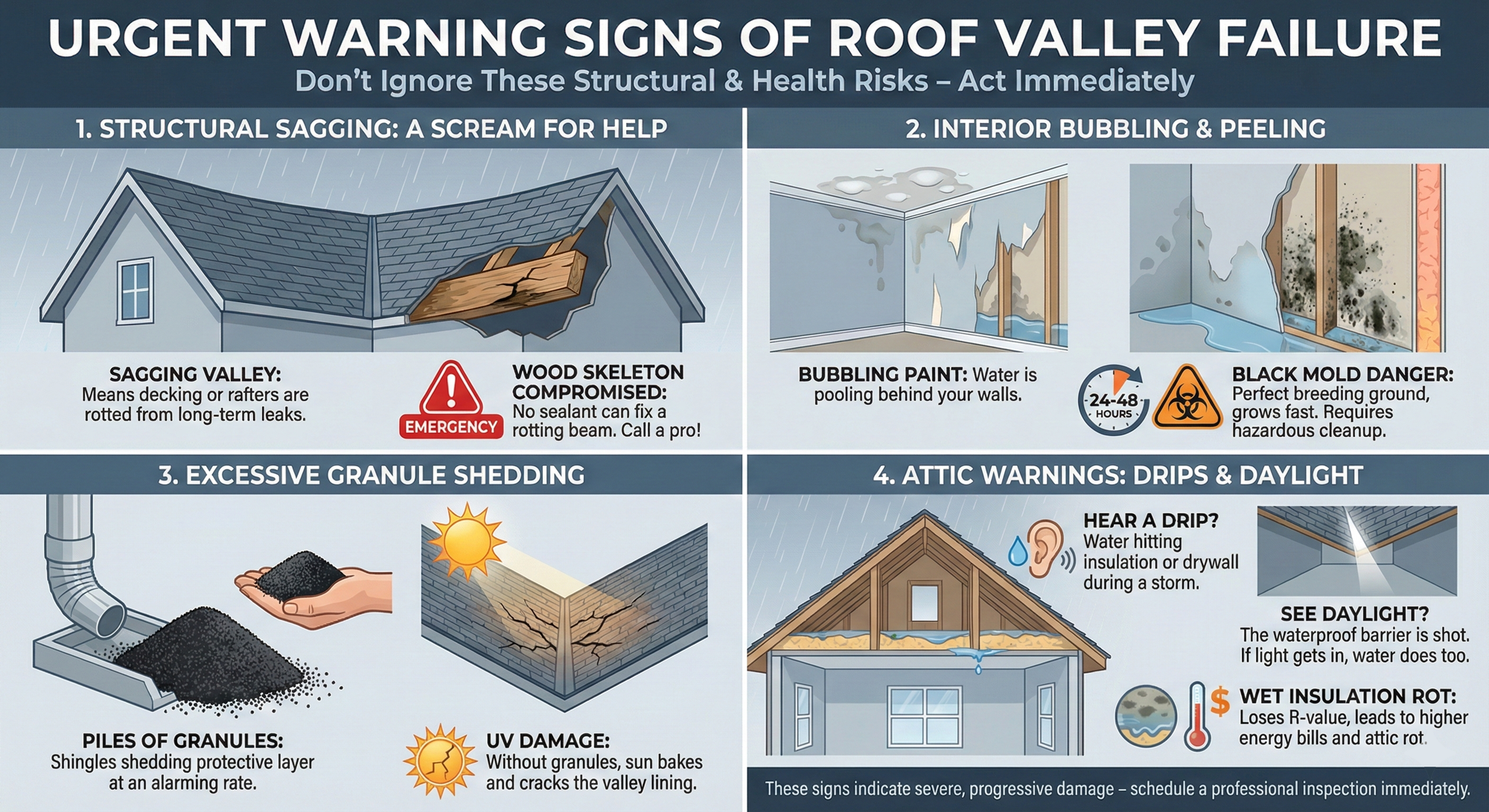
A missing shingle is an annoyance. A sagging roofline is a structural scream for help. If your roof valley line is not straight or dips in the middle, call a professional immediately. This usually means the decking or rafters underneath have rotted from a long-term leak. Structural sagging indicates the wood skeleton of your home is compromised. No amount of surface sealant will fix a rotting beam.
Watch your interior ceiling paint. It often tells the story before water drips. If you see bubbling paint or peeling wallpaper near room corners, water is pooling behind your walls. This trapped moisture is a perfect breeding ground for black mold, which can grow within 24 to 48 hours. Once mold gets into your insulation or drywall, you are paying for a hazardous material cleanup crew.
Check your downspouts or the splash blocks. If you find piles of mineral granules that look like coarse sand, your shingles are shedding their protective layer at an alarming rate. This is bad news for valleys. Once those granules are gone, UV rays bake the valley lining until it cracks. Finding excessive granules means your roof is nearing the end of its life.
Another red flag is something you might hear. If you are in the attic during a storm and hear a dripping sound, or if you can see daylight through the valley joint, the waterproof barrier is shot. If light can get in, water can get in. Wet insulation loses almost all its R-value immediately, so you will pay higher energy bills while your attic slowly rots.
Keeping Your Roof Valleys in Tip-Top Shape
You obsess over gutter cleaning but ignore the highway that feeds them. Your roof valleys are the storm drains of your house, handling gallons of rushing water during intense Tulsa downpours. If you treat them like just another patch of shingles, you are setting yourself up for problems. Debris loves to settle where water needs to flow.
Imagine a wet, heavy pile of leaves sitting in the V-shaped crease of your roof for three months. That decaying matter acts like a sponge, holding moisture against the roofing materials long after rain stops. This rots the asphalt or corrodes the metal. It also creates a dam, forcing water to back up and travel sideways under shingles.
Getting up there is about ensuring the structural framework of your roof does not turn into a science experiment for mold and rot. By keeping these channels clear, you allow the roof to dry properly between storms. This is the single biggest factor in extending the life of your roofing system. Neglect is expensive, but maintenance is mostly sweat equity.
Easy Maintenance Tips
Do not use a pressure washer. Blasting your roof with high power strips protective granules off shingles and forces water underneath the valley flashing. Be gentle. A leaf blower is best for dry debris, letting you clear the area without touching the delicate materials.
If you are dealing with wet, stuck-on leaves, use a soft-bristled brush or your gloved hands. Never use metal rakes or shovels. One slip with a metal tool can gouge the coating on metal valleys or tear an asphalt shingle, creating a leak. Work from the top down, gently loosening debris so it slides toward the gutters.
Look for more than just leaves. Moss and algae love the shade in roof valleys, and their roots can lift shingles. If you see green fuzz, do not scrape it. Use a specialized roof cleaner or a 50/50 mix of water and bleach with a garden sprayer to kill the growth. After clearing the mess, do a visual check.
- Check for loose fasteners or nails that have backed out due to thermal expansion.
- Remove any debris buildup that could divert water flow laterally under shingles.
- Look closely for granule loss which exposes the asphalt to harmful UV rays.
- Inspect the condition of sealants along the valley edges for cracking or separation.
Proactive Steps That Really Work
Tree branches are the enemy of a healthy roof valley. Overhanging limbs create shade that prevents the valley from drying out, accelerating material degradation. Trim back any branches that hang within six feet of your roofline to allow sunlight to hit the valleys.
Consider installing zinc or copper strips at the top of your roof ridges if you struggle with moss or algae. When it rains, trace amounts of metal wash down the roof, creating an environment where moss cannot survive. This passive prevention saves you from scrubbing the valleys later. These proactive measures are part of a comprehensive roof valley maintenance plan that is crucial for your home’s long-term health.
The best time to spot a failing valley is during a heavy storm. If you can safely access your attic, go up with a strong flashlight while it is raining. Look at the underside of the decking where the valley is. Dark spots or active drips give you real-time data on where the water penetration is happening.
Keep a close eye on the sealants and caulk around the valley flashing. These materials have a shorter lifespan than metal or shingles. Oklahoma’s freeze-thaw cycles can cause these sealants to become brittle and crack within five to ten years. Re-applying a high-quality, roof-rated sealant to these failure points is a cheap fix that can buy you several more years of leak-free performance.
Protect Your Home’s Structure
Nearly three-quarters of roof leaks originate in the valleys because they channel a massive volume of water. They carry a heavy load. It is the V-shaped channels directing gallons of Tulsa rain where it needs to go, or where it should not if they are broken. If you ignore the warning signs, you are rolling the dice with your home’s structural integrity.
Fixing a small valley issue is cheaper than replacing a water-logged ceiling. Do not wait for a stain to appear. Procrastination is the most expensive part of roof repair. If you see any of these signs, or just want the peace of mind that comes with a professional inspection, contact Trifecta Roofing. We provide honest assessments and high-quality repairs for homeowners in Tulsa and the surrounding areas. Request your free estimate today and let us keep your home safe and dry.
FAQ
Why are roof valleys suddenly failing more often these days?
I have noticed an uptick in complaints about leaks where roof sections join, probably because our storm seasons are more intense. These V-shaped channels are superhighways for rain. They take a beating because they handle more water volume than the rest of the shingles. It is a high-stress area that gives up long before the rest of the roof does. Because water rushes down two slopes and slams together in the middle, the wear and tear happens faster there. When they fail, water goes straight into the attic.
How can I tell if my valley is leaking without climbing up on a ladder?
Your ceiling will usually tell on the roof. Keep an eye out for water stains that look like long lines or streaks rather than a random round spot. These linear marks usually follow the path of the valley above them. Another giveaway is if the stain shows up after a heavy downpour but then seems to dry out when the sun comes out. That intermittent pattern is classic valley behavior. If you see mold creeping along the corners of your ceiling, that is a sign moisture has been there for a while.
Does the type of material used in the valley actually matter?
It matters a ton. The material choice is the biggest factor in how long the fix lasts. I have seen open valleys with metal flashing last for ages because water flows freely. But closed valleys where shingles are woven together tend to trap debris and wear out faster. If you have copper, it turns green when aging. Bright shiny copper means it is wearing thin. Aluminum gets a chalky white powder on it before it fails. Knowing what you have helps you predict when it will quit. Asphalt just cracks, which is harder to see from the ground.
Is there a safe way to test for a valley leak myself?
The garden hose trick is effective. Grab a helper to stand in the attic with a flashlight while you run water gently over one section of the valley at a time. Start at the bottom and work your way up. Do not spray the whole roof at once or you will never know where the hole is. Inside the attic, turn the lights off during the day and look for tiny pinpoints of daylight through the decking. Seeing light where wood should be is the fastest way to confirm a gap. Be careful with the water so you do not make a mess inside.
Can I just patch a valley or do I need a whole new roof?
You might get away with a repair if you catch it early. If you see the roof sagging near the valley, that is structural and a patch will not cut it. Warping usually means the wood underneath is rotting. Sometimes you can replace the flashing and shingles in that one area. But if you have multiple layers of old shingles or the leak has been dripping for months, a professional needs to tear it up to the deck to make sure the framing is not damaged. It is better to fix it right than to have the roof cave in later.