Siding Repair vs Replacement Cost: The Tipping Point for a Smarter Investment
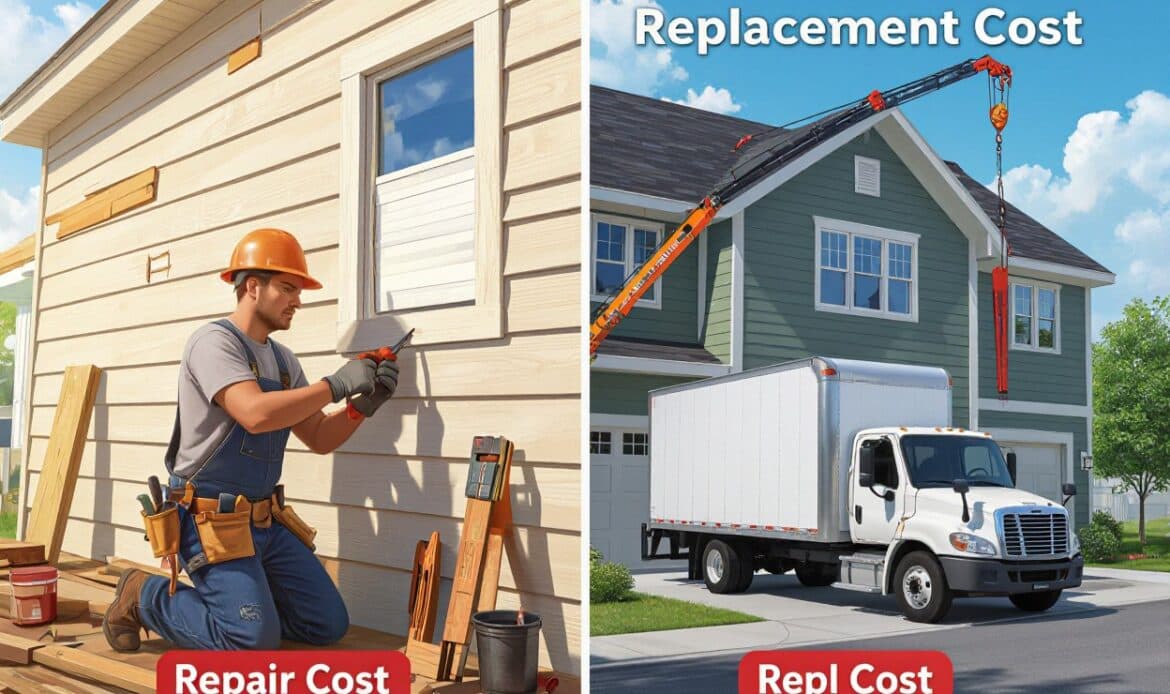
Siding repair vs replacement cost comes down to three things: what the damage costs to fix, what shape the rest of the wall is in, and how much life the material has left. At Trifecta Roofing and Restoration, we use a simple rule with homeowners: when repair costs exceed 30–50% of replacement value, replacement is usually the better buy. Look for extensive rot, water damage, or warped panels that damage your structure, and watch your energy bills. Damaged siding can waste 15–20% of the energy you pay for. Resale matters too, since replacement often returns 52–69% ROI. A cost worksheet and a professional inspection will settle the question.
Key Takeaways:
- Use a cost-threshold rule: if total repair estimates exceed 30–50% of full replacement cost, replacement is usually the better long-term value.
- Do a 5-minute inspection: look for rot or soft spots, warping, loose panels, water stains, mold, and visible insulation gaps to find the true damage.
- Factor in siding age and material lifespan: vinyl (20–40 years), fiber cement (30–50), and premium options (50+). If the siding is past or near its expected life, lean toward replacement.
- Replace, do not patch, when you see red flags like extensive rot, structural damage, repeated water leaks, bulging, or widespread mold. Those problems drive repair costs up fast.
- Count energy savings and ROI in the decision. Damaged siding can increase energy loss by about 15–20%. Insulated or full replacement can lower bills and typically recovers 52–69% of project cost over time.
What Your Siding Is Made Of
Types of Siding Materials
Vinyl is the low-cost option, with a typical lifespan of 20–40 years and installation often between $2–$7 per sq ft. Maintenance is light, but it fades and expands in extreme heat. Fiber cement resists fire and impact and lasts 25–50 years, with installed costs near $5–$12 per sq ft. Wood looks great but needs regular sealing and is prone to rot and insect damage. Aluminum shrugs off fire and rot and usually lasts 30–40 years, though dents and paint failure are the common complaints. Engineered wood splits the difference on looks and maintenance, with lifespans around 30–40 years.
| Vinyl | 20–40 yrs, low cost, poor in extreme heat, minimal maintenance |
| Fiber cement | 25–50 yrs, fire-resistant, higher install cost, heavy material |
| Wood | 20–40 yrs, great looks, requires sealing, prone to rot |
| Aluminum | 30–40 yrs, rust-resistant, dents easily, moderate cost |
| Engineered wood | 30–40 yrs, better moisture resistance than real wood, mid-range cost |
Match those tradeoffs to your budget, your climate, and how long you plan to stay in the house.
Lifespan and Durability
Vinyl and standard wood siding usually show real wear by year 20–30. Quality fiber cement and premium engineered systems commonly run 30–50 years. If your siding is older than the low end of those ranges, put replacement in your math instead of paying for repair after repair. Track your repair totals and apply the 30–50% repair-to-replacement threshold. Once repairs approach that share of a full replacement, replacement usually wins, because it stops the recurring moisture leaks and the 15–20% energy losses that come with them.
Widespread rot, continuous water staining, or structural warping eats through remaining life quickly and points to replacement. Small cracks or a couple of loose panels are fair repair candidates when the siding is still young and the insulation is intact. Use an inspection checklist to log defects, the square footage affected, and every quote, so you can run a clear ROI comparison. Many homeowners find replacement adds 52–69% of project cost back to resale value, which matters if you plan to sell within a decade.
Climate drives durability as much as the material does. Coastal salt air speeds corrosion on aluminum, freeze-thaw cycles shorten porous materials, and high humidity raises the odds of hidden moisture and mold. When you replace, pick materials proven in your local conditions. That is how you get full lifespan and less maintenance.
How to Tell How Bad the Damage Really Is
Start by measuring what you can see. Calculate the damaged area in square feet, photograph every side of the house, and track repair estimates so you can apply the 30–50% rule. If your repair total approaches or passes that share of a full replacement estimate, replacement is usually the smarter financial move. Use How Much Does Siding Repair Cost? to benchmark typical per-square-foot repair ranges, then drop your numbers into a cost-tracking worksheet and see whether patching or replacing pencils out.
Then compare the damage against the material's age. Many vinyl and fiber cement products last 20–40 years, and premium options can top 50 years. If your siding is near the low end of its life and keeps failing, replacement delivers better long-term ROI. Watch the energy side too. Gaps, damaged insulation, or widespread air leakage can push heating and cooling costs 15–20% higher. Pull your utility bill trends before you commit to repairs.
Common Signs of Damage
Look for warping, buckling, or panels that no longer sit flat. If more than 25% of a wall is warped, or boards have hairline cracks running several inches, a repair is probably a temporary fix. Probe suspicious spots with a screwdriver. Soft areas, crumbly edges, or dark staining behind the siding mean rot or an active water leak. One soft spot under 6 inches can be patched. Continuous damage to the sheathing across multiple studs usually means replacement.
Other red flags: repeated nail pops, failed caulking around windows and trim, mold growth, and interior clues like water stains on drywall or peeling paint on window casings. Document storm or impact damage with date-stamped photos and square footage estimates. That supports your insurance claim and tells you whether a small fix (say, replacing 10–30 sq ft) or a whole-section replacement is required.
DIY vs. Professional Inspections
You can do a solid 5-minute inspection yourself. Walk the perimeter, note loose or missing panels, probe the suspect areas, and photograph flashing and caulk lines. A rented moisture meter or infrared camera (typically under $40/day) will find dampness you cannot see. Use those readings and your photos to sort what needs attention now from what can wait for routine maintenance.
A professional inspector or siding contractor goes past the surface: moisture-mapping, sheathing probes, attic and soffit checks, and a written estimate that puts repair cost next to full replacement cost. Paid inspections typically run $100–$300, and many contractors waive the fee when you move forward with a contract. Every job we do starts with a free inspection, and that visit often pays for itself by catching rot or framing damage you would have missed.
Here is what a pro visit should include: 1 to 2 hours on site, a photo-backed report with measured square footage, line-item repair vs. replacement quotes, thermal or moisture imaging where it is needed, and paperwork formatted for insurance claims. Catching hidden moisture or structural damage early is what keeps a small bill from becoming a large one.
What Repairs Actually Cost
Add up your siding repairs from the last 3–5 years and compare that sum to a current replacement estimate. The formula is simple: (Total Repair Cost ÷ Replacement Cost) × 100 = Repair Percentage. The industry treats 30–50% as the tipping point where replacement becomes the smarter money. Say your repairs over three years total $4,000 and a full replacement quote on your 2,000 sq ft home is $12,000. That is 33%, and it is time to price out replacement.
Material lifespan changes the math. Vinyl typically lasts 20–40 years, while premium fiber cement or engineered options can exceed 50 years, so a $10,000 replacement can carry a lower lifetime cost than repeated $500 repairs over a decade. Keep a worksheet with dates, invoices, failure types, and contractor notes so you can run the number in a minute. Contractors use that same worksheet during a free consultation to give you an accurate break-even timeline.
Typical Repair Costs
Minor fixes like swapping a few panels, patching small cracks, or re-caulking trim generally run $150 to $1,200 depending on access and material, with panel swaps landing around $300–$800 each. Bigger jobs, a single wall or gable, water-damaged sheathing, or several boards at once, commonly fall between $1,000 and $4,000 once labor, disposal, and any mold remediation are counted.
Local labor rates and matching problems push those numbers up. Matching discontinued siding or high-end fiber cement can double a simple panel-replacement quote. Track every line item (parts, labor, travel, permit) so your repair-percentage formula runs on real numbers instead of memory.
Hidden Costs of Frequent Repairs
Patchwork hides bigger problems. Unseen moisture behind siding causes framing rot and mold, and that turns a $500 panel fix into a $5,000–$20,000 structural repair once sheathing and studs come out. Energy loss through gaps and degraded insulation commonly adds 15–20% to your heating and cooling bills, so a failed wall is a monthly cost, not a one-time nuisance.
Repeat repairs also hit resale value, insurance claims, and your calendar. Multiple service calls mean repeated trip fees ($75–$200), scheduling delays, and a weak inspection report that can shave thousands off an asking price. The time and stress of managing contractors over and over is real money too, even though it never shows up on an invoice.
Use cumulative tracking. Add every repair invoice in a rolling 3–5 year window and divide by your current replacement estimate. Over 30%, start planning replacement. Past 50%, replace now, both for the money and for the risk. Pair the worksheet with an energy audit and a professional assessment to measure hidden damage and get an ROI projection. Replacement typically recovers 52–69% of cost at resale while stopping the energy and structural losses.
What Replacement Costs
Replacement usually becomes the better move once repairs approach the 30–50% rule against a full replacement. If recurring siding problems total $6,000 in repair estimates on a home where full replacement is $12,000, you have crossed the line where replacement delivers lower long-term cost and better resale value. Track repair invoices next to replacement quotes on one worksheet and the tipping point is easy to see.
There are benefits past the sticker price. Insulated siding can cut heating and cooling losses by roughly 15–20%, and replacement projects historically recover 52–69% ROI at resale depending on material and market. Put those figures beside local contractor bids before you sign anything.
Average Replacement Costs
A full replacement on an average 2,000 sq ft house swings widely by material. Vinyl commonly runs about $8,000–$20,000 installed, fiber cement usually lands between $12,000 and $33,000, and premium wood or engineered siding can reach $20,000–$40,000 or more. Tear-off, disposal, and basic trim work are usually included, but expect separate line items for upgrades like thicker insulation or new trim.
Labor and regional pricing explain much of that spread. Urban markets with higher labor rates can add 15–30% to material-based estimates, and complex rooflines or multiple stories add time and safety cost. Collect at least three itemized bids and compare per-square-foot and per-project pricing, not just the bottom line.
- Vinyl cost range: $8,000–$20,000 for typical homes
- Fiber cement range: $12,000–$33,000 depending on texture and brand
- Premium materials: $20,000–$40,000+ for real wood or specialty siding
- Any regional labor variations can shift your final invoice by 15–30%
Factors Influencing Replacement Expenses
Material choice is the biggest lever you control. Vinyl and engineered products keep material costs down, while fiber cement, real wood, and stone veneer cost more to buy and install. Rot or structural damage found during tear-off often multiplies the total. A routine discovery adds 10–30%, and widespread rot can double the line items for framing and sheathing.
House complexity, height, and access are predictable cost drivers. A one-story rectangle keeps labor and safety gear cheap. Two- and three-story homes with heavy trim and lots of windows need scaffolding, which raises labor 20–50%. Budget permit fees, disposal fees, and possible trim or window flashing upgrades as fixed items.
Climate and the performance you want also shape the choice. In hail-prone or high-wind areas you may want impact-rated or thicker materials. That adds 10–25% up front and cuts insurance claims and maintenance later. An energy audit showing a 15–20% reduction in HVAC load from insulated siding is how you justify a higher upfront cost on payback.
- Material selection: Vinyl vs. fiber cement vs. wood drives baseline cost
- Hidden damage: Rot or mold found during demolition typically adds 10–30%
- Labor & access: Multi-story and complex homes increase labor 20–50%
- Any performance upgrades (insulation, impact ratings) can raise upfront cost but lower operating expenses
Which One Pays Off Over Time
Compare what you have spent patching over the last 3–5 years against current replacement estimates. If tracked repairs approach or pass 30–50% of the replacement price, replacement usually makes better financial sense and cuts your exposure to hidden damage. The worksheet is simple: list repair dates, area in square feet, individual costs, and a running total, then divide that total by a current full-replacement estimate for your percentage.
Lifespan and performance count too. Standard siding materials commonly last 20–40 years, while premium options can exceed 50 years. Insulated replacements cut air leakage and energy waste by roughly 15–20%, which shows up on your utility bill and in buyer interest.
Long-Term Value Snapshot
| Repair | Replacement |
|---|---|
| Lower immediate cost for small problems such as small rot spots, warping on one wall, or loose panels. Tracked repairs under 30% of replacement typically make sense if damage is in one spot and water leaks are controlled. You must verify there’s no underlying sheathing rot or repeated moisture cycles, since recurring fixes drive total costs past the repair threshold quickly. | Higher upfront cost but longer-term stability. Full replacement addresses widespread issues, allows material upgrades (e.g., insulated or fiber cement), and reduces repeated maintenance. Typical resale recovery ranges from 52–69% of project cost, and replacing failing siding often eliminates energy loss, the spread of insect or rot damage, and multiple service calls over a 10–15 year period. |
Return on Investment for Repairs vs. Replacement
Run a straight ROI test. Add repair costs from the past 3–5 years and set that total against a current replacement quote. Example: replacement on your 1,800 sq ft home is quoted at $18,000 and you have spent $7,200 on repairs in four years. That is a 40% repair-to-replacement ratio, and it says replacement will likely save money long-term while lowering the risk of hidden damage.
Count the returns that are not dollars on a quote. Upgrading to insulated siding pushes ROI past simple cost recovery by cutting heating and cooling costs and future maintenance. Start with the published recovery averages (52–69%), then add projected annual energy savings (commonly 15–20% with proper insulation) to estimate payback over 10–15 years.
Impact on Home Resale Value
Siding condition drives curb appeal and buyer confidence. Visible damage or obvious patchwork lowers offers or triggers repair demands at inspection. A full siding replacement priced at $20,000 typically raises perceived value by about $10,400–$13,800 based on the 52–69% recovery range. Spot repairs rarely impress a buyer who can see uneven finishes or old rot.
The neighborhood matters. Where most exteriors are updated or homes are higher-end, buyers expect matching materials and long-lasting products, so replacement with premium siding beats patchwork. Buyers also price in future replacement cost. If they think you put off the big job, the offer will reflect it.
Keep documented maintenance and professional inspection reports either way. Clear records showing regular inspections, no repeated water leaks, and recent targeted repairs protect value when you choose repair. Replacement paired with a visible warranty and energy-performance specs usually gets the strongest buyer response and the highest net recovery at sale.
Paying for the Project
Siding replacement runs roughly $5,000 to $25,000 depending on home size and material, with many projects landing in the $10,000–$15,000 range. Apply the same rule of thumb: if total repair estimates exceed 30–50% of replacement cost, replacement usually makes more financial sense. Run your numbers in a cost-tracking worksheet to confirm. For material-specific tradeoffs and whether a patch or full swap is better on vinyl, see Vinyl Siding Repair vs. Replacement for real-world examples.
Pick financing that matches your expected ROI. Siding replacements typically recover 52–69% of cost at resale and can cut energy loss by about 15–20% with insulated products. Compare the total financing cost over the life of the loan, not the monthly payment. A small payment stretched over 20 years can double the interest you pay and wipe out the ROI.
Payment Plans and Loans
Contractor payment plans usually include an upfront deposit (10–30%) plus staged payments tied to milestones. Read deferred-interest promotions closely. A common offer is 0% APR for 12–18 months that converts to high interest dating back to day one if you do not pay it off in time. Unsecured home improvement loans generally run 6–18% APR over 3–10 years. A $15,000 loan at 7% over 10 years works out to about $174/month.
Home equity options (HELOC or home-equity loan) often carry lower rates, with typical HELOCs at variable rates around 3–8% depending on market and credit. FHA 203(k) or Fannie Mae home improvement programs are alternatives if you are refinancing. Get written loan terms, check for prepayment penalties, and compare total interest across options before signing. Avoid using high-interest credit cards (>20% APR) for multi-thousand-dollar projects unless you have a clear, short payoff plan.
Insurance Coverage Considerations
Insurance may cover siding damage from specific events: wind, hail, fire, or impact. Standard homeowner policies usually pay from the dwelling coverage portion. What you collect depends on whether the policy pays Replacement Cost Value (RCV) or Actual Cash Value (ACV). RCV covers full replacement after your deductible. ACV subtracts depreciation. Deductibles typically fall between $500 and $2,500, so a $2,000 siding repair claim could land inside your deductible and not be worth filing.
Documentation decides claims. Take time-stamped photos, get a contractor estimate with line-item pricing, and keep damaged samples. If the adjuster undervalues the damage, hand over your contractor's scope and ask for a reinspection. A public adjuster can increase recovery on large claims, but their fee comes out of your payout. Cosmetic-only damage is often excluded, so build the claim around performance problems like water leaks or structural damage when they exist.
Filing small claims over and over can raise future premiums. If a repair estimate is at or near your deductible, or under $2,000, you are often better off paying out of pocket and logging the repair. Keep receipts, contractor before-and-after photos, and a timeline. Insurers commonly require documentation within 30–90 days of loss, and a gap between your contractor's estimate and the adjuster's can be closed with a formal supplement or a claims appeal.
Making the Call
Weigh the short-term savings of a repair against long-term value. When repair costs approach 30–50% of replacement, when your siding is near the end of its expected lifespan, or when you see widespread rot, warping, water leaks, or climbing energy bills, replacement is usually the wiser move. Work ROI into it (typical recovery 52–69%), check what insurance may cover, and pick a material that performs in your climate. That is the honest way to judge siding repair vs replacement cost.
From there it is straightforward: keep a cost-tracking worksheet, run the 5-minute inspection checklist, schedule a professional assessment and an energy audit, and document damage thoroughly for any claim. Vet your contractor, choose climate-appropriate materials, and set a maintenance plan so you get full life and value out of whichever option you pick. If you want a second set of eyes on your walls, Trifecta Roofing and Restoration works throughout Tulsa and Northeast Oklahoma, and every job starts with a free inspection. Call (918) 471-2777.
FAQ
How do I decide whether to repair or replace siding based on cost?
Put total projected repair costs next to full replacement cost. If repairs approach or exceed 30–50% of replacement cost, replacement is usually the smarter choice. Steps: 1) Get itemized quotes for each repair and for full replacement. 2) Add projected future repairs for the next 5–10 years. 3) Divide total projected repair spend by replacement cost for your percentage. 4) At 30–50% or more, replace. Log dates, damage type, contractor quotes, and expected useful life after repair in a worksheet. When your numbers sit close to the threshold, schedule a professional assessment to confirm hidden damage and check the math.
What are the red flags that indicate siding damage requires immediate replacement rather than repairs?
Replace instead of repairing when the problems are widespread or structural: 1) Extensive rot or soft spots across large areas, 2) Repeated water leaks or mold behind multiple panels, 3) Significant warping, buckling, or peeling, 4) Sagging walls or damaged sheathing, 5) Recurring repairs in the same areas, 6) Pest infestation that has damaged the structure underneath, or 7) Ongoing air or water leaks causing interior damage. What to do: stop the temporary fixes, document damage with photos and dates, arrange an emergency professional inspection, and move to replacement if structural safety or health hazards (mold, major water leaks) are in play.
What is the 5-minute siding inspection checklist every homeowner can use?
Walk the perimeter and check: 1) Visible gaps, loose or missing panels and trim, 2) Warping, cracks, or blistering on siding surfaces, 3) Soft spots when pressed, which means rot, 4) Failing caulk or flashing around windows, doors, and rooflines, 5) Stains or mold that signal moisture leaks, 6) Paint failure on wood or engineered siding, and 7) Interior clues like musty odors, water stains, or attic moisture. Find a red flag, log the location and severity, take photos, and schedule a professional follow-up. A downloadable inspection checklist keeps your findings consistent when you share them with contractors for quotes.
How do siding age and material type affect whether I should repair or replace?
Lifespans vary: vinyl 20–30 years, fiber cement 25–40 years, wood 20–40 years depending on species and maintenance, and metal 30–60 years. Premium options like stone, brick, and high-end systems can last 50+ years. Guidance: if the siding is past roughly 75% of its expected life, or several components are near end-of-life, replacement beats patchwork on cost. When you replace, look at upgrades like insulated or higher-durability products to stretch service life and cut maintenance.
Will siding replacement reduce energy bills, what ROI can I expect, and how do insurance claims factor into cost decisions?
Insulated or well-sealed siding cuts energy waste from air leakage and poor insulation, commonly reducing heating and cooling loss by roughly 15–20% on poorly performing walls. Resale ROI for siding replacement typically runs about 52–69% of cost, depending on material and market. On insurance: storm or impact damage is often covered, wear-and-tear is not. Document damage with dated photos, repair estimates, and maintenance records. File promptly and back the claim with contractor estimates. Good steps: get an energy audit before replacement so you can measure the savings, request multiple replacement quotes, and gather documentation for any claim that can offset the cost.