


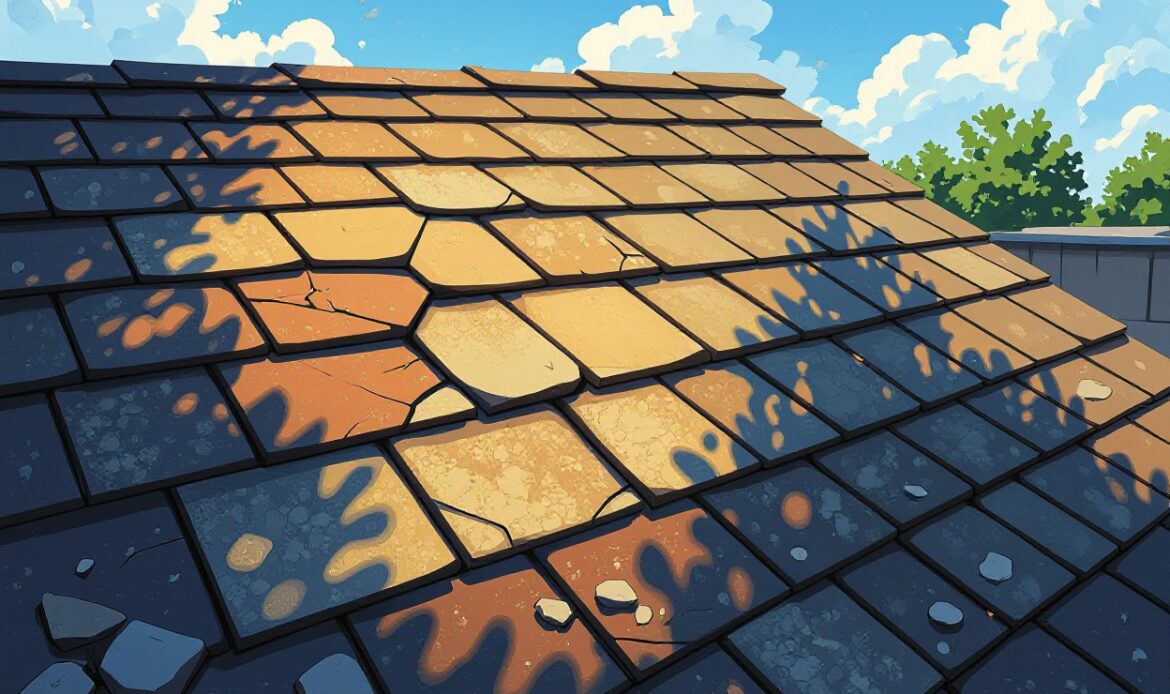
Most people do not notice the signs of sun damage to shingles until they spot ugly, washed-out patches on their roof. While you try to keep your house cool, the sun breaks down the molecular bonds in your asphalt shingles, drying them until they become brittle. Once that starts, your roof loses its ability to fight water damage. This silent process of UV radiation is the biggest threat to your home’s first line of defense.
What is Happening to My Shingles?
The Sun’s Role in Roof Aging
Many homeowners believe storms are the biggest threat to their roof. The reality is quieter. Daily sunshine causes the most wear. Think of your roof like the dashboard of a car parked outside for a decade. The cracking and fading happen because the sun is relentless. In Tulsa, where we see around 230 sunny days a year, your shingles are constantly baking. That heat, combined with UV rays, accelerates the aging process faster than you might expect.
The heat plays a massive part in this aging cycle. When Oklahoma summer temperatures hit the 90s, your roof surface can soar past 140 degrees. This thermal shock causes materials to expand during the day and contract at night, weakening structural integrity over time. It is a physical workout your roof never signed up for, and eventually, something gives.
How UV Rays Affect Shingle Materials
A shingle appears solid, but it is a complex chemical mixture held together by volatile oils. UV rays penetrate the asphalt and cook these crucial oils out of it. Once the petroleum-based oils evaporate, the asphalt loses its flexibility and becomes brittle.
This chemical process, a key part of the solar degradation of asphalt roofing, is what causes the material to dry out. As the binder breaks down, it loses its grip on the protective granules. These granules are the small, sandy bits that provide color and protection. Without the sticky asphalt, granules wash into your gutters. This slow disintegration leaves the fiberglass mat underneath exposed to the elements.
This chemical reaction creates a vulnerability that water exploits. Once the molecular bonds are snapped and the material becomes porous, moisture can seep in, leading to leaks. It is sunburn for your house, but your roof cannot heal itself.
Am I Seeing Signs of Sun Damage?
Spotting Fading and Discoloration
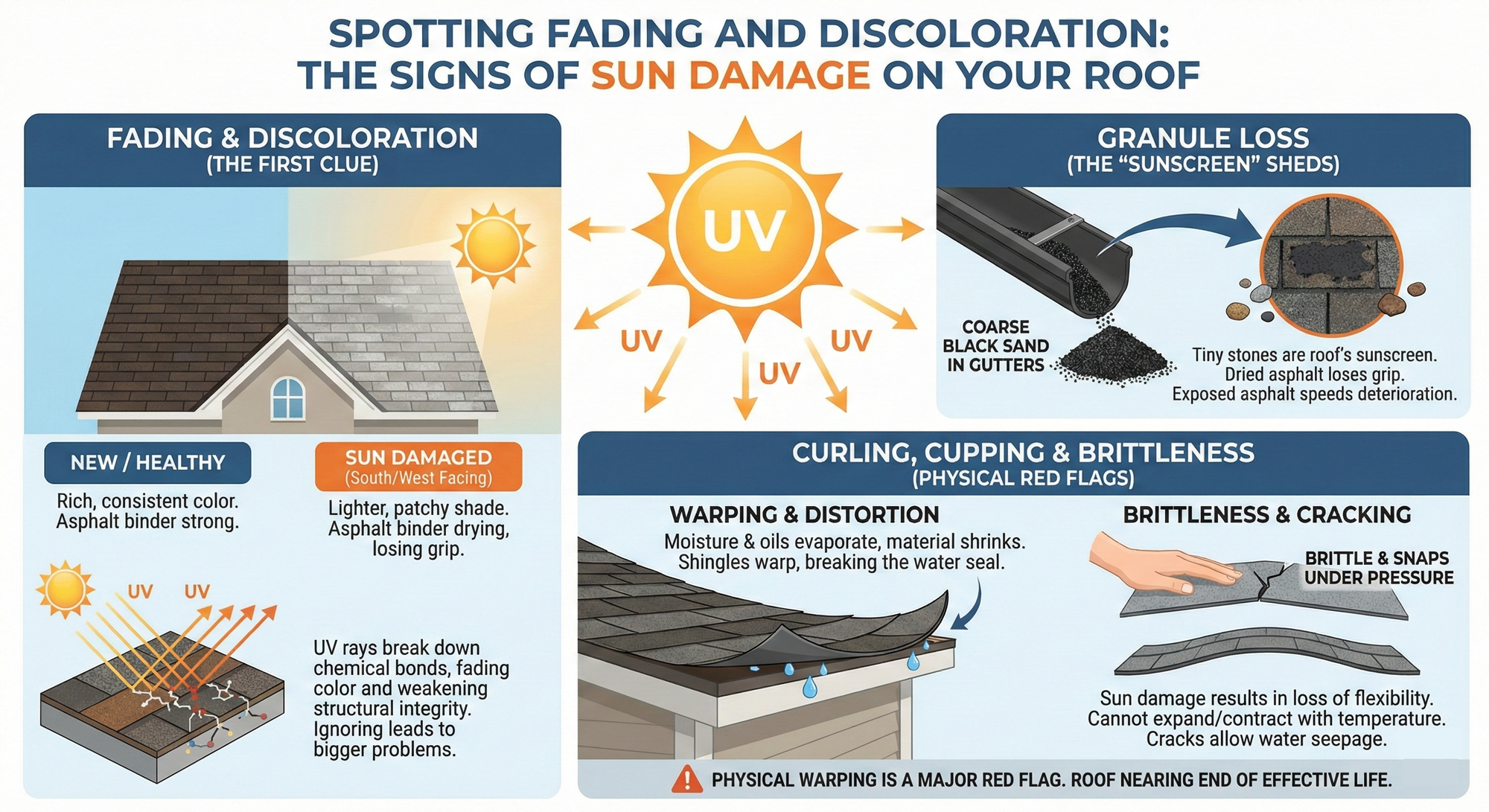
You may wonder why some sections of your roof look much older than others. This is often the first clue of sun damage. You will likely notice that slopes facing south or west have turned a lighter, washed-out shade. While this hurts your curb appeal, it is also a physical signal that the asphalt binder is drying out and losing its grip on the protective surface.
A small amount of lightening is normal as a roof settles. Patchy or extreme discoloration, however, means UV rays are breaking down chemical bonds inside the material. The science behind this process shows exactly how UV rays break down the shingle’s protective layers. Once the color fades, structural integrity weakens. Ignoring it leads to bigger problems.
Granule Loss and Other Warning Signs
Look inside your gutters or near your downspouts after a heavy rain. If you see piles of coarse black sand, you have a problem. Those tiny ceramic-coated stones are your roof’s sunscreen. When the asphalt dries out from constant baking, it loses its ability to hold onto them. Once those granules are gone, the deterioration speeds up significantly because the raw asphalt is left completely exposed.
You also need to watch for shingles that are curling up at the corners or cupping in the middle. As moisture and oils evaporate, the material shrinks and distorts. If your shingles look warped or are pulling away from the roof deck, they no longer seal your home against water. This physical warping is a major red flag that your roof is nearing the end of its effective life.
If you were to touch a sun-damaged shingle, it would not have the slight flexibility that healthy asphalt has. Instead, it becomes brittle and might snap under light pressure. This brittleness is dangerous because it means your roof can no longer expand and contract with temperature swings, leading to cracks that let water seep in.
Why Does My Roof Fade Faster Than Others?
You have probably noticed that one house on your street looks new while the one next door looks faded. The difference often comes down to the chemical makeup of the shingles. Manufacturers add UV inhibitors to the asphalt mix, but cheaper shingles use less of this ingredient. On a molecular level, the impact of UV rays on asphalt shingles is significant, breaking down the chemical bonds that provide flexibility.
Even with the best shingles, color choice plays a massive role in longevity. Darker colors like charcoal or black absorb more heat and radiation than lighter shades like gray or tan. That absorbed energy breaks down the asphalt bonds faster. A midnight black roof looks sharp on day one, but it will show its age faster than a lighter color that reflects more of the Oklahoma sun.
Roof Orientation Matters
The direction your roof slopes face is the biggest factor in uneven fading. South-facing slopes are the victims because they get blasted by the sun all day, while the north side stays relatively cool. That is why you might see severe discoloration on just one side of your home while the rest looks fine.
West-facing slopes also have it rough. They catch the afternoon sun when the air temperature is at its peak, usually between 2 PM and 5 PM in Tulsa. This creates a combination of UV radiation and intense ambient heat. If your home has a complex roofline, do not be surprised if your roof looks like a patchwork of different shades after a few years.
How Temperature and Weather Play a Part
Tulsa summers are brutal, but the heat combined with the light does the real damage. When the thermometer hits 90 degrees, your dark roof can reach 160 degrees or more. This extreme heat cooks the volatile oils out of the asphalt, leaving the shingle dry. Once those oils are gone, the shingle loses its flexibility and cannot hold onto the colored granules as well.
The UV rays break the chemical bonds, while the heat dries everything out. This combination makes the color fade rapidly because the pigment in the granules degrades under thermal stress. You cannot control the weather, but this reaction explains why roofs in cooler climates hold their color longer than ours do.
| Environmental Factor | Impact on Shingle Color & Integrity |
|---|---|
| Ambient Air Temp (90°F+) | Raises roof surface temp to 160°F+, evaporating crucial oils. |
| Direct UV Exposure | Breaks molecular bonds in asphalt, causing graying and brittleness. |
| Combined Heat & UV | Accelerates granule loss, washing away the color source. |
Oklahoma weather often swings wildly from a scorching afternoon to a cool evening. This rapid temperature drop forces your shingles to contract quickly after expanding all day. This constant push-and-pull creates micro-cracks in the asphalt layer. Over time, this thermal cycling physically weakens the material to the point where it can no longer hold pigment, leading to a washed-out, patchy look.
| Cycle Stage | Physical Reaction |
|---|---|
| Mid-Day Peak Heat | Shingles expand and pores open, exposing asphalt to UV. |
| Evening Cooling | Rapid contraction stresses the material structure. |
| Long-Term Result | Micro-cracking occurs, leading to permanent pigment loss. |
What About Different Shingle Types?
Not all roofing materials surrender to the sun at the same speed. While standard asphalt shingles are common, their ability to fight UV radiation varies based on their composition. The petroleum-based oils in cheaper shingles dry out much faster, leading to a brittle, cracked look.
The quality of engineering and the density of the material matter. Some options are built to reflect solar energy, while others absorb it. Here are the main players on roofs across Oklahoma:
- Standard 3-tab asphalt shingles which are budget-friendly but sensitive to heat.
- Architectural shingles that use thicker layers and better granules.
- Metal shingles that reflect rather than absorb heat.
- Clay and concrete tiles known for extreme longevity.
The initial cost of the material often correlates directly with its ability to withstand UV degradation.
| Roofing Material Type | Performance in Tulsa UV Conditions |
|---|---|
| Standard 3-Tab Asphalt | Begins fading within 5 years; prone to rapid granule loss. |
| Architectural Asphalt | Resists fading for 10-15 years due to thicker construction. |
| Metal Roofing | Reflects UV rays; specialized coatings prevent color loss. |
| Clay/Concrete Tiles | Lifespan exceeds 50 years; naturally resistant to UV breakdown. |
| Cool Roof Asphalt | Uses reflective granules to reduce heat absorption and aging. |
Do Higher-Quality Shingles Last Longer?
Spending more money upfront often works out in your favor. Cheaper 3-tab shingles are thinner and have less asphalt, meaning they have less oil to lose before they dry out. In our local climate, these basic shingles can look washed out in as little as five years. Premium architectural shingles are thicker and packed with more UV inhibitors. They hold onto their oils longer, usually giving you 10 to 15 years before showing significant age.
Manufacturers add technology to high-end products to fight the sun. Many top-tier lines include specialized granules that reflect sunlight to keep the shingle cooler. Since heat accelerates the chemical breakdown of asphalt, a cooler shingle is a longer-lasting shingle. You pay more initially but replace the roof less often.
Are There Better Options for My Roof?
If you want to avoid worrying about asphalt drying out, consider materials that do not rely on petroleum oils. Metal shingles or standing seam roofs are great options because they reflect UV radiation instead of absorbing it. With modern reflective coatings, a metal roof can bounce solar energy away, which stops fading and keeps your attic cooler. They do not get brittle and do not lose granules.
Clay and concrete tiles are another option. Since they are not made of organic compounds, they are almost immune to the sun damage that affects asphalt. They might fade slightly over decades but will not curl or crack from sun exposure. Their lifespan often exceeds 50 years, making them a long-term solution.
If you prefer the look of traditional shingles, “cool roof” asphalt shingles are available. These look like standard shingles but use cooling granule technology to reflect infrared radiation. It is a smart middle ground that offers better protection against chemical breakdown caused by the Oklahoma sun.
How Can I Protect My Roof From Sun Damage?
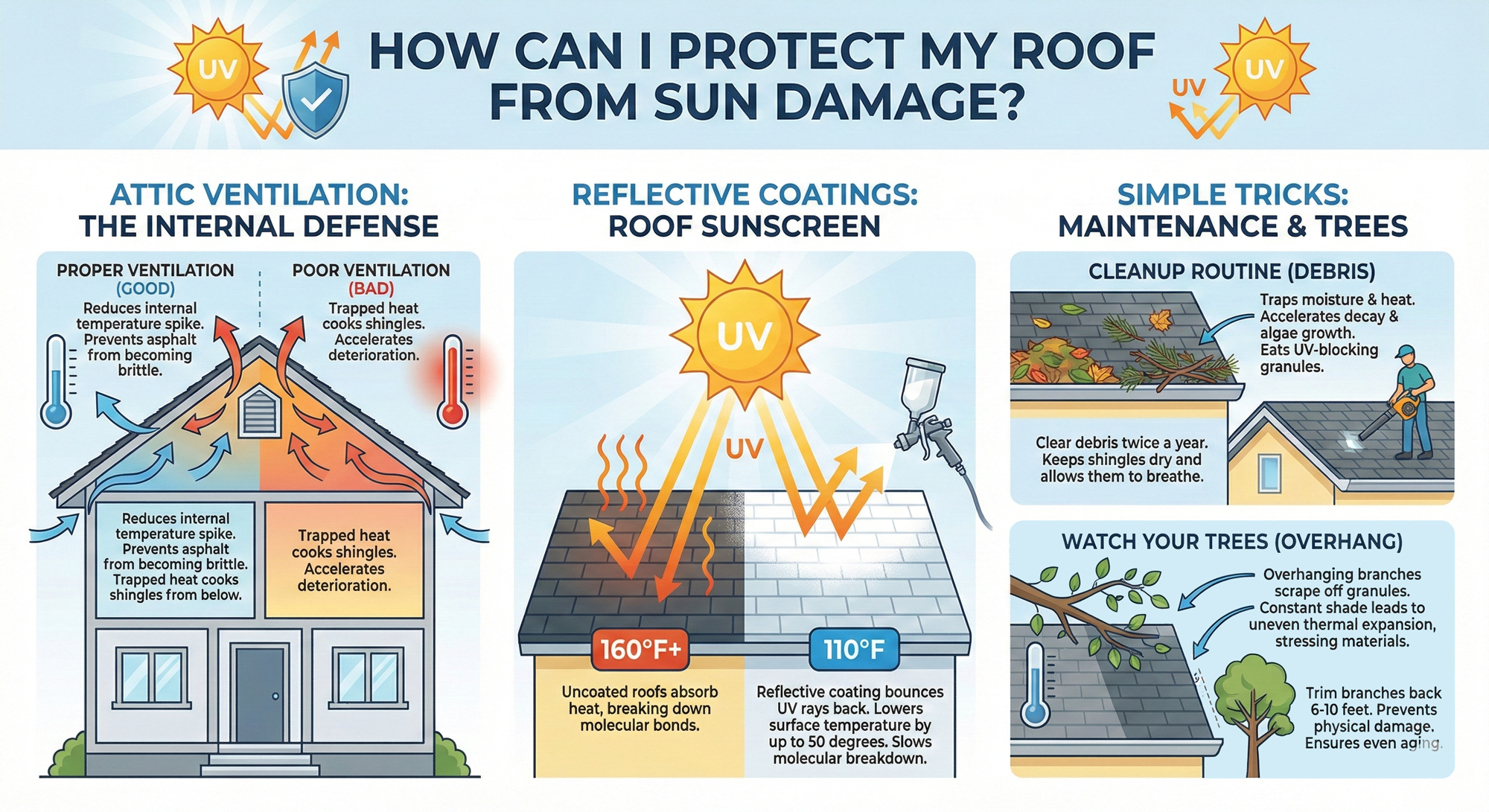
You can fight back against UV damage. One of the best defenses is inside your attic. Proper ventilation is critical because trapped heat cooks your shingles from the bottom up while the sun beats down from above. For your roof to last, you must understand proper attic ventilation to reduce the internal temperature spike that makes asphalt brittle.
Reflective coatings are also gaining popularity in Tulsa. These specialized sprays act like sunscreen for your roof, bouncing UV rays back into the atmosphere. A quality reflective coating can lower roof surface temperatures by up to 50 degrees. It is an investment that pays off by stopping the molecular bonds from breaking down so quickly.
Simple Tricks to Keep Your Roof Safe
A simple cleanup routine helps. When leaves and pine needles pile up, they trap moisture and heat, which accelerates decay and promotes algae growth that eats away at UV-blocking granules. Clear debris off your roof at least twice a year. It keeps the shingles dry and allows them to breathe.
Watch your trees, too. Overhanging branches can scrape off protective granules. Constant shade on one section of the roof leads to uneven thermal expansion, stressing the materials where hot and cool sections meet. Trimming branches back about six to ten feet prevents physical damage and ensures your roof ages evenly.
When is the Right Time to Call a Pro?
There comes a point when you need a professional opinion. If you find handfuls of mineral granules in your gutter downspouts, your roof needs help. Granule loss means the raw asphalt is exposed directly to the sun, and failure is just around the corner. A professional can assess if a protective sealant can save it or if the structural integrity is too far gone.
Pay attention to the shape of individual shingles. If you spot shingles that are curling or blistering, do not try to fix them yourself. Curling indicates the material has dried out and shrunk significantly, meaning it can no longer expand and contract with Tulsa’s temperature swings without cracking. A professional can tell you if a repair is possible or if you are investing in a failing system.
Age is a deceptive factor. Even if your roof is only halfway through its 20-year warranty, Tulsa’s intense UV index can age shingles twice as fast as the manufacturer intended. A professional inspection every 3 to 5 years catches subtle issues like hairline cracks or sealant failure around flashings you would never see from the ground. Catching these issues early helps manage the UV damage to roof shingles repair cost in Tulsa, meaning you might get away with a minor fix instead of a full tear-off.
Is It Time to Replace My Shingles?
Deciding between a repair and a full replacement is rarely simple. There is a line between cosmetic issues and structural failure that puts your home at risk. If your shingles look a little washed out, you might have time. Once the material loses its flexibility, you are racing against the next storm. You must weigh the cost of a new roof against potential water damage repairs.
Age is your best baseline. If a standard asphalt roof is past the 15-year mark in our climate, it is on borrowed time. Asphalt shingles lose their waterproofing oils every year. After a decade and a half of baking in 90-degree heat, they can no longer expand and contract without cracking. If you see widespread issues, a full replacement is often the smarter financial move than endless patch jobs.
Signs It is Time for a Roof Upgrade
You need a close look at your roof. The most dangerous signs are often subtle until it is too late. Look for “bald spots” where granules have washed away, leaving the black asphalt or shiny fiberglass mat exposed to the elements. Once that fiberglass is showing, the shingle has no protection left and will fail rapidly. You might also notice shingles “clawing” or curling inward, which means the material has shrunk and is pulling away from the roof deck.
Another red flag is finding pieces of shingle on your lawn after a windy day. When shingles become brittle, they lose their tear resistance and snap off in chunks during high winds. If you see this debris, or if the tabs flap easily, the adhesive seal has failed. At that point, your roof system can no longer shed water effectively.
My Take on Roof Lifespan
Manufacturers use “30-year” or “Lifetime” labels on shingles, but you must take those numbers with a grain of salt in Tulsa. Those ratings are based on lab conditions, not the reality of our freeze-thaw cycles and baking UV radiation. A standard “30-year” architectural shingle in Oklahoma typically provides 18 to 22 years of reliable service. If you have a 3-tab shingle roof, you should budget for a replacement around the 12 to 15-year mark.
The intense thermal shock our roofs endure puts immense stress on the asphalt composition. This constant expansion and contraction wears the material out faster than it would in a milder climate. Treat the warranty number as a maximum theoretical limit, not a guarantee.
Ventilation is the biggest variable. I have seen 15-year-old roofs that look new because the attic had great airflow, and 8-year-old roofs that were failing because heat had nowhere to go. If your attic becomes a furnace every July, it cooks the shingles from the bottom up, drastically shortening their life expectancy. To get near that warranty number, you must ensure your intake and exhaust vents are working properly.
To wrap up
Now you know what the Oklahoma sun does to your roof. Ignoring faded spots is not a good plan. It is about keeping water out and your energy bills down. You do not have to climb a ladder every weekend, but spotting bald patches or curled edges early can save you a massive headache.
Your roof fights a silent battle every day.
Shingles will not last forever, but you have more control than you think. Checking your attic ventilation or considering reflective coatings buys your home extra time against the elements. If you are unsure what you are looking at, calling a local professional to check the grit and structural integrity is a smart move. Catching sun damage before a leak starts is the best way to protect your biggest investment.
If you are concerned about the state of your roof, do not wait for a leak to confirm your suspicions. Contact the experts at Trifecta Roofing for a thorough inspection. Get a free quote today and learn how we can protect your home.
FAQ
Is faded shingle color just a cosmetic issue I can ignore?
Most people assume graying shingles are just an eyesore. Unfortunately, discoloration is usually the first red flag that the structural integrity of your roof is weakening. The color comes from granules and asphalt oils. When they fade, it means the sun is drying the material out. Once those oils are gone, the shingle loses flexibility and turns brittle, making it prone to cracking in the wind. A faded roof is a weaker roof. If you see the color fading, it is time to check your roof’s health.
Can I just paint over the faded shingles to protect them?
Painting your shingles is not a quick fix. Standard paint is not designed for the chemical makeup of asphalt and does not expand and contract correctly. Regular paint can trap moisture inside the shingles and rot your roof deck. There are specific reflective coatings made for roofs, but they are not the same as wall paint. These specialized coatings reflect UV rays and allow the shingles to “breathe.” Using the wrong product will likely void your warranty and accelerate damage.
Why does one side of my roof look way older than the other?
The sun plays favorites depending on which direction your house is pointed. South and west-facing slopes take a beating that north-facing sides do not. In Tulsa, those south and west sides get the long, harsh afternoon sun during the hottest part of the day. This intense exposure cooks the asphalt and fades the color much faster than the shaded or morning-sun sides. It is normal for one side of the roof to look five or ten years older than the rest.
How long does it really take for the sun to ruin asphalt shingles here?
The “30-year warranty” is usually about manufacturing defects, not how long it will last under the Oklahoma sun. The reality is harsher. You will likely see color fading within the first five years. By the ten-year mark, it is common to see significant granule loss and some edge curling on standard 3-tab shingles. The UV radiation here is relentless. While high-end architectural shingles last longer, do not wait 20 years to start inspecting things just because of the warranty.
Should I let trees grow over the roof to block the UV rays?
While shade stops UV rays from hitting the asphalt, trees bring other problems. Branches can scrape the granules off the shingles on windy days. Partial shade can create a patchy look where some spots fade and others do not, making repairs difficult. Too much shade also promotes algae and moss growth, which eats the shingles. Trimming branches back is usually better than creating a tree canopy over your roof.