Skiatook Homeowner's Guide to Storm-Ready Roofing
If you own a home in Skiatook, you already know Oklahoma weather doesn't give much warning. Wind, hail and driving rain can move through in a few minutes and leave a roof that looks fine from the driveway but isn't.
Storm-ready roofing isn't a product you buy. It's a habit: know the condition of your roof before the weather, get a real look at it after, and repair what's actually damaged instead of guessing. This guide walks through how we approach that with homeowners around Skiatook, and what you can check yourself between inspections.
What makes a roof "storm-ready" in the first place?
A storm-ready roof is one with no open weak points for wind and water to work on. Most storm damage we see isn't a shingle field that failed all at once. It's a small problem that was already there, and the storm found it.
The parts that usually decide how a roof handles weather:
- Shingle seal. Shingles bond to the course below them. Once that seal breaks, wind can lift and fold the tab, and the next rain gets underneath.
- Flashing. The metal at chimneys, walls, skylights and valleys. Flashing takes more abuse than the field of the roof and is a common first leak.
- Penetrations. Pipe boots, vents and anything else poking through the deck. Rubber boots crack with age and sun.
- Valleys. Where two roof planes meet, water concentrates and moves fast. Debris and worn material show up here first.
- Attic ventilation. An attic that can't breathe cooks the underside of the deck and shortens shingle life, which makes the whole system less able to take a hit.
If those pieces are sound, a roof handles weather the way it was designed to. If one of them is tired, a storm turns a maintenance item into a leak.
What should you look for after a storm hits your Skiatook home?
You don't need to climb up on the roof. Most of the useful signs are visible from the ground, the yard or inside the house.
Walk your property and look for:
- Granules in the gutters or at downspout splash blocks. Shingles shed some granules over time, but a sudden pile after a storm is worth noting.
- Dented gutters, downspouts, gutter aprons or metal vents. Soft metal takes a hail impact more visibly than shingles do. If the metal is dented, the roof took hits too.
- Shingle pieces or whole tabs in the yard or against the fence line.
- Dark spots or bruising visible on the roof slope from the ground, especially on the side the storm came from.
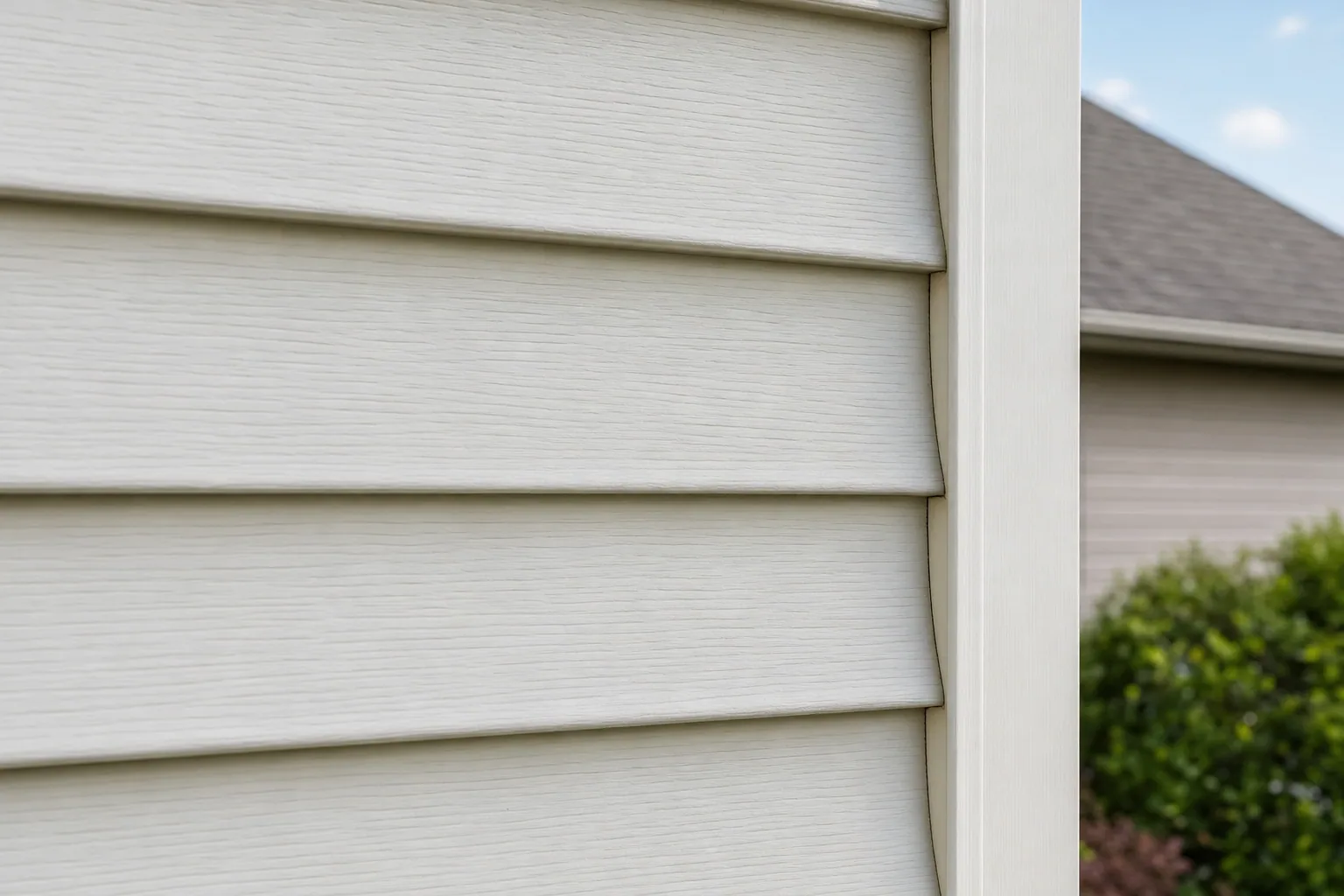
- Damaged siding, window wraps or screens. Wind-driven hail hits walls as well as roofs, which is why we look at siding during the inspection too.
- Stains on ceilings, around light fixtures, or at the top of interior walls. Those usually mean water has already been in the house for a while.
- Daylight or wet decking in the attic. Take a flashlight up and look at the underside of the deck, especially near chimneys, vents and valleys.
Write down what you find and the date of the storm. Photos on your phone cost nothing and help later.
How does a free roof inspection actually work?
Every job we take starts the same way. We come out and inspect the roof, the attic and the siding, and it doesn't cost you anything.
The attic matters more than most homeowners expect. From inside, we can see whether water has been getting in, whether the decking is stained or soft, and whether the attic is ventilating the way it should. A roof can look acceptable from above and tell a different story from below.
We take photos of everything we find and show them to you. You should be able to see the damaged pipe boot, the lifted shingle, the dented vent, whatever it is, without taking our word for it. If your roof is in good shape, the photos show that too, and that's a useful thing to have on file before the next storm.
If you've had weather over your Skiatook neighborhood and you're not sure whether anything actually got hurt, this is the point where a call makes sense. An inspection and a set of photos give you something real to decide with instead of a hunch.
Do you actually need a full replacement?
Not always. A lot of what we find is repairable, and when a repair will do, we tell you so instead of selling you a replacement.
A repair usually makes sense when the damage is contained to a specific area and the rest of the roof still has life in it. Think a cracked pipe boot, failed flashing at a chimney, a section of wind-lifted shingles on one slope, or a valley that needs attention.
Replacement starts to make sense when the damage is spread across multiple slopes, when the shingles are near the end of their service life anyway, or when repeat repairs would cost more over time than doing it once. The honest answer depends on what the photos show on your specific roof, not on a rule of thumb.
The reason we're direct about this: a roof we talk you into replacing when you didn't need it is a roof you remember us for, and not in a good way. We'd rather do the repair and be the people you call next time.
What should you expect on price and communication?
Before any work starts, you get a written price. The full price. Not a range, not a starting-at number that moves once the crew is on the roof.
We want you looking at that number next to the photos from your inspection so the two line up. If you want to sit on it, sit on it. If you want to get another set of eyes on it, do that.
When you call, James or a sales manager answers the phone, roughly 6 AM to 10 PM, every day. That's a real person, not a dispatch service. Worth being clear about the other side of that: we are not a 24-hour service. If something happens at 2 AM, do what you can to protect the inside of the house, keep water off anything valuable, and call when the lines open in the morning.
We're rated 4.9 across 150 reviews on Google, Angi and HomeAdvisor, which mostly reflects those two things: people get a straight answer on the phone and a price that doesn't change.
When is it time to call?
Call if a storm came through and you found any of the signs above. Call if you're seeing a ceiling stain and can't tell where it's coming from. Call if you just bought a house in Skiatook and want to know what you're working with before the next round of weather.
And call if it's been a few seasons since anyone has actually been on your roof. A roof you have current photos of is a roof you can make decisions about.
The inspection is free, you'll get the photos, and if it turns out nothing needs doing, we'll tell you that too. Reach out when you're ready and we'll get you on the schedule.
Frequently Asked Questions
Does the roof inspection cost anything?
No. Every job starts with a free inspection of the roof, the attic and the siding, and we take photos of what we find so you can see it yourself.
What hours can I reach someone?
James or a sales manager answers the phone roughly 6 AM to 10 PM, every day. We are not a 24-hour emergency service, so if something happens overnight, protect what you can inside the house and call in the morning.
Will you try to sell me a full roof replacement?
Only if that's what the roof needs. If a repair will do the job, we tell you so instead of selling a replacement.
How do I know the price won't change once work starts?
You get a written price before any work begins, and it's the full price, not a starting figure. Compare it against the inspection photos so you can see what you're paying for.