Understanding Roof Ventilation and Why It Matters
Your roof does more than keep rain out. It also needs to breathe. Roof ventilation is the system that allows air to flow through your attic, removing heat and moisture that can damage your home from the inside out. Many homeowners overlook this critical component until problems arise, but proper roof ventilation is one of the most cost-effective ways to protect your investment and extend the life of your roofing system.
When ventilation fails, moisture accumulates in your attic. That dampness feeds mold, rots wood framing, and compromises insulation. In summer, heat builds up and forces your air conditioning to work overtime. In winter, warm air escaping into the attic can melt snow on the roof, causing ice dams that lead to leaks. Understanding how roof ventilation works helps you spot problems early and maintain a healthy home.
How Soffit Vents and Ridge Vents Work Together
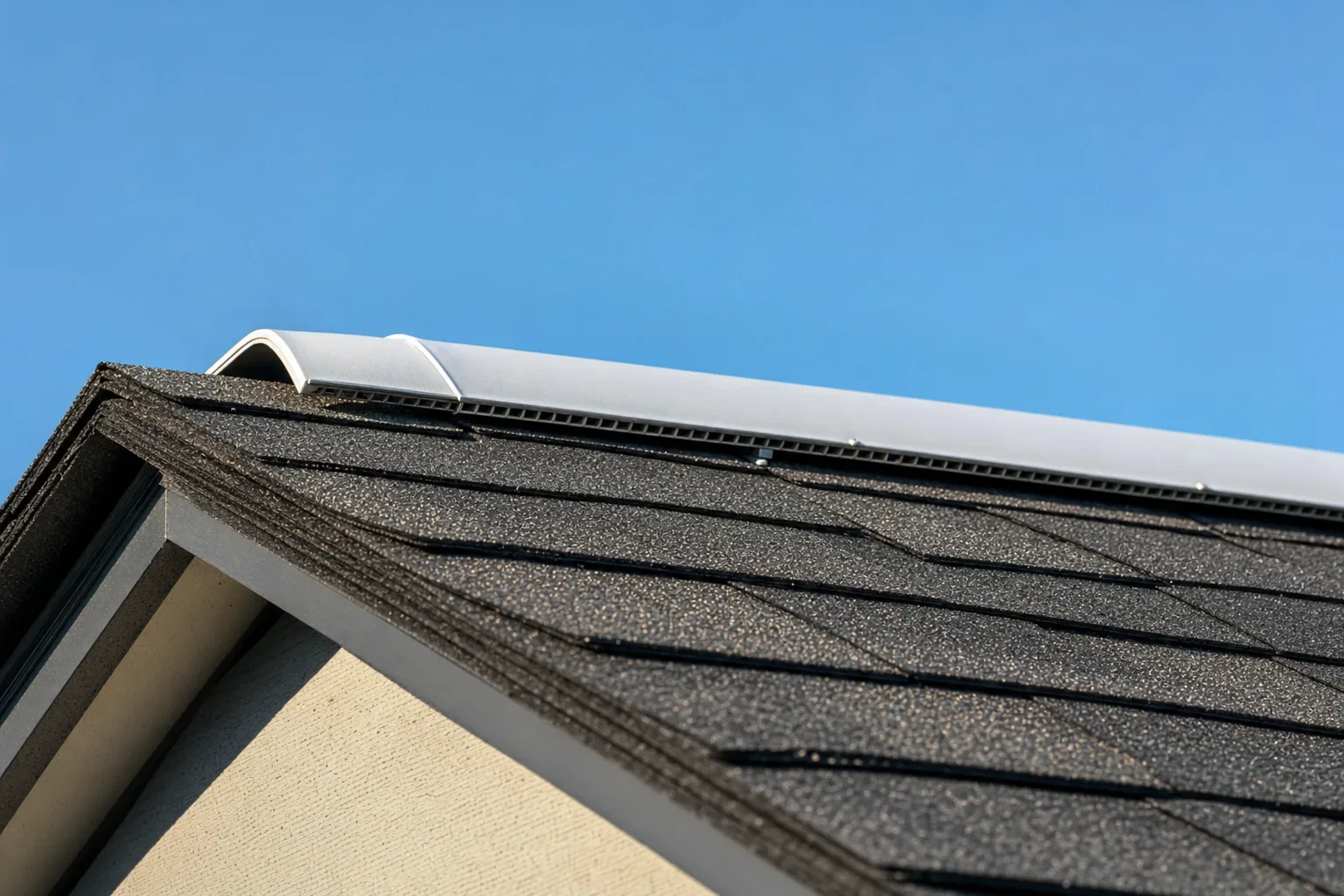
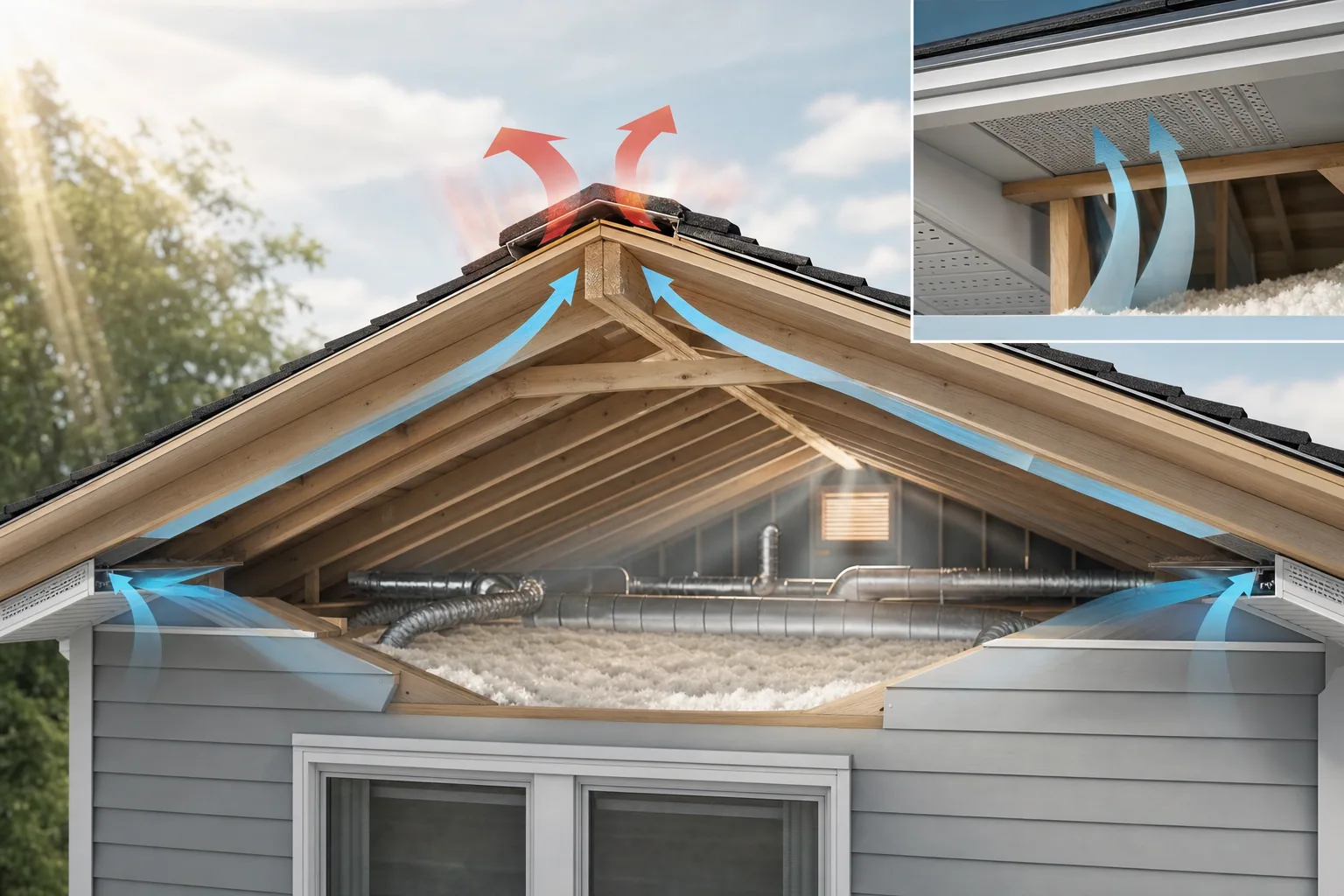
Proper roof ventilation relies on a balance of intake and exhaust. Soffit vents sit along the lower edges of your roof, under the eaves. They pull cool, fresh air into the attic. Ridge vents run along the peak of your roof and allow warm, moist air to escape. This creates a continuous circulation cycle that keeps your attic dry and at a stable temperature.
The system works best when soffit vents and ridge vents are sized and positioned correctly. If you have one without the other, you lose the entire benefit. A ridge vent alone cannot draw air into the attic. Soffit vents alone cannot push air out. Both components are essential for creating the airflow your roof needs.
The Problem With Poor Attic Ventilation
When attic ventilation is inadequate, several issues emerge:
- Moisture buildup that promotes mold and mildew growth
- Wood rot in rafters, trusses, and decking
- Shortened roof shingle lifespan due to heat and moisture damage
- Higher energy bills as air conditioning works harder to cool your home
- Ice dam formation in winter that forces water under shingles
- Pest infestations attracted to damp wood and insulation
Many of these problems develop silently. By the time you notice water stains on your ceiling or hear about mold during an inspection, significant damage has already occurred. That's why preventive maintenance, including checking your attic ventilation, is so important.
Roof Ventilation Types: Options for Your Home
Different roof designs call for different ventilation solutions. Understanding the main roof ventilation types helps you know what to expect:
Ridge Vents and Soffit Vents: The most common and effective combination, these work as an intake-exhaust pair to move air continuously through the attic.
Gable Vents: Rectangular openings on the side walls of your attic, these work best in homes where ridge vents cannot be installed, though they are less effective than ridge and soffit combinations.
Turbine Vents: Wind-powered fans that spin and pull air upward and out. These work well in mild climates but can be noisy and require maintenance.
Power Vents: Motorized fans that actively pull air from the attic. Useful in humid climates but add to your electric bill.
The best system for your home depends on your roof design, local climate, and existing attic structure. A roofing professional can assess your situation and recommend the most effective approach.
Energy Efficiency and Moisture Control
Many homeowners don't realize that roof ventilation directly impacts their energy bills. In summer, a properly ventilated attic stays cooler, reducing the load on your air conditioning system. In winter, ventilation prevents warm, moist air from condensing in the attic and damaging insulation.
This is especially important in Tulsa, where hot, humid summers and variable winters put real stress on both your roof and your HVAC system. Proper roof ventilation works hand in hand with quality insulation to keep your home comfortable while controlling moisture that leads to decay and mold.
When to Upgrade Your Roof Ventilation
If your home was built before modern ventilation standards were established, or if you've noticed recurring issues like mold, ice dams, or high energy bills, it may be time to assess your ventilation. Signs that an upgrade could help include:
- Visible mold or moisture stains in the attic
- Shingles that seem to wear faster than expected
- Rooms that are hard to keep cool in summer
- Musty odors in upper-floor closets or bedrooms
- Visible daylight through cracks or gaps in attic vents
Upgrading your roof ventilation is often less expensive than dealing with water damage, mold remediation, or premature roof replacement. It's also a smart move if you're planning to replace your roof anyway, since new ventilation and a new roof work best when installed together.
Know the True State of Your Roof, Before the Next Big Storm
Most roofing issues go unnoticed until water starts dripping through the ceiling. Our multi-point roof inspection gives you an honest, detailed look at your roof's current health.
The Bottom Line on Roof Ventilation
Proper roof ventilation is not glamorous, but it is essential. The small investment in making sure your soffit vents, ridge vents, and attic airflow are working properly pays dividends in roof longevity, energy savings, and peace of mind. Trifecta Roofing and Restoration knows that every home is different, and we evaluate your specific ventilation needs as part of our comprehensive roofing assessment. Whether you need ventilation repairs, upgrades, or simply want to understand your current system better, our team is ready to help keep your Tulsa home safe and sound.