Your roof's first line of defense against leaks and water damage isn't your shingles. It's the underlayment. This hidden layer sits between your wood deck and shingles, catching water that sneaks past shingles and directing it safely away. When shingles curl from age, straight-line winds break seals, or hail punches through, underlayment is what keeps water from soaking into your home.
In Tulsa and Northeast Oklahoma, where hail season runs March through June and wind storms are common, a quality underlayment is not optional. It's insurance for your home's interior. Let's walk through what underlayment is, the main types, and what to expect when it's time to replace yours.
What Roof Underlayment Does
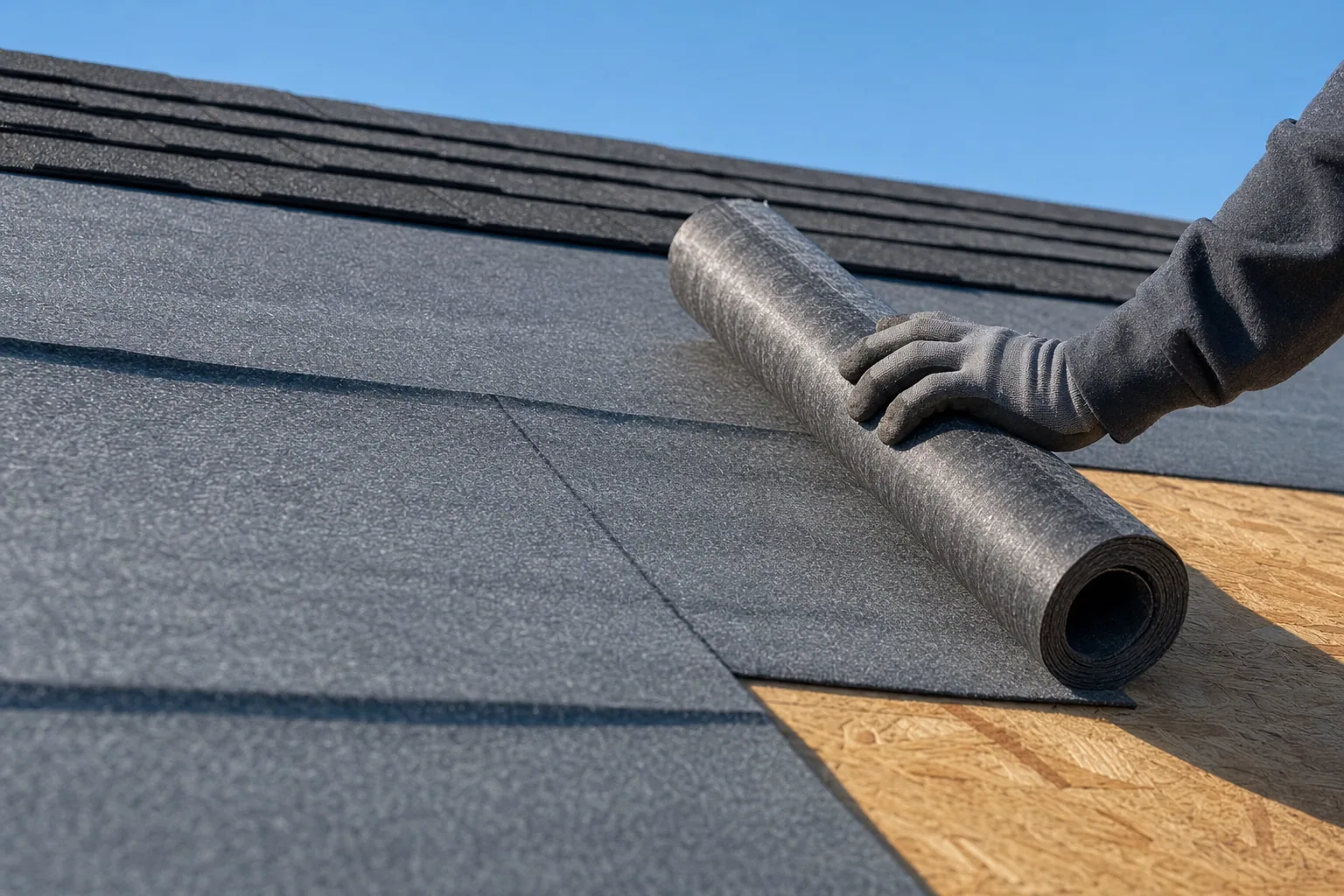
Underlayment is a protective layer that sits on top of your roof's wood sheathing, underneath the shingles. Think of it as a safety net. When rain hits your roof, most of it sheds off the shingles. But some water finds its way under the shingles, especially during heavy rain or when wind drives rain sideways.
Without underlayment, that water soaks straight into your wood deck, causing rot, mold, and structural damage. With it, the water is caught and channeled down to your gutters and drains. A solid underlayment also protects your roof during the installation process itself, and it can seal small gaps or imperfections in your sheathing.
In high-impact weather regions like ours, underlayment also serves as a buffer. If hail cracks or punctures your shingles, underlayment is there to stop water before it enters the attic.
Types of Roof Underlayment
Asphalt-Saturated Felt
Asphalt-saturated felt is the oldest type of underlayment. It's made from natural fibers soaked in asphalt. You'll also hear it called tar paper or 30-pound felt.
Felt is cheap and easy to install, which is why some contractors still use it. But it has real weaknesses. Felt degrades quickly in sunlight and heat. It can tear during installation and shrink over time, creating gaps. In humid climates, it's prone to mold. A felt underlayment typically lasts only 15 to 20 years, sometimes less.
Feel does not absorb much water, which is good. But it's not the best choice for new roofing in Oklahoma. If your roof is being replaced, ask your contractor whether they're using felt and why.
Ice and Water Shield
Ice and water shield is a self-adhering membrane that sticks directly to the wood deck. It's made from rubberized asphalt and is designed to bond tightly to the sheathing, creating a waterproof seal.
Ice and water shield excels in high-risk areas: the eaves, valleys, and around penetrations like chimneys and vents. Water tends to pool in these spots, and ice dams in winter can push meltwater back under shingles. An ice and water shield membrane prevents that water from leaking through.
The downside is cost. Ice and water shield runs more than felt. It's also heavier and stickier to work with, so installation takes longer. Many roofers use ice and water shield on the lower three feet of the roof and over valleys, then use a lighter underlayment for the rest.
Synthetic Underlayment
Synthetic underlayment is the modern choice. It's made from polypropylene or polyethylene, non-bituminous materials that don't degrade the way felt does.
Synthetic underlayment is lightweight, breathable, and durable. It resists UV damage and won't rot or mold. Most synthetics last 20 to 30 years, matching the lifespan of quality asphalt shingles. It's also easier for roofers to walk on and less slippery in wet conditions, which improves safety during installation.
The trade-off is upfront cost. Synthetic runs more than felt but less than ice and water shield for most of the roof. Given the longer life and better performance in Oklahoma's weather, synthetic underlayment is often the best value for a new roof.
Choosing the Right Underlayment for Your Roof
When you get a new roof, every job starts with a free inspection, photos, and a written price. That conversation should include what underlayment is being used and why.
For most roofs in Tulsa and Northeast Oklahoma, here's what we recommend:
- Use ice and water shield on the bottom three to five feet of the roof and in all valleys and around penetrations.
- Use synthetic underlayment for the rest of the roof.
- Avoid felt on new roofing, unless cost is the only factor and the homeowner understands the durability trade-off.
Synthetic is especially smart if you're installing Class 4 impact-resistant shingles. Those shingles are built tough and often earn insurance discounts. Pair them with quality synthetic underlayment and you've got real protection against hail and wind damage.
Roof Underlayment Cost
Underlayment cost depends on roof size, type chosen, and local labor rates. As a rough range:
- Asphalt felt runs $0.50 to $1.00 per square foot.
- Synthetic underlayment runs $1.00 to $2.00 per square foot.
- Ice and water shield runs $1.50 to $3.00 per square foot.
For a typical Tulsa-area home with a 2,000 square-foot roof, the difference between felt and synthetic for the whole roof might be $1,000 to $2,000. That sounds like a lot, but consider that synthetic lasts longer and protects your home better. Spread over 25 years, it's a small annual cost for peace of mind.
Your insurance company may not require a specific underlayment, but they do require that your roof meets building code. A solid underlayment helps your roof do that and keeps your coverage valid.
Why Quality Underlayment Matters After a Storm
Oklahoma gets hit hard by hail and straight-line winds. When that happens, your shingles take the visible damage, but underlayment is what stops water from getting inside.
If you have hail or wind damage, every job starts with a free inspection. We'll look at shingles, deck, flashing, and underlayment. We work with most insurance companies to manage claims. An adjuster will assess the damage and determine coverage. Our job is to explain the damage plainly, meet the adjuster at your house, and recommend only the work your roof actually needs.
A strong underlayment can be the difference between a repair and a full replacement. If hail punctures shingles but the underlayment is intact and flexible, we may only need to replace the damaged shingles and reseal others. If the underlayment is aged and brittle, we'll recommend replacing the whole roof.
Know the True State of Your Roof, Before the Next Big Storm
Most roofing issues go unnoticed until water starts dripping through the ceiling. Our multi-point roof inspection gives you an honest, detailed look at your roof's current health.
The Bottom Line
Roof underlayment is not glamorous, but it's essential. You don't see it after the roof is done, but it's working every day to keep water out of your home. In Oklahoma, where weather is unpredictable and severe, choosing quality underlayment is a smart investment.
When you're ready to replace your roof or repair storm damage, call us at (918) 471-2777 for a free inspection. We'll tell you exactly what your roof needs, show you the options, and give you a fair price. No gimmicks, no pressure. Just honest roofing.