Soffit and fascia are the unsung heroes of your home's exterior. They sit up there along your roofline where most homeowners never look, quietly protecting your house from rain, wind, and pests. But when they start to fail, the damage spreads fast and gets expensive.
We work with Oklahoma homeowners every day who discover soffit and fascia problems during roof inspections or after a storm. Many don't realize how critical these components are until water starts leaking into the attic or siding. The good news is that soffit repair and fascia repair are straightforward jobs when you catch the damage early.
What Soffit and Fascia Do
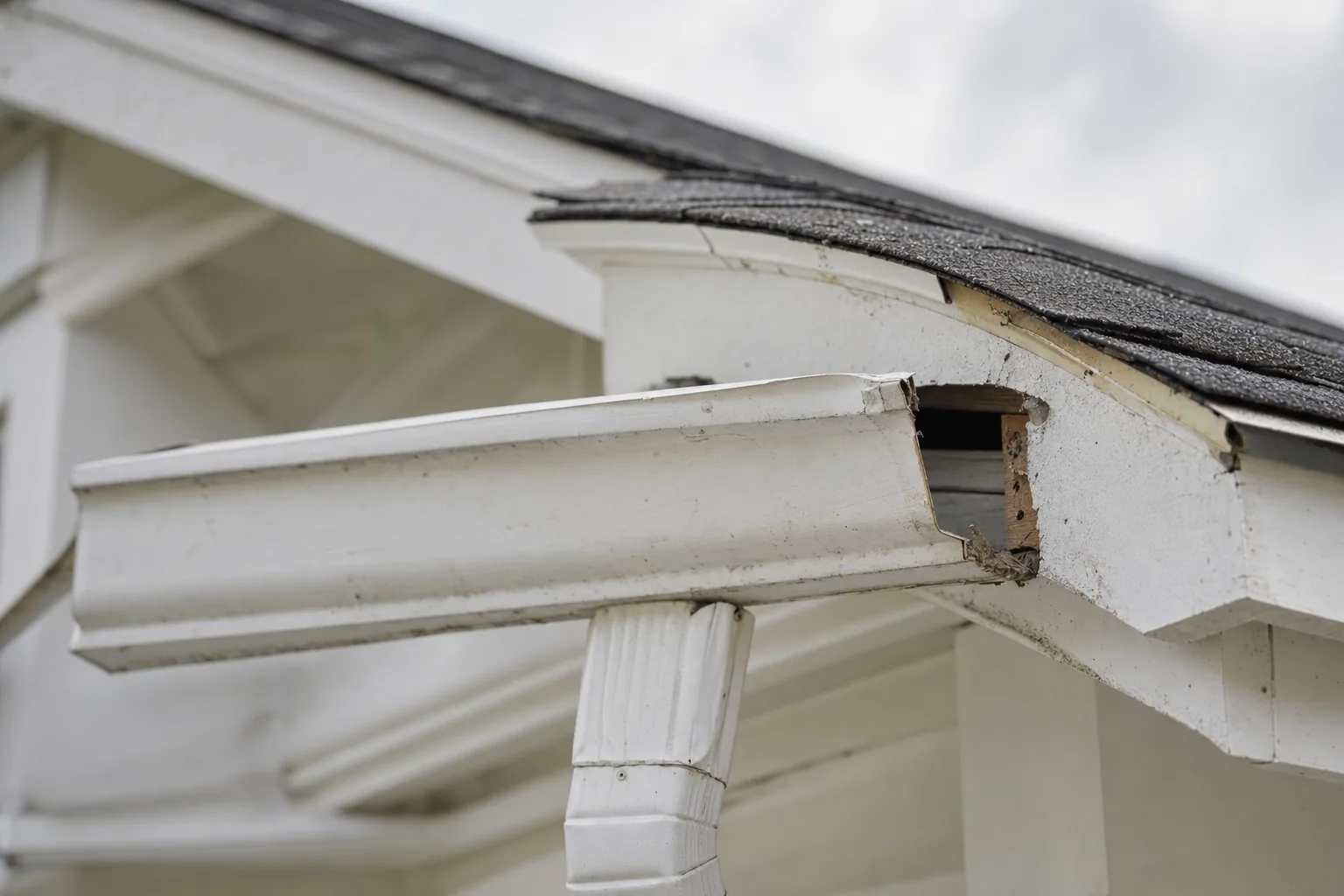
Soffit is the horizontal panel that runs along the underside of your roof overhang. It covers the gap between your home's exterior wall and the roofline, and it includes small vent holes that let air circulate under the roof. Fascia is the vertical trim board that sits behind your gutters and closes off the rafter ends. Together, they shield the wooden structure underneath from rain, insects, and weather.
When soffit and fascia fail, water gets into the attic, the roof framing starts to rot, and mold can grow inside your walls. In Oklahoma's spring and early summer storms, hail and straight-line winds can bend and crack fascia boards, tearing soffit panels and leaving your home vulnerable to leaks.
Signs of Soffit and Fascia Damage
Look up at your roofline regularly, especially after storms. Here's what to watch for:
- Peeling or bubbling paint on fascia or soffit
- Visible cracks, splits, or holes in the boards
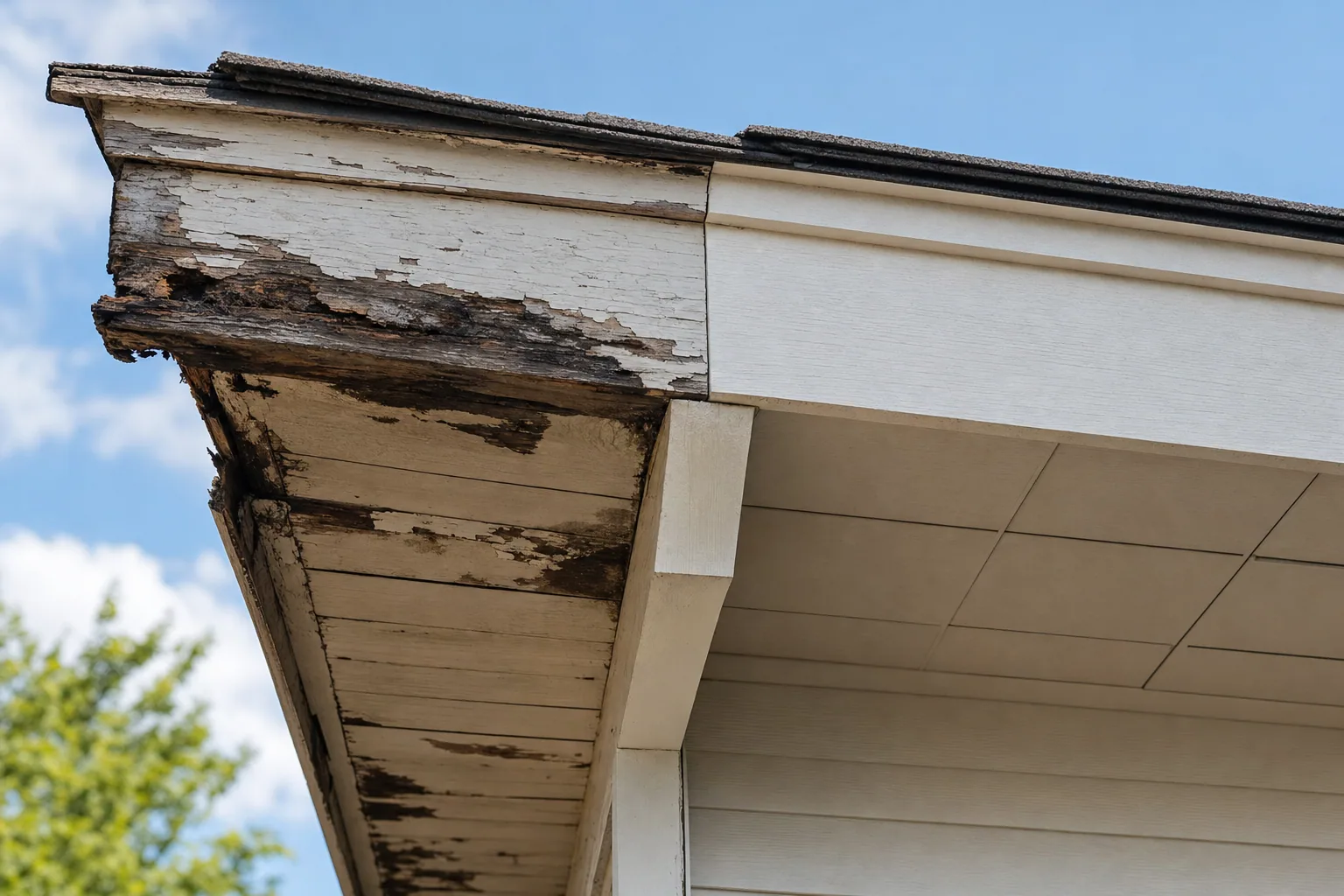
- Soft or spongy soffit when you touch it (a sign of rot)
- Water stains or dark discoloration along the eaves
- Sagging soffit panels or fascia pulling away from the house
- Bent or dented fascia after wind or hail
- Gutters pulling away from the house or hanging unevenly
- Insect or bird damage, holes, or nesting
Many of these problems start small and hidden. A tiny crack in fascia can let water seep behind it. Soffit rot often begins on the underside where you can't easily see it. By the time you notice serious damage, the wood underneath may already be compromised.
Repair vs. Replacement: What Does Your Home Need?
Not every damaged soffit or fascia board needs to be replaced. That's where an honest inspection makes all the difference.
Soffit repair might be right if the damage is minor and localized. A single cracked panel, a small hole from weather, or paint failure can often be fixed without tearing out the whole system. A simple repair costs less and takes less time.
However, if the wood is rotted, if multiple sections are damaged, or if the structural integrity is compromised, replacement is the only solid fix. Rot spreads, and patching rotted wood is temporary. You're better off replacing the damaged section so you know the job will last.
The same goes for fascia. If it's bent or cracked from a storm but the wood underneath is sound, repair might work. But if the rot has set in, you need replacement. A professional inspection will show you which direction to go, and we'll tell you straight if a repair will do instead of a replacement.
Soffit Replacement Cost and What Affects the Price
Soffit replacement cost depends on a few key factors:
- Material choice: Vinyl soffit costs less than wood, and aluminum falls in between. Vinyl resists rot and requires little maintenance, which makes it popular in Oklahoma.
- Linear feet to cover: The more eaves you have, the more soffit panels you need.
- Complexity: Soffits with vents, or homes with multiple levels or angles, take longer to replace.
- Existing damage: If rotted wood has spread to the rafter tails or roof framing underneath, the repair scope grows.
- Labor: Fascia and soffit work often requires scaffolding or lifts, especially on two-story homes.
There's no fixed price for soffit replacement, but every job starts the same way at Trifecta: with a free inspection, photos, and a written estimate. We'll tell you what we find, what needs to happen, and what it costs. No surprises, no upselling.
Rotted Soffit Repair: Why It Matters
Rotted soffit is one of the most common problems we see. Soffit rot happens because moisture gets trapped against the wood, and in Oklahoma's humidity, that rot spreads quickly.
When soffit is rotted, the structure supporting your gutters and roof overhang is already weakened. Water can drip behind the soffit into the attic. The rot can creep into the fascia, the rafter tails, and even the main roof structure if left unchecked.
The solution for rotted soffit repair is replacement of the affected sections. Patching rotted wood doesn't stop the rot; it just hides it for a while. You'll be back to square one within a year or two. A proper soffit replacement removes the rot, improves ventilation, and protects the wood framing underneath for the next 20 or 30 years.
What to Do After a Storm
If your soffit or fascia takes damage from a hail or wind event, here's the right approach:
- Stay off the roof and away from damaged areas until the weather clears.
- If there's an active leak inside, put a bucket under it and keep the area dry.
- Take photos of the damage from the ground.
- Call your insurance company and report the damage.
- Request a free inspection from a local contractor who understands Oklahoma storms and insurance claims.
At Trifecta, we work with most insurance claims and will meet your adjuster at your home. We'll document the damage, explain what happened, and help you understand the repair scope. Many homeowners are surprised to learn that storm damage to soffit and fascia is covered under their policy, especially after hail or straight-line winds.
Next Steps
If you've noticed damage to your soffit or fascia, or if you just want peace of mind, the first step is a professional inspection. We'll climb up there, take photos, and show you exactly what we find. We'll tell you whether your home needs a repair or a replacement, and we'll put a fair price in writing.
Every job starts with a free inspection, photos, and a written estimate. No high-pressure sales, no gimmicks, just honest advice and quality work. Give us a call at (918) 471-2777 to schedule your free estimate.
Cracked or Warped Siding? Don't Wait for Water Damage.
Siding does more than look good, it keeps moisture from rotting your home's structural framing. If your siding is cracked, loose, or showing signs of storm damage; call now!
Request a Free Siding Inspection
(918) 471-2777